Generated with AI3 min read
Loudspeaker
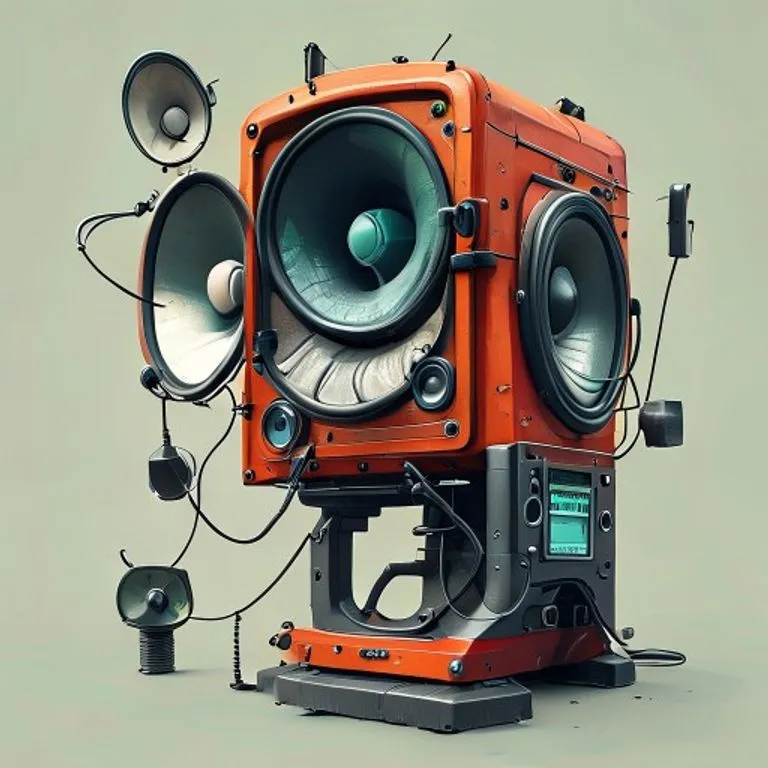
Brief description
A device that converts electrical signals into sound waves. It is the primary means of audible communication and entertainment in the electronic age.
Use / Function
- Primary use: Reproducing audio for human hearing.
- Secondary uses: Public address systems, alarms, acoustic testing.
- Scale: Domestic / Mass communication.
Operating principle
The most common type (the dynamic loudspeaker) works on the principle of Lorentz force.
- Electrical input: A varying electric current (representing sound) flows through a coil of Wire.
- Magnetic interaction: This current creates a varying magnetic field around the coil, which interacts with the fixed magnetic field of a permanent Magnet.
- Mechanical movement: The interaction causes the coil (the voice coil) to move back and forth rapidly.
- Acoustic output: The coil is attached to a large diaphragm or cone (usually made of Paper). As the coil moves, it vibrates the cone, pushing the air and creating sound waves.
How to create it
Minimum functional version
- Magnet: A strong permanent Magnet.
- Voice Coil: A cylinder of lightweight material with many turns of thin insulated Copper Wire.
- Cone: A stiff but lightweight cone made of Paper or thin plastic.
- Suspension: A flexible surround (fabric or soft plastic) that holds the cone in place but allows it to move forward and back.
- Assembly: The voice coil is glued to the center of the cone and positioned so it surrounds (but does not touch) the magnet. The cone is mounted in a Wood or metal frame.
Technical level
Intermediate. Requires precision in aligning the voice coil within the narrow gap of the magnet.
Materials needed
- Essential materials:
- Tools:
- Scissors, soldering iron, alignment shims.
Variants and improvements
- Electrodynamic speaker: Uses an electromagnet instead of a permanent magnet (common before high-strength magnets were affordable).
- Horn Speaker: Uses a flared acoustic horn to increase efficiency (used in early phonographs and public address systems).
- Piezoelectric speaker: Uses crystals that vibrate when electricity is applied; simple but limited frequency range.
Limits and risks
- Efficiency: Most speakers are inefficient, converting only a small fraction of electrical energy into sound; the rest is lost as heat.
- Distortion: If driven with too much power, the cone can deform or the coil can burn out.
- Enclosure: Without a proper box (baffle), the sound waves from the back of the cone cancel out those from the front, resulting in poor bass response.