SyntheticGenerated with AI2 min read
Tungsten
W
Made of
Tungsten (or wolfram) is a dense, refractory metal prized for surviving extreme heat and wear. It is essential in X-ray tubes, filaments, and hard alloys.
Description of what it is like
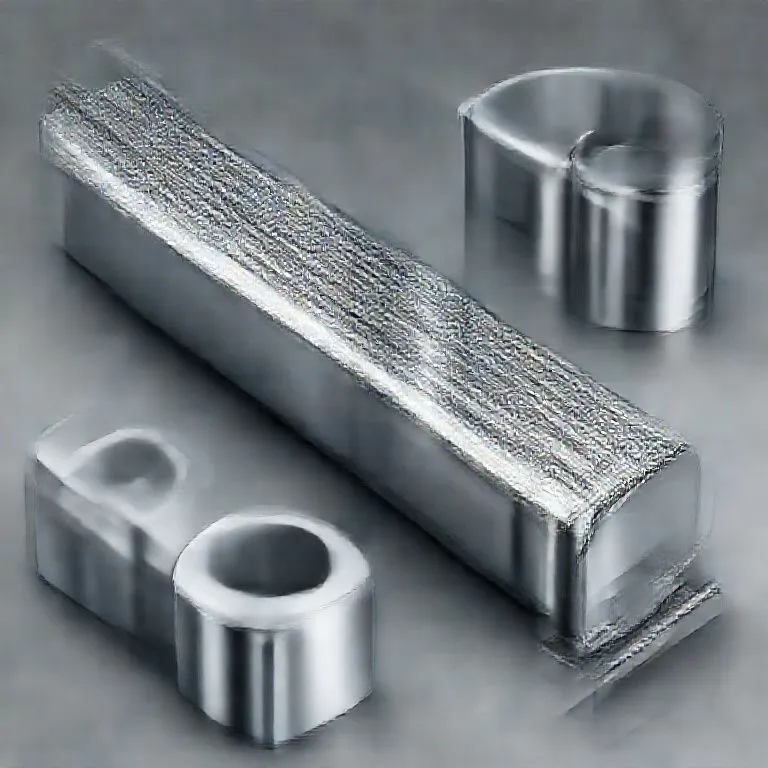
Tungsten is silvery-gray, very heavy in the hand, and hard but brittle at room temperature. It keeps its strength at temperatures that soften most metals.
Origin and where to find it
- Environments: Found in hydrothermal veins and granitic regions.
- Signs: Ores such as wolframite (dark, heavy) and scheelite (pale, dense).
- It is a natural element but requires advanced processing to isolate.
Minimum processing required
- Crushing and concentrating the ore.
- Roasting to convert minerals into tungstates.
- Chemical conversion to tungsten oxide.
- High-temperature reduction with hydrogen or carbon.
- Sintering or hot pressing to form solid parts.
Tools needed to work on it
- High-temperature furnaces and refractory crucibles.
- Reducing atmosphere control (hydrogen or carbon sources).
- Presses and grinders for powder metallurgy.
- Carbide tooling for machining.
Common forms of use
- Sintered rods and plates.
- Wire or filaments.
- Tungsten Carbide: A chemical compound containing equal parts of tungsten and carbon atoms, used in industrial machinery, Milling Cutters, and Lathe Tools for its extreme hardness.
- Dense shields or counterweights.
Possible substitutes
- Steel: Lower heat resistance but easier to work.
- Copper: Better thermal conduction but melts much earlier.
- Lead: High density for shielding but soft and toxic.
Limitations and common failures
- Brittle if not alloyed or processed correctly.
- Difficult to melt or cast; most work requires powder metallurgy.
- Oxidizes at very high temperatures in air.
Risks and safety
- Fine dust is a respiratory hazard.
- High-temperature processing risks severe burns and fire.
Related materials
Properties
- Highest melting point of all metals
- Very high density
- Hard
- Brittle at room temperature
- Excellent heat resistance
Used for
- X-ray tube targets
- Light bulb filaments
- Vacuum tube cathodes
- Electrodes
- Cutting tool alloys
Manufacturing / Process
Extracted from wolframite or scheelite, converted to tungstate, reduced at high temperature with hydrogen or carbon, then sintered.