Generated with AI3 min read
Sewing Machine
Brief description
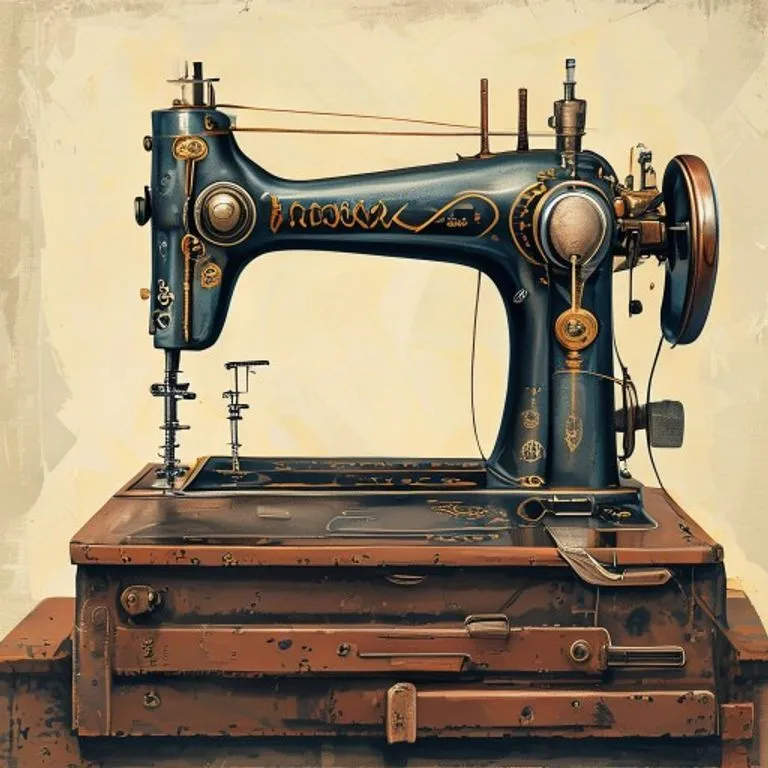
A mechanical device used to stitch fabric and other materials together with thread. It automates the stitching process, significantly increasing speed and uniformity compared to hand sewing.
Use / Function
- Primary use: Rapid production of clothing, upholstery, and sails.
- Secondary uses: Embroidery, quilting, and leatherwork.
- Scale: Domestic to industrial mass production.
Operating Principle
Most sewing machines use a lockstitch mechanism, which involves two threads:
- Upper Thread: Carried by the needle through the fabric.
- Lower Thread (Bobbin): Housed in a shuttle or hook assembly below the fabric.
Process:
- The needle pushes the upper thread through the fabric to form a loop.
- A shuttle hook catches this loop and wraps it around the lower thread (bobbin thread).
- The needle pulls up, tightening the loop to form a lockstitch inside the layers of fabric.
How to create it
Creating a functional sewing machine requires precision engineering and metallurgy.
Key Components
- Needle Bar: Moves the needle up and down vertically.
- Shuttle/Hook Assembly: Rotates or oscillates to catch the thread loop.
- Feed Dogs: Metal teeth that move the fabric forward after each stitch.
- Hand Wheel / Treadle: Provides mechanical power to drive the gears and shafts.
Technical Level
Advanced. Requires precise machining of gears, shafts, and timing mechanisms.
Materials needed
- Essential materials:
- Tools:
- Lathe: For turning shafts and precision parts.
- Milling Machine: For cutting gears and slots.
- Drill Press: For precise holes.
Variants and improvements
- Chain Stitch Machine: Uses a single thread (easier to build but stitches can unravel).
- Treadle Machine: Foot-powered, leaving hands free to guide fabric.
- Electric Machine: Motor-driven for high speed and consistent power.
- Zigzag Machine: Needle moves side-to-side for reinforced stitching or buttonholes.
Relationship with Loom
The Loom produces the Fabric that the sewing machine uses.
- Loom: Weaves Yarn into cloth.
- Sewing Machine: Stitches cloth into garments.
Without the loom (or similar fabric-making process like knitting), the sewing machine would have no material to work on.
Limits and risks
- Complexity: High precision required; slight misalignment causes skipped stitches or broken needles.
- Maintenance: Requires regular oiling and cleaning of lint.
- Safety: Moving parts (needle, gears) can cause injury; fingers must be kept clear of the needle.