Generated with AI3 min read
Power Loom
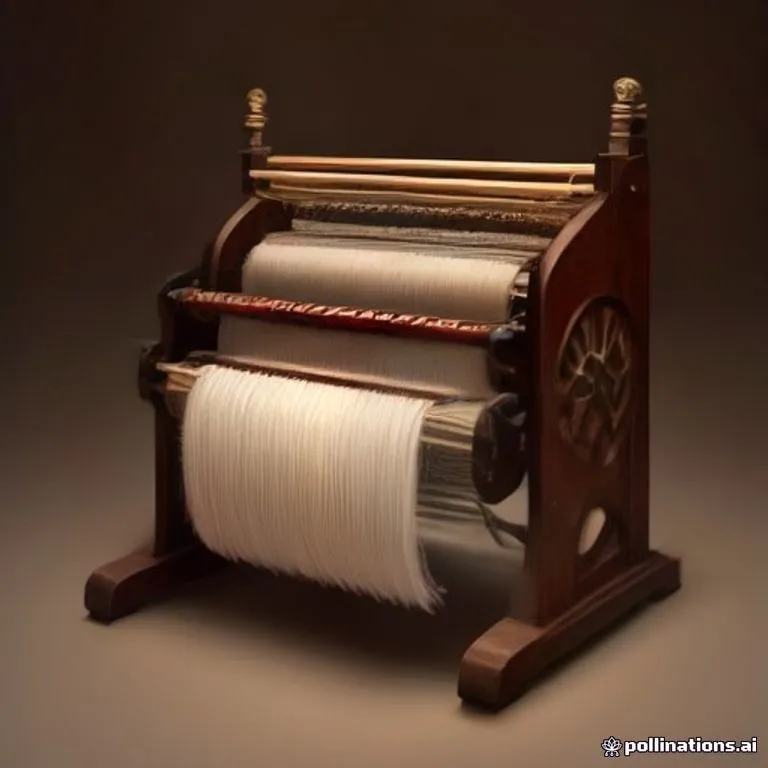
Brief description
A power loom is a mechanized loom driven by a line shaft, water wheel, or steam engine designed to weave yarn into cloth automatically. Invented by Edmund Cartwright in 1785, it mechanized the shed opening, shuttle passing, and reed beating actions, turning textile weaving from a slow handcraft into a mass-production industrial process.
Use / Function
- Industrial Textile Weaving: Weaves cotton, linen, wool, or synthetic yarns into broadcloth fabrics at high speeds.
- Garment & Canvas Production: Provides uniform woven bolts of cloth required for clothing, sails, sacks, and upholstery.
- Scale: Industrial mill and factory floor scale.
Operating principle
- Shedding Mechanism: Harnesses connected to cams or treadles separate alternate warp threads, opening a triangular passage (the shed).
- Shuttle Propulsion: Mechanical picker sticks or levers strike the shuttle, propelling it rapidly back and forth through the open shed carrying the weft thread.
- Beating-Up: A heavy reciprocating reed frame (the sley) pushes the newly laid weft thread tightly against the fell of the woven cloth.
- Take-Up and Let-Off Synchronization: Mechanized roller gears unwind unspun warp threads from the warp beam while simultaneously winding finished cloth onto a take-up roll.
How to create it
- Construct Heavy Support Frame: Cast rigid side frames out of Cast Iron or heavy structural Wood to withstand intense vibration.
- Mount Main Power Drive Shaft: Install a central Steel drive shaft with eccentric cams and belt pulleys connected to a water wheel or steam engine.
- Install Harness Shedding Cams: Attach offset lifting cams to raise and lower the wooden heddle frames in perfect sequence using connecting cords made of Rope.
- Build the Shuttle Picking Motion: Fabricate leather or wooden picker sticks driven by spring-loaded tappets on the camshaft to throw the wooden shuttle across the raceboard.
- Attach Reed Sley Assembly: Hang a heavy swinging sley frame holding a fine steel wire reed comb to press each weft thread firmly into place.
- Integrate Automatic Let-Off & Take-Up Gears: Install ratchet and pawl gear trains on the warp and cloth rollers to maintain uniform tension.
Materials needed
- Frame & Structural Members: Sturdy Cast Iron castings or timber beam frame.
- Drive & Mechanisms: Steel shafts, gears, cams, levers, springs, and heavy drive belts made of Rope or leather.
- Weaving Components: Wooden shuttles, steel wire reeds, and heddle cords.
Variants and improvements
- Jacquard Power Loom: Integrates punched card mechanisms to control individual warp threads, enabling intricate patterned brocades and damasks.
- Automatic Northrop Loom: Introduced self-reloading shuttle quills without stopping the machine, increasing weaver productivity tenfold.
- Shuttleless Looms: Modern air-jet, water-jet, or rapier looms that carry weft yarn without a heavy wooden shuttle.
Limits and risks
- Yarn Snagging & Snapping: High-speed shuttle flight can snap delicate warp threads, causing machine jams or cloth defects if not stopped immediately.
- Pinch and Crush Hazards: Unshielded gears, heavy flying shuttles, and fast-moving sley frames pose severe injury risks to operators.
- Noise & Vibration: Continuous impact pounding requires solid building foundations and hearing protection.