SyntheticGenerated with AI2 min read
Rope
Made of
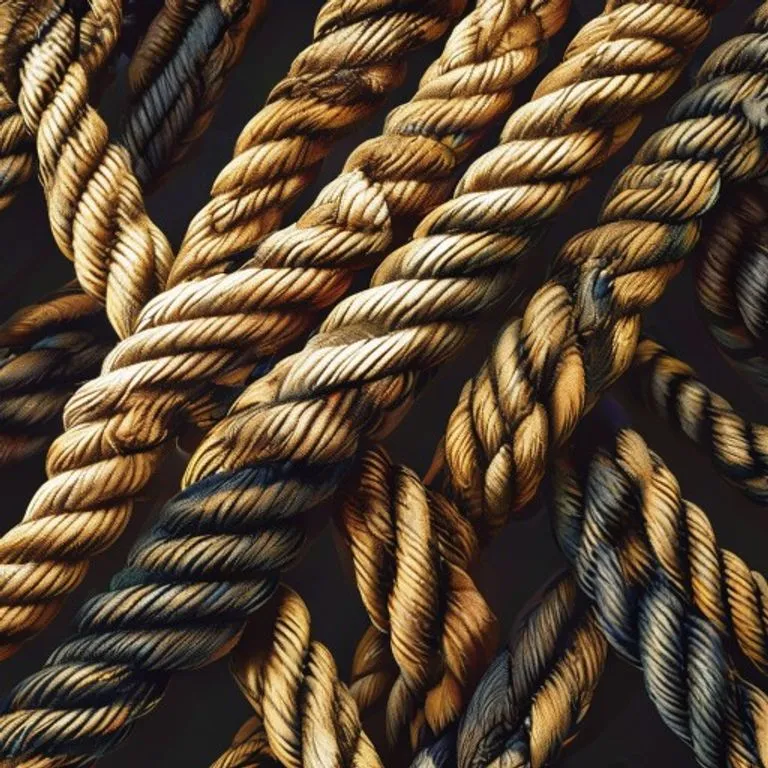
Rope is a strong, thick cord made by twisting or braiding together strands of fibers, wire, or other material. It is essential for heavy-duty tasks where string or yarn would break.
Description of what it is like
Rope is thicker and stronger than string (typically >4mm diameter). It has a coarse texture if made from natural fibers like hemp or manila. It can be stiff when new but becomes more flexible with use.
Origin and where to find it
- Not found in nature: Must be manufactured.
- Raw Materials:
- Natural: Hemp, manila, sisal, cotton, coir (coconut fiber).
- Synthetic: Nylon, polypropylene, polyester (modern).
- Wire: Steel strands (for suspension bridges).
Minimum processing required
- Fiber Preparation: Cleaning and combing fibers (heckling).
- Spinning: Twisting fibers into yarns.
- Forming: Twisting yarns into strands.
- Laying: Twisting three or more strands together to form the rope. The twist must be balanced to keep the rope straight.
Tools needed to work on it
- Ropewalk: A long space for laying out strands.
- Rope jack/Spinner: To twist the strands.
- Top: A grooved wooden block to guide the twist.
- Knife/Fid: For cutting and splicing.
Common forms of use
- Twisted (Laid): Most common, easy to splice.
- Braided: Smoother, less likely to kink.
- Cable: Rope made by twisting other ropes together (very thick).
Possible substitutes
- Chain: Stronger, more durable, but heavier and not elastic.
- Steel Cable: For modern high-strength applications.
- Vine/Lianas: Primitive natural substitute (unprocessed).
Limitations and common failures
- Rot: Natural fiber ropes rot when stored wet.
- Fraying: External fibers wear out from abrasion.
- Internal wear: Grit can get inside and cut fibers.
- Snapback: If a rope breaks under tension, it can snap back with deadly force.
Risks and safety
- Burn: Fast-moving rope can cause friction burns.
- Entanglement: Risk of getting caught in coils.
- Breaking limit: Always know the Safe Working Load (SWL), usually much lower than the breaking strength.
Related materials
- String: Thinner version.
- Plant fibers: Raw material.
- Chain: Metal alternative.
Properties
- High tensile strength
- Flexible
- Durable
- Shock-absorbing (some types)
Used for
- Heavy lifting
- Bridge construction
- Towing
- Climbing
- Sailing/Rigging
Manufacturing / Process
Twisting multiple yarns or strands together in a spiral direction opposite to the twist of the yarns to prevent unraveling.