Generated with AI3 min read
Plow and tools
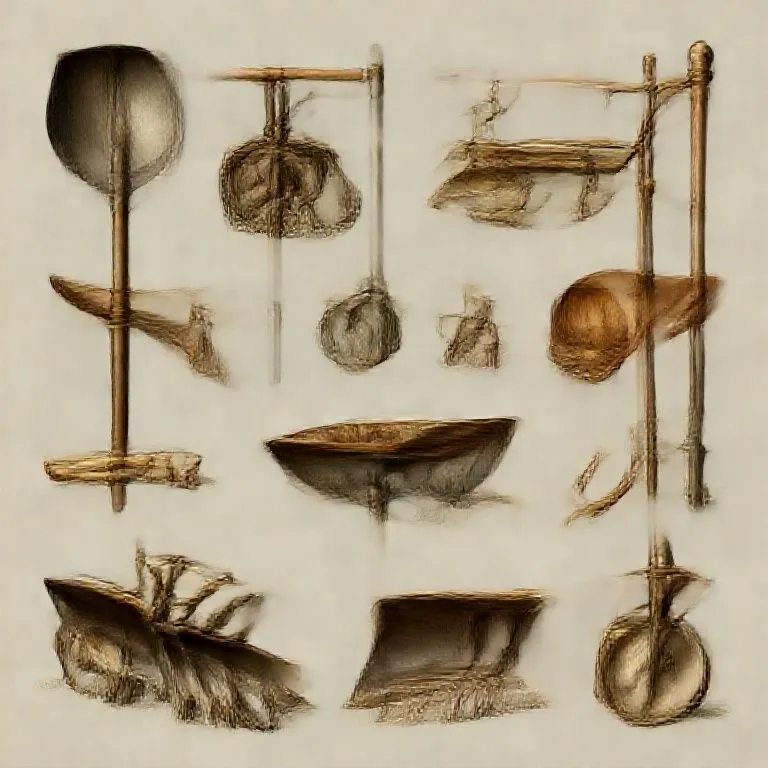
Brief description
Plow and tools are a basic agricultural toolkit used to break soil, open furrows, and manage fields for planting and harvest. The plow handles heavy soil work, while hand tools handle precision tasks.
Use / Function
- Soil preparation: Break and turn soil to aerate and mix organic matter.
- Furrowing: Create straight rows for sowing and irrigation.
- Weed control: Cut or uproot weeds between rows.
- Harvest support: Lift tubers and loosen soil for gathering.
- Scale: Household to community fields.
Operating principle
- Soil cutting: The share concentrates force on a narrow edge to shear soil and open a groove.
- Soil lifting and turning: The moldboard lifts the slice, rolls it over, and buries weeds and residues.
- Depth control: The beam angle and hitch height set penetration, preventing skipping or over-burial.
- Draft conversion: Traction translates pulling into forward motion and steady soil turnover.
- Hand tools: Leverage and wedge edges deliver precise cutting, loosening, and shaping between rows.
How to create it
- Build a beam and handles: Shape a strong wooden beam with a grip for steering.
- Add a share: Attach a stone or metal blade at the front to cut soil.
- Set the angle: Tilt the share so it bites and lifts instead of skipping.
- Make a hitch: Use Plant fibers or Leather straps for a human or animal yoke.
- Finish hand tools: Create simple hoes and rakes from wood with stone or metal edges.
- Technical level: Basic to Intermediate (metal share and yoke increase efficiency).
Materials needed
- Essential: Wood frame, share of Stone or Iron, bindings of Plant fibers or Leather.
- Tools: Stone tools or metal tools for shaping, plus Shovel for clearing.
- Substitutes: Digging stick or shallow scratch plow for light soils.
Variants and improvements
- Ard (scratch plow): Simple wooden plow for light soils.
- Moldboard plow: Turns soil completely, better weed control.
- Iron share and coulter: Cuts harder soils and reduces wear.
- Animal-drawn plow: Faster and deeper tillage. Using a Horse Collar instead of a yoke greatly increases pulling efficiency.
- Combine harvester: Mechanized harvest that completes the field cycle.
Limits and risks
- Soil damage: Over-tillage can cause erosion and moisture loss.
- Stone breakage: Rocky ground chips shares and bends frames.
- Power needs: Requires steady draft power and skill to guide.
- Injury risk: Heavy loads and sharp edges can cause strain or cuts.