Generated with AI2 min read
Combine harvester
Brief description
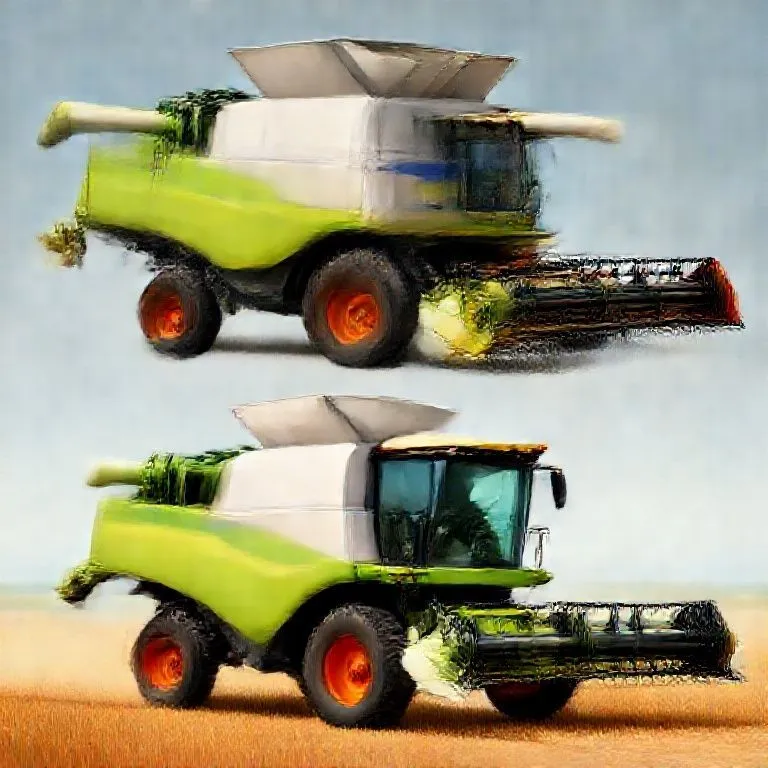
A combine harvester is a machine that performs reaping, threshing, and cleaning of grain in a single pass. It compresses multiple harvest steps into one operation, reducing labor and time across large fields.
Use / Function
- Harvesting grain: Cuts standing crops and gathers the heads.
- Threshing: Separates grain from stalks and husks.
- Cleaning: Uses airflow and sieves to remove chaff.
- Field efficiency: Complements soil preparation from Plow and tools by mechanizing harvest.
- Scale: Farm to regional agriculture.
Operating principle
- Cutting header: A reciprocating knife and reel cut and feed crop into the machine.
- Feeding system: Augers and conveyors move material into the threshing drum.
- Threshing drum and concave: Impact and rubbing separate grain from straw.
- Separation: Straw walkers or rotors shake remaining grain free.
- Cleaning shoe: Fans and sieves blow away chaff while grain falls into a bin.
How to create it
- Build a simple header: A rigid bar with a cutting edge and reel to guide stalks.
- Add a threshing drum: A rotating cylinder with bars against a curved concave.
- Create a winnowing section: A fan with adjustable airflow and layered sieves.
- Power and drive: Use animal, water, or engine power with belts and pulleys.
- Minimum functional version: Reaper + small thresher + fan-driven cleaner.
- Technical level: Advanced for full combine; intermediate for partial versions.
Materials needed
- Essential: Steel frame and cutting parts, Iron shafts and fasteners, Wood for platforms or housings.
- Power and motion: Natural rubber belts, Leather straps or padding.
- Tools: Forging tools, woodworking tools, drilling and alignment tools.
- Substitutes: Rope drive and wooden components for low-speed, animal-powered versions.
Variants and improvements
- Reaper-binder: Cuts and bundles without threshing.
- Stationary thresher: Separate machine paired with manual reaping.
- Self-propelled combine: Engine-driven with onboard grain tank.
- Rotary combine: Improved separation and reduced grain loss.
Limits and risks
- Maintenance load: Many moving parts require constant alignment and lubrication.
- Losses: Poor settings waste grain in straw or chaff.
- Safety hazards: Rotating drums and belts can cause severe injury.
- Terrain limits: Wet or uneven fields reduce performance and increase clogging.