Generated with AI3 min read
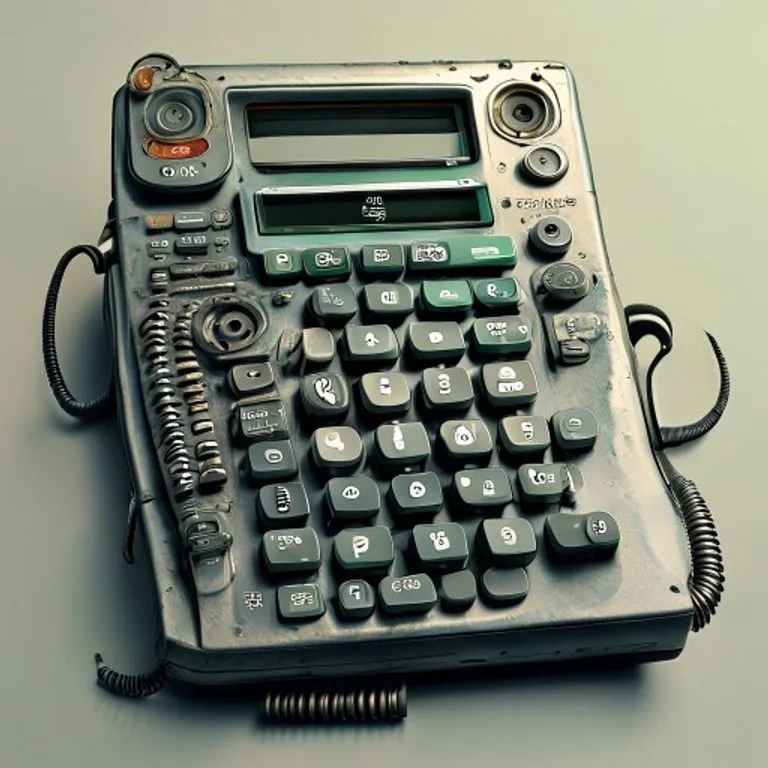
Mechanical Calculator
Brief description
A mechanical device used to perform the basic operations of arithmetic automatically. It replaces mental calculation or manual tools like the abacus with a system of interlocking gears and levers that track numerical values.
Use / Function
- Primary use: Performing addition, subtraction, multiplication, and division with high accuracy.
- Secondary uses: Accounting, navigation (logarithmic calculations), and scientific data processing.
- Scale: Desktop devices for businesses, engineers, and scientists.
Operating principle
Mechanical calculators rely on the “stepped drum” or “pinwheel” mechanisms to represent and manipulate numbers:
- Input: Numbers are set using sliders, keys, or wheels.
- Addition: Turning a crank rotates gears. A “carry” mechanism ensures that when a gear completes a full rotation (representing 0-9), it advances the next gear (the tens place) by one tooth.
- Subtraction: Performed by reversing the rotation or using complementary addition.
- Multiplication/Division: Accomplished through repeated addition or subtraction combined with shifting the carriage (changing the decimal place).
How to create it
A mechanical calculator is one of the most complex mechanical devices to build, requiring extreme precision.
- Digit Wheels: A series of cylinders or disks marked 0-9.
- Carry Mechanism: The most difficult part; a “tens-carry” lever or cam that triggers the next digit wheel at exactly the right moment without jamming the system.
- Accumulator: A register that displays the result of the calculations.
- Reset Mechanism: A way to quickly return all digit wheels to zero.
- Casing: A sturdy box, often Wood or metal, to protect the delicate internal works.
Materials needed
- Gears and Mechanisms: Brass is preferred for its ease of machining and low friction. Steel is used for high-wear parts like springs and pawls.
- Axles: Polished Steel rods.
- Frame: Iron or Brass plates to hold the axles in perfect alignment.
- Lubrication: Fine Vegetable Oil or animal fats to ensure smooth operation.
Variants and improvements
- Pascaline: One of the earliest calculators (17th century), primarily for addition and subtraction.
- Arithmometer: The first commercially successful mechanical calculator, capable of all four arithmetic operations.
- Comptometer: A key-driven calculator where the act of pressing the keys provides the power for the calculation.
- Difference Engine: A massive, specialized mechanical calculator designed to tabulate polynomial functions (early mechanical computer).
Limits and risks
- Precision: A tiny error in the shape of a gear tooth can cause the entire machine to jam or provide incorrect results.
- Complexity: Extremely difficult to repair if an internal part breaks.
- Speed: Much slower than electronic calculators; complex multiplications can take significant physical effort.
- Size: Capable machines are often heavy and bulky.