Generated with AI3 min read
Matches
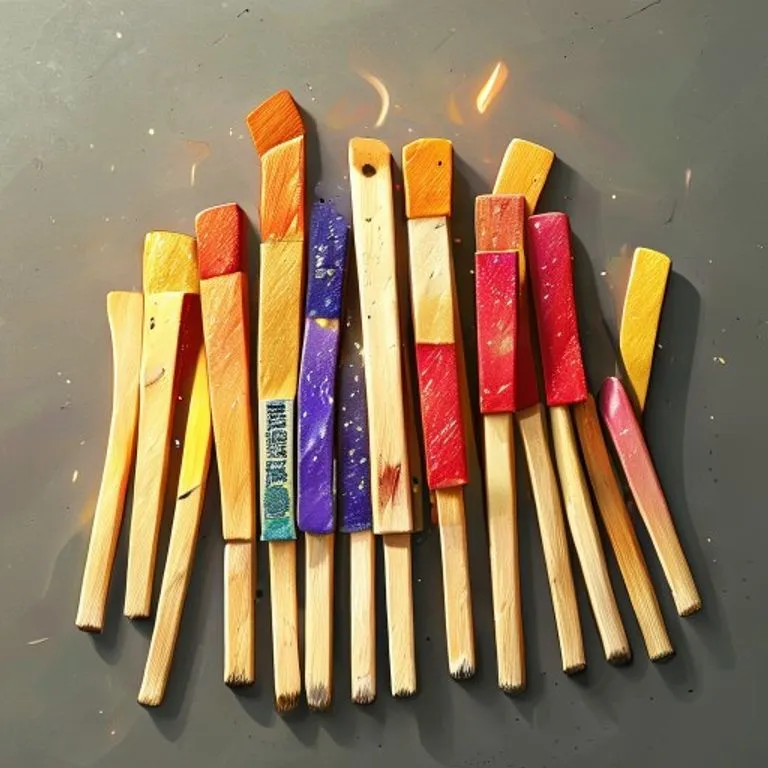
Brief description
Matches are small wooden sticks or strips of cardboard tipped with a chemical substance that ignites when rubbed against a rough or specially prepared surface. They provide a portable, reliable, and instantaneous source of fire.
Use / Function
- Fire Starting: Lighting stoves, lamps, candles, and campfires.
- Portability: Compact and easy to carry for individual use.
- Reliability: Functions in windy conditions (with specific variants) and provides immediate flame.
Operating principle
Matches function through friction-induced chemical ignition:
- Friction: Striking the match against a rough surface generates localized heat.
- Ignition: This heat triggers a reaction in the match head chemicals. In early friction matches, this involved unstable compounds like white phosphorus or antimony trisulfide.
- Combustion: The initial spark ignites the main fuel in the head (usually Sulfur), which then catches the Wood stick on fire.
- Oxidation: An oxidizing agent (like Potassium Nitrate or potassium chlorate) provides oxygen to sustain the rapid reaction.
How to create it
Friction Match (Lucifer type)
- Splint Preparation: Cut small, uniform slivers of straight-grained Wood (like pine or aspen).
- Dipping: Dip the ends in melted paraffin wax (optional, helps flame transfer) and then into a chemical paste.
- Paste Composition: A mixture of an oxidizer (Potassium Nitrate), a fuel (Sulfur), an abrasive (crushed Glass), and a binder (Glue).
- Drying: Allow the heads to dry thoroughly in a controlled environment.
Note: Modern safety matches require red phosphorus on the striking surface, which is safer as the match cannot ignite by accidental friction against any surface.
Materials needed
- Fuel: Wood splints, Sulfur.
- Oxidizer: Potassium Nitrate (or potassium chlorate).
- Abrasive: Crushed Glass or fine Sand.
- Binder: Glue (animal glue or starch).
- Tools: Sharp Knife for splints, mixing Containers.
Variants and improvements
- Friction Matches: Can be struck on any rough surface; prone to accidental ignition.
- Safety Matches: Can only be struck on a specific surface containing red phosphorus.
- Storm Matches: Feature a larger head and specialized coating to stay lit in high winds and rain.
- Book Matches: Made of cardboard strips bound together.
Limits and risks
- Moisture: Damp matches will not ignite. They must be kept in a waterproof container.
- Accidental Ignition: Non-safety matches can ignite in pockets or if dropped.
- Toxicity: Early matches used white phosphorus, which was highly toxic to workers (“phossy jaw”).
- Fragility: The wooden splint can snap if struck too hard.