NaturalGenerated with AI2 min read
Sulfur
Made of
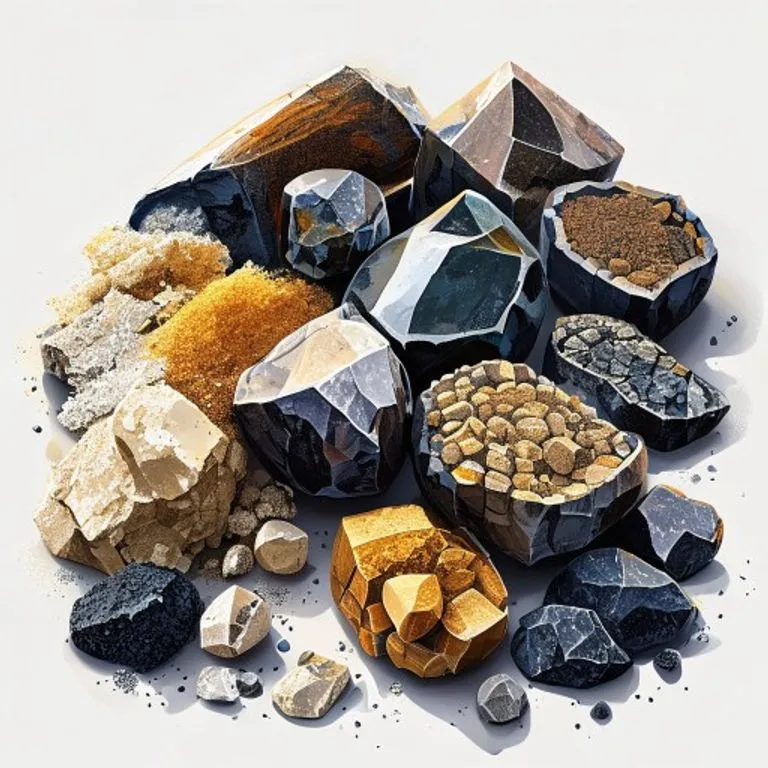
Sulfur (brimstone) is a bright yellow crystalline solid at room temperature. It is essential for life and industry, particularly for making sulfuric acid and gunpowder.
Description of what it is like
- Appearance: Bright yellow powder or crystals.
- Smell: Odorless in pure form, but burning it produces sulfur dioxide (smell of burnt matches). Compounds like hydrogen sulfide smell like rotten eggs.
- Combustion: Burns with a blue flame.
Origin and where to find it
- Environments: Volcanic regions (fumaroles), salt domes, and hot springs.
- Signs: Yellow deposits around vents or in rocks.
- Natural: Occurs as native element.
Minimum processing required
- Collection: Scraping from deposits.
- Purification: Melting (Frasch process or simple heating) to separate from rock.
Tools needed to work on it
- Shovel/Scraper: For collection.
- Pot/Retort: For melting/purifying (melts at ~115°C).
Common forms of use
- Powder: Flowers of sulfur for agriculture/medicine.
- Solid blocks: Cast sulfur.
- Molten: For casting or bonding (sulfur concrete).
Possible substitutes
- Pyrite: Source of sulfur/sulfuric acid but requires roasting.
Limitations and common failures
- Flammability: Catches fire easily.
- Brittleness: Pure sulfur is fragile.
Risks and safety
- SO2 Gas: Burning produces toxic sulfur dioxide gas.
- Acid: Mixing with water/humidity can form weak acids.
Related materials
- Gunpowder: Key ingredient.
- Sulfuric Acid: Made from sulfur.
- Rubber: Vulcanized with sulfur.
Properties
- Yellow solid
- Flammable
- Brittle
- Distinctive smell (when burned)
Used for
- Gunpowder
- Sulfuric acid
- Medicine (sulfa drugs)
- Rubber vulcanization
- Fungicide
Manufacturing / Process
Mined from volcanic deposits or extracted from sour gas.