NaturalGenerated with AI2 min read
Potassium Nitrate
KNO3
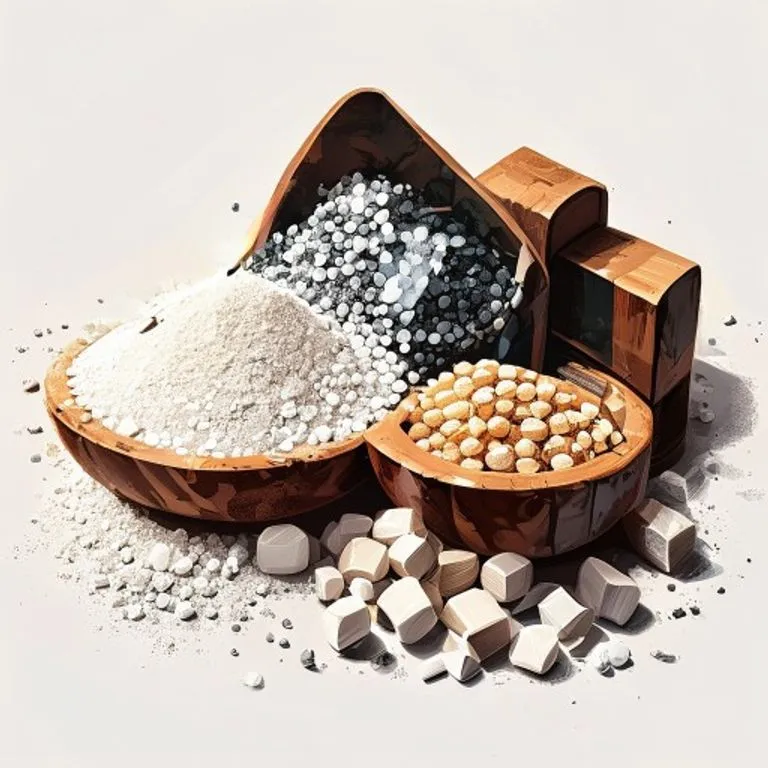
Potassium nitrate, also called saltpeter, is a white crystalline salt used as an oxidizer and fertilizer. It stores oxygen within its structure, which makes it valuable for rapid combustion mixtures like black powder.
Description of what it is like
It appears as white to slightly gray crystals or granular powder. It feels gritty, dissolves easily in water, and stays dry only in low humidity.
Origin and where to find it
- Environments: Nitrate-rich soils, cave deposits, arid caliche beds, or manure/compost piles that have been leached and matured.
- Signs: White crusts on soil or walls, soluble salts that recrystallize after drying.
- It is a natural mineral but is commonly refined.
Minimum processing required
- Leaching: Soak nitrate-bearing soil or mineral in water to dissolve salts.
- Filtration: Remove solids and charcoal/organic debris from the solution.
- Evaporation and crystallization: Boil or sun-evaporate to form crystals.
- Drying: Dry crystals thoroughly to prevent clumping and loss of performance.
- Poor processing leads to impurities that reduce burn strength in propellants.
Tools needed to work on it
- Leaching vats or pots
- Filters (cloth, sand, or charcoal bed)
- Evaporation pans and heat source
- Dry, sealed containers for storage
Common forms of use
- Crystals: Fertilizer or for transport and storage.
- Ground powder: Oxidizer for black powder and pyrotechnics.
- Solution: For impregnation of fuels or processing steps.
Possible substitutes
- Sodium nitrate (Chile saltpeter): Similar oxidizer but more hygroscopic.
- Ammonium nitrate: Effective Synthetic Fertilizer and oxidizer but more unstable and moisture prone.
- Composted manure/urine salts: Low-grade fertilizer substitute.
Limitations and common failures
- Moisture absorption: Clumps and loses effectiveness.
- Impurity contamination: Salts and organics weaken combustion consistency.
- Overheating during drying: Can decompose or contaminate with fuel dust.
Risks and safety
- Oxidizer hazard: Intensifies fire and makes fuels burn faster.
- Dust irritation: Fine crystals can irritate eyes and lungs.
- Storage risk: Keep away from fuels, sulfur, or sparks.
Related materials
Properties
- Crystalline
- Water soluble
- Strong oxidizer
- Hygroscopic
- Stable when dry
Used for
- Fertilizer
- Gunpowder
- Pyrotechnics
- Food curing
Manufacturing / Process
Extracted from nitrate-rich soils or mineral deposits, leached with water, filtered, and crystallized by evaporation; can also be produced from manure beds and purified by recrystallization.