Generated with AI3 min read
Hydraulic Accumulator
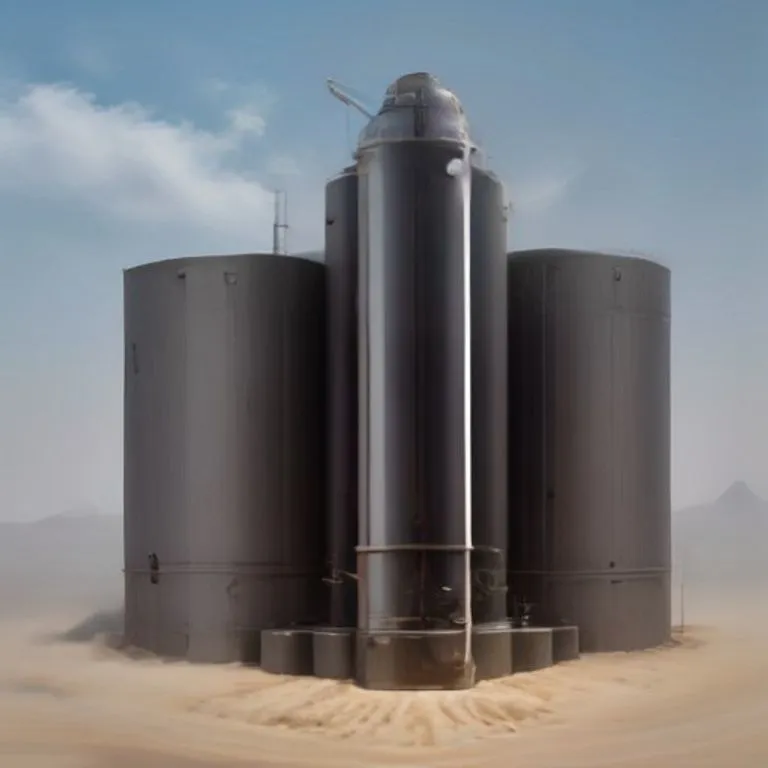
Brief description
A hydraulic accumulator is an energy storage device that stores liquid under pressure to supply fluid power when demand exceeds pump capacity or when the primary pump is inactive. It provides a reservoir of pressurized fluid for machinery like hydraulic presses, cranes, and lifts.
Use / Function
- Primary Use: Storing energy in pressurized hydraulic systems and smoothing out pressure surges or pulsations.
- Secondary Uses: Providing emergency power during pump failure, holding continuous pressure on hydraulic clamps, and absorbing shock loads.
- Scale: Industrial, central power generation workshops, and heavy engineering facilities.
Operating principle
Fluid (usually water or oil) is pumped into a cylinder, lifting a heavy weight or compressing a gas/spring.
- Charge phase: A Pump forces fluid into the cylinder, forcing a heavy-duty piston or ram upward against gravity (weight-loaded accumulator) or compressing nitrogen gas/a spring.
- Storage phase: The fluid remains under high pressure controlled by a Valve.
- Discharge phase: When a connected machine (such as a Hydraulic Press) requires immediate high-volume flow, the stored pressurized fluid is discharged rapidly into the system.
How to create it
Minimum functional version (Weight-loaded accumulator)
- Cylinder and Ram: Construct a heavy vertical cylinder made of Cast Iron or Steel with a smooth bore. Fit a tight-fitting vertical ram (piston) with pressure-tight seals at the top.
- Ballast Container: Attach a large container or box to the top of the ram and fill it with dense ballast material (such as stone, iron ballast, or scrap iron).
- Inlet/Outlet Manifold: Connect high-pressure piping with non-return valves to the base of the cylinder, linking it to both the supply pump and the driven machinery.
- Safety Valve: Install a high-pressure safety relief valve at the maximum stroke height to prevent over-extension of the ram.
Materials needed
- Essential:
- Cast Iron or Steel: For the thick-walled cylinder, ram, and high-pressure manifold.
- Water: As the primary hydraulic fluid (often mixed with soluble oil to prevent corrosion).
- Ballast: Heavy stone, gravel, or iron scrap to load the ram.
- Seals: Leather or rubber packing rings to seal the ram under high pressure.
- Tools: Lathe (for turning and honing the cylinder bore and ram), Wrench, Boring Machine.
Variants and improvements
- Weight-Loaded Accumulator: Uses gravity and heavy ballast; provides completely constant pressure regardless of fluid volume stored.
- Spring-Loaded Accumulator: Uses a heavy coil spring to exert force on the piston; lightweight but pressure decreases as fluid discharges.
- Gas-Charged (Bladder/Piston) Accumulator: Uses compressed nitrogen gas separated from the fluid by a rubber bladder or free-floating piston; standard in modern hydraulic systems.
Limits and risks
- Extreme Hydraulic Pressure: High pressures pose significant risks of explosive component failure or fluid injection injuries.
- Heavy Structural Loads: Weight-loaded accumulators require sturdy foundational support due to tons of ballast weight.
- Seal Degradation: Worn or damaged seals cause continuous fluid leaks and rapid loss of stored hydraulic energy.