Generated with AI3 min read
Glider
Brief description
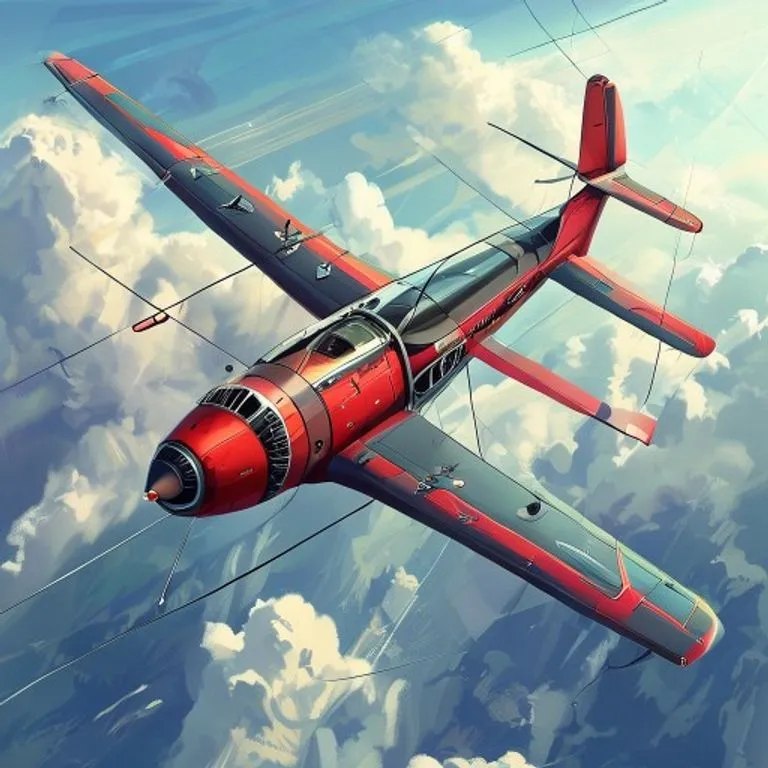
A Glider is a fixed-wing aircraft that is supported in flight by the dynamic reaction of the air against its lifting surfaces, and whose free flight does not depend on an engine. It is the purest application of aerodynamics to achieve human flight.
Use / Function
- Aviation Development: Used historically to study lift and control before adding engines.
- Transport: Can be used to carry payloads or troops (as seen in WWII) silently.
- Training: Teaching pilots the fundamentals of flight and aerodynamics.
- Meteorology: Studying air currents and atmospheric conditions.
Operating principle
A glider exploits several key concepts of flight, without using thrust from an engine:
- Lift: Generated by the flow of air over the wings (Aviation).
- Weight: The force of gravity pulling the aircraft down.
- Drag: The air resistance opposing the forward motion.
- Glide Ratio: The glider is always “falling,” but it moves forward many feet for every foot it drops.
- Soaring: To stay aloft or gain altitude, a glider must find air that is rising faster than the glider is sinking. This includes Thermals (rising warm air) and Ridge Lift (wind blowing up a slope).
How to create it
- Level: Intermediate.
- Airframe: A lightweight skeleton made of Wood (like spruce or bamboo).
- Wings: Large, curved surfaces (airfoils) designed for maximum lift.
- Covering: The skeleton is covered with Fabric (silk or cotton) and treated with “dope” (Paint or lacquer) to make it airtight and taut.
- Controls: Movable surfaces (Ailerons, Elevator, Rudder) to control roll, pitch, and yaw.
Materials needed
- Wood: For the ribs, spars, and fuselage.
- Fabric: To cover the wings and control surfaces.
- Wire: For structural bracing and control cables.
- Glue: To bond the wooden structure.
- Paint: (Dope) To seal and tighten the fabric.
- Metal: For hinges and attachment points.
Variants and improvements
- Hang Glider: A flexible wing (Rogallo wing) where the pilot’s body weight controls the aircraft.
- Sailplane: High-performance glider with very long, thin wings for exceptional glide ratios (often 40:1 or better).
- Biplane/Monoplane Gliders: Different wing configurations used in early aviation history (e.g., Lilienthal or Wright gliders).
Limits and risks
- Weather Dependence: Cannot stay aloft without rising air currents.
- Landing: Must be planned carefully, as there is no “go-around” capability without an engine.
- Structural Failure: If designed poorly, wings can snap under the stress of high-speed maneuvers or turbulence.
Related inventions
Related knowledge
- Aviation
- Meteorology (Weather Observation)