Generated with AI3 min read
Aviation (Flight Principles)
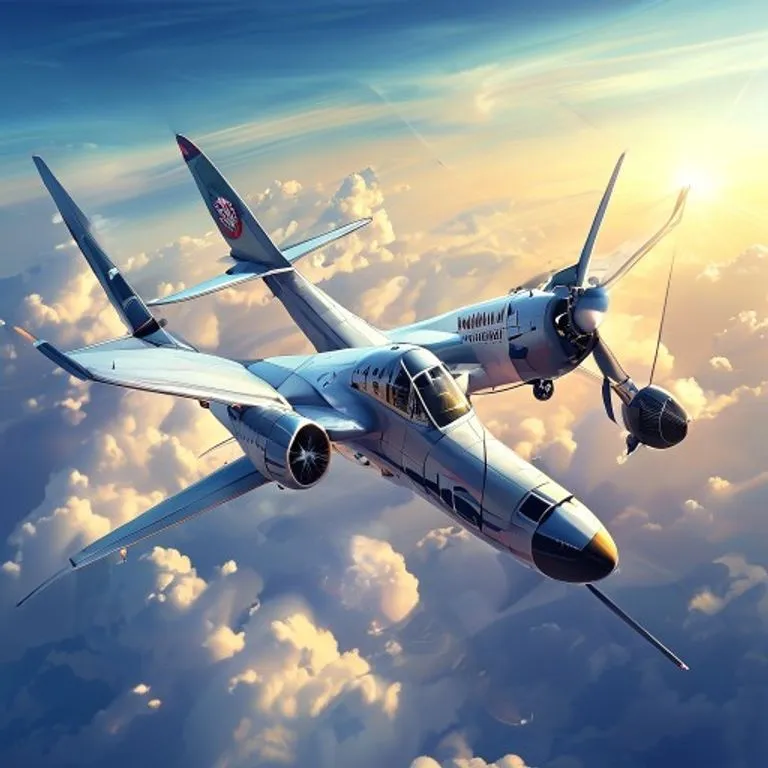
Brief description
Aviation is the design, development, production, operation, and use of aircraft. It relies on understanding the physical principles of aerodynamics to overcome gravity and achieve controlled flight.
Use / Function
- Rapid Transportation: Moving people and goods over long distances in short times.
- Surveillance and Mapping: Aerial observation for scientific or security purposes.
- Scientific Research: Atmospheric studies and weather monitoring.
- Search and Rescue: Reaching inaccessible areas quickly.
Operating principle
Flight is achieved by balancing four physical forces:
- Lift: Upward force generated by air moving over an airfoil (wing). According to Bernoulli’s principle, faster-moving air over the curved top surface has lower pressure than slower air underneath.
- Weight: Downward force of gravity acting on the aircraft.
- Thrust: Forward force produced by a Propeller or jet engine to move the aircraft through the air.
- Drag: Rearward force caused by air resistance opposing the aircraft’s motion.
How to implement
1. The Airframe
- Build a lightweight, strong structure using Wood (spruce) or Aluminum.
- Cover the frame with taut Fabric (canvas/linen) or thin metal sheets to create aerodynamic surfaces.
2. The Wings (Airfoils)
- Shape the wings with a curved top and flatter bottom to generate lift.
- Ensure the wings are strong enough to support the aircraft’s weight.
3. Control Surfaces
- Ailerons: On the wings, to control roll (banking left or right).
- Elevators: On the tail, to control pitch (climbing or descending).
- Rudder: On the tail, to control yaw (turning left or right).
4. Power Plant
- Install an Internal Combustion Engine or motor.
- Attach a Propeller designed to convert rotational power into thrust.
Materials needed
- Structural Materials: Wood, Steel tubing, or Aluminum.
- Covering: Fabric, doped with lacquer for tautness and waterproofing, or sheet metal.
- Fasteners: Bolts, rivets, and high-strength glue.
- Fuel: Biofuel or gasoline.
Variants and improvements
- Glider: Unpowered aircraft that relies on rising air currents and initial height.
- Biplane: Two sets of wings for extra lift at low speeds (common in early aviation).
- Monoplane: Single set of wings, more efficient at higher speeds.
- Jet Aircraft: Uses jet turbines for massive thrust and high-altitude flight.
Limits and risks
- Stall: If the angle of attack is too steep or speed too low, lift is lost, and the aircraft falls.
- Weather: Wind, turbulence, and icing can be extremely dangerous.
- Mechanical Failure: Engine or structural failure in flight is often catastrophic.
- Complexity: Requires high precision in construction and significant pilot training.