Generated with AI3 min read
Crystal Radio
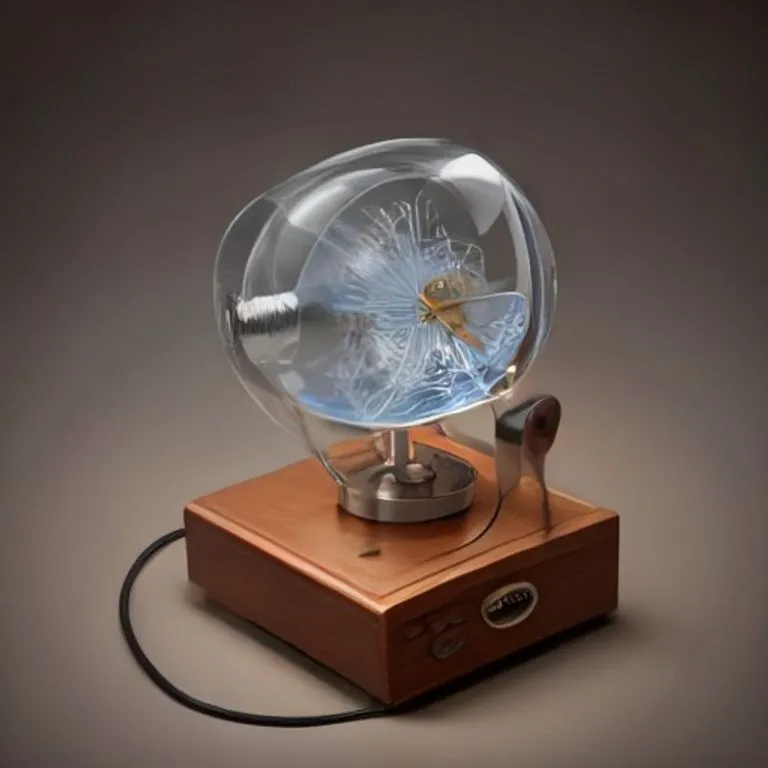
Brief description
A Crystal Radio (or crystal set) is a passive, battery-free radio receiver that extracts audio signals directly from ambient electromagnetic radio waves. It uses the electromagnetic energy intercepted by a long antenna to power its headphones, making it the most fundamental, power-independent long-distance communication tool in human history.
Use / Function
- Emergency Communication: Receives AM radio broadcasts and news transmissions without any external electrical power source or batteries.
- Resourceful Signal Reception: Functions indefinitely in post-disaster scenarios or remote environments.
- Scale: Personal/domestic signal reception.
Operating principle
A crystal radio operates through resonance and signal rectification:
- Antenna Capture: A long outdoor wire antenna intercepts electromagnetic radio waves, inducing a tiny alternating electric current (AC).
- Resonant Circuit: An inductor (coiled Wire) and tuning capacitor form a resonant circuit that selects one specific carrier frequency while rejecting others.
- Semiconductor Rectification: A natural semiconductor crystal—such as Pyrite (fool’s gold) or galena (lead sulfide)—touched by a fine wire (“cat’s whisker”) acts as a point-contact diode. It rectifies the high-frequency AC carrier wave, converting it into a varying direct current (DC) that matches the original audio signal.
- Acoustic Output: High-impedance magnetic earpieces convert the audio-frequency current variations directly into sound waves through membrane vibration.
How to create it
- Construct the Tuning Coil: Wrap 80 to 100 turns of insulated Copper wire tightly around a non-conductive cylinder, such as a Wood dowel or cardboard tube. Scrape a narrow strip of insulation along the length of the coil to allow a sliding metal contact to tune the frequency.
- Prepare the Crystal Detector: Mount a mineral crystal of Pyrite or galena in a conductive holder. Attach a flexible safety pin or thin copper wire (“cat’s whisker”) mounted on a spring mechanism so its delicate tip touches the crystal surface lightly until a sensitive receiving spot is found.
- Erect Antenna and Grounding: String a high, insulated long-wire antenna (15 to 30 meters long) outdoors. Connect a reliable ground wire to a metal pipe or copper rod driven deep into moist earth.
- Assemble the Receiver Circuit: Connect the antenna lead to one end of the coil and the ground wire to the other. Wire the crystal detector and a pair of high-impedance headphones in series across the tuned coil.
- Tune the Station: Adjust the coil slider and fine-tune the cat’s whisker pressure on the crystal until audio broadcasts or Morse code signals become audible in the earpiece.
Materials needed
- Conductor & Coil: Insulated Copper magnet Wire.
- Detector Mineral: Pyrite, galena, or a manufactured germanium diode (1N34A).
- Structure & Insulation: Dry Wood or Glass supports.
- Transducer: High-impedance magnetic headphones or crystal earpiece.
- Tools: Wire strippers, soldering iron or mechanical binding clips.
Variants and improvements
- Foxhole Radio: A wartime field variant using an oxidized safety pin resting on a blue razor blade as a crude semiconductor detector.
- Variable Capacitor Tuning: Replaces the coil slider with a variable air capacitor for sharper frequency selectivity.
- Amplified Crystal Set: Connects the detector output to a Vacuum Tube or Transistor amplifier to drive loudspeakers.
Limits and risks
- No Signal Amplification: Sound volume is strictly limited by the energy captured by the antenna; requires quiet surroundings and sensitive earphone transducers.
- Requires High Antenna: Performance depends heavily on a long, elevated antenna free from surrounding structural interference.
- Selectivity Limits: Nearby powerful transmitters may bleed through or overlap weaker signals.