Generated with AI2 min read
Chariot
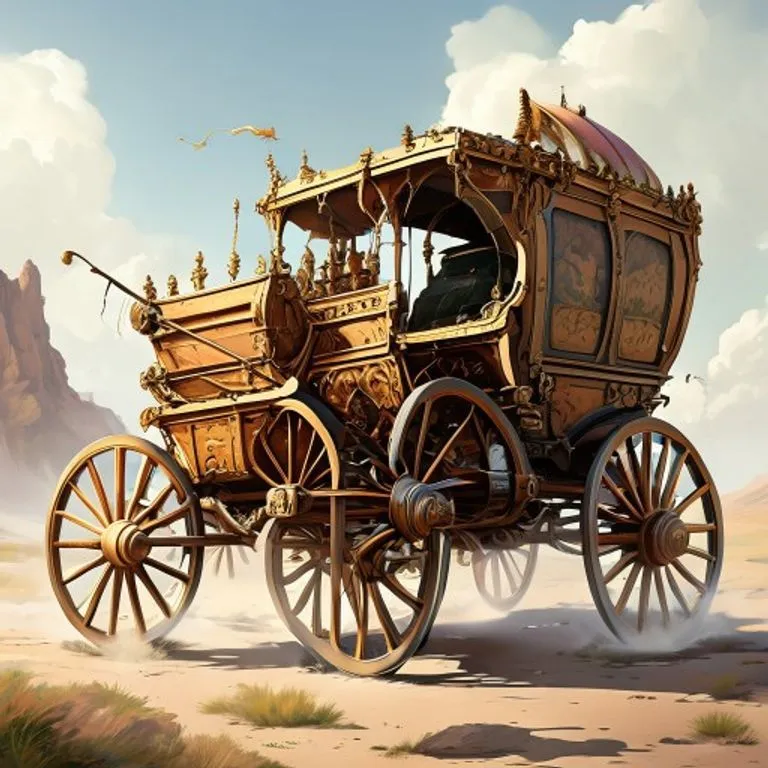
Brief description
A fast, lightweight, two-wheeled vehicle drawn by horses. Historically used for warfare, hunting, and racing. It represents the pinnacle of ancient mobile engineering, combining speed and maneuverability.
Use / Function
- Warfare: Used as a mobile archery platform or for shock tactics.
- Transportation: Rapid transport for messengers or nobility.
- Racing: A popular sport in ancient civilizations.
Operating principle
The chariot relies on a lightweight design and the power of horses.
- Speed: By minimizing weight and using spoked wheels, the horses can pull the vehicle at high speeds.
- Stability: A wide axle track provides stability during sharp turns.
How to create it
- Platform: Construct a light wooden floor with a low semi-circular guard at the front.
- Axle: Mount a strong axle at the very rear of the platform to maximize stability and maneuverability (though this increases the weight on the horses).
- Wheels: Attach two spoked wheels. Solid wheels are too heavy for a war chariot.
- Draft Pole: Attach a long pole to the center of the axle/frame, extending forward to the horses’ yoke.
- Yoke: Connect the pole to the horses using a yoke and leather straps.
Materials needed
- Wood: Light but strong wood (ash, elm) for the frame and wheels.
- Leather: For suspension (floor weaving) and harnessing.
- Metal: Bronze or iron for axle pins and wheel tires.
Variants and improvements
- Scythe Chariot: Fitted with blades on the wheels to cut down infantry.
- Quadriga: A chariot drawn by four horses.
- Cart: A heavier, slower version for transport (see Cart).
Limits and risks
- Terrain: Requires flat, open ground. Useless in forests or rocky terrain.
- Skill: Requires a highly skilled driver (charioteer) and trained horses.
- Fragility: Light construction makes it vulnerable to breaking upon impact.