Generated with AI3 min read
Sled
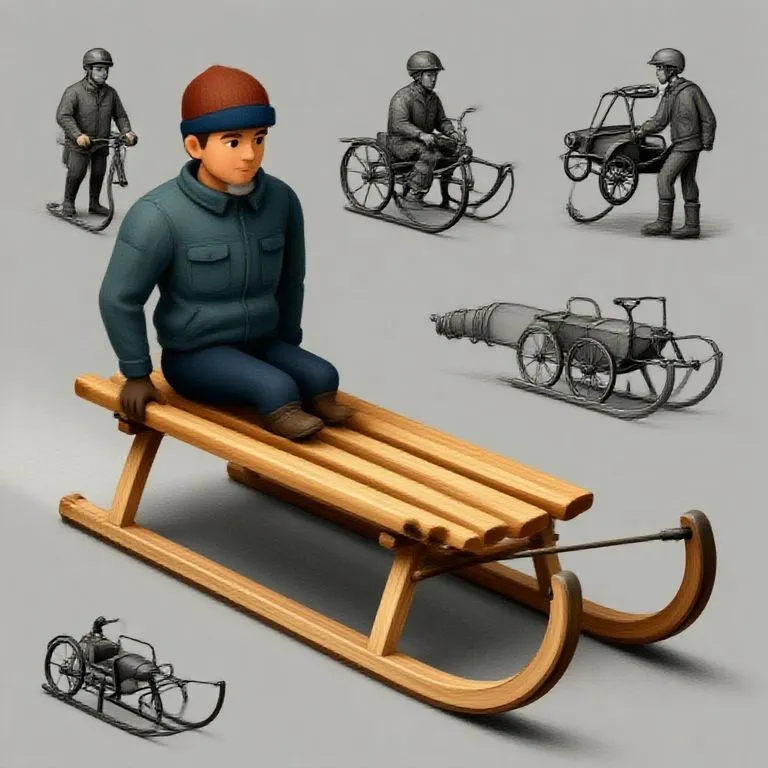
Made of
Brief description
A sled is a land vehicle that slides across a surface, usually usually having runners or a flat bottom. It is designed to transport people or goods across low-friction surfaces like snow, ice, mud, or wet grass, although early sleds were also used on sand (Ancient Egypt).
Use / Function
- Transport: Moving heavy loads or people over terrain where wheels would sink or get stuck (deep snow, soft mud).
- Logistics: Essential for arctic or winter survival/travel.
- Recreation: Sliding down hills for sport.
Operating principle
The sled works by distributing the load’s weight over a surface area that slides rather than rolls.
- Runners: Narrow strips (skis) reduce the contact area, minimizing friction on hard ice or packed snow.
- Flat Bottom (Toboggan): Maximizes surface area to “float” on top of deep, soft snow, preventing the vehicle from sinking.
- Lashing: Traditional sleds use flexible lashings (rope, leather) instead of rigid nails. This allows the sled to flex and twist over uneven terrain without breaking.
How to create it
Basic Runner Sled (Komartik style)
- Runners: Select two long, sturdy poles or planks. If using wood, they can be steam-bent at the front to glide over obstacles.
- Shoeing (Optional): Attach bone, antler, or a layer of frozen mud/ice to the bottom of the runners to reduce friction and protect the wood.
- Crossbars: Lay wooden crosspieces across the runners.
- Lashing: Lash the crossbars to the runners using rope or raw hide. Do not use rigid joinery (nails/screws) if traversing rough terrain; flexibility is key.
- Decking: Add a platform of slats or hide on top of the crossbars to hold the load.
Materials needed
- Wood: For runners and crossbars (Ash, Birch, or Spruce are good choices).
- Bone/Antler: For runner shoes (harder and slicker than wood).
- Lashing: Rope, rawhide strips, or sinew.
- Lubricant: Mud mixed with water (frozen), fat, or oil for the runners.
Variants and improvements
- Toboggan: A flat-bottomed sled made of curled planks, used for deep soft snow.
- Travois: A simple A-frame drag used by indigenous peoples, dragged by a horse or dog.
- Sledge: Heavy-duty sled for hauling stones or timber.
- Pulka: A low-slung small sled used for sport or transport, pulled by a skier or dog.
Limits and risks
- Friction: Requires a low-friction surface. Useless on dry pavement or rocky ground (high wear).
- Control: Harder to steer and brake than wheeled vehicles.
- Terrain: Can tip over on steep side-slopes.