NaturalGenerated with AI2 min read
Spices
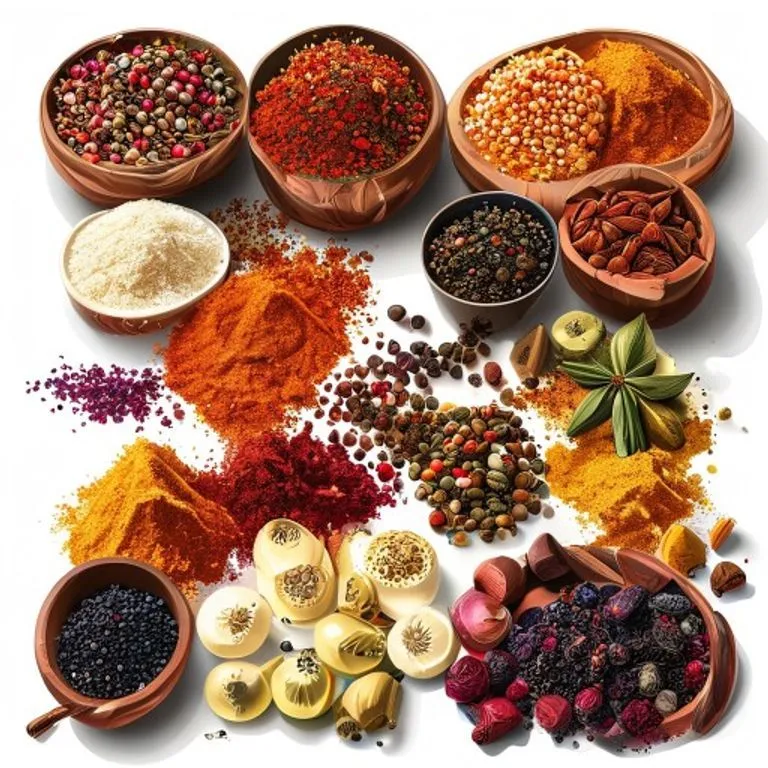
Spices are dried aromatic plant parts used to flavor, preserve, and sometimes medicate food. They are valued for concentrated oils and resins that remain potent after drying.
Description of what it is like
Usually small, dry pieces such as seeds, bark curls, roots, or pods. Whole spices are hard and fragrant; ground spices are fine powders that release aroma quickly.
Origin and where to find it
- Environments: Gardens, forest edges, tropical and subtropical farms, spice trees and shrubs.
- Signs: Strong scent when crushed, resinous bark, aromatic seeds, or pungent roots.
- It is a natural material harvested from specific plants.
Minimum processing required
- Cleaning: Remove dirt, husks, and damaged pieces.
- Drying: Air-dry in shade or gentle heat to prevent mold.
- Sorting: Separate grades by size and aroma.
- Grinding: Pulverize with Mortar or Hand Mill when needed.
- Storage: Seal in dry Containers away from light.
Tools needed to work on it
- Drying racks or woven mats.
- Mortar or Hand Mill for grinding.
- Containers for storage.
- Low, steady heat from Fire when sun drying is unreliable.
Common forms of use
- Whole spices simmered in stews.
- Ground spice powders for seasoning.
- Infused oils or vinegars for preservation.
- Blended spice mixes for cooking or trade.
- Enhancing Umami in broths and stews.
Possible substitutes
- Fresh herbs: Good aroma but shorter shelf life.
- Salt: Enhances flavor but lacks aroma.
- Smoke or charred flavorings when spices are unavailable.
Limitations and common failures
- Aroma loss: Volatile oils fade with heat, light, and air exposure.
- Moisture damage: Damp storage leads to mold or caking.
- Adulteration: Mixed fillers reduce potency.
Risks and safety
- Irritation: Fine powders can sting eyes and lungs.
- Allergies: Some spices trigger reactions.
- Contamination: Dirty grinders or damp storage can make spices unsafe.
Related materials
Properties
- Aromatic
- Potent flavor
- Low moisture when dried
- Volatile oils
- Light and heat sensitive
Used for
- Seasoning
- Umami enhancement
- Food preservation
- Medicinal blends
- Dyeing and fragrance
- Trade and ritual
Manufacturing / Process
Harvested from bark, seeds, roots, or fruits and then cleaned, dried, and ground or blended for storage and use.