NaturalGenerated with AI2 min read
Honey
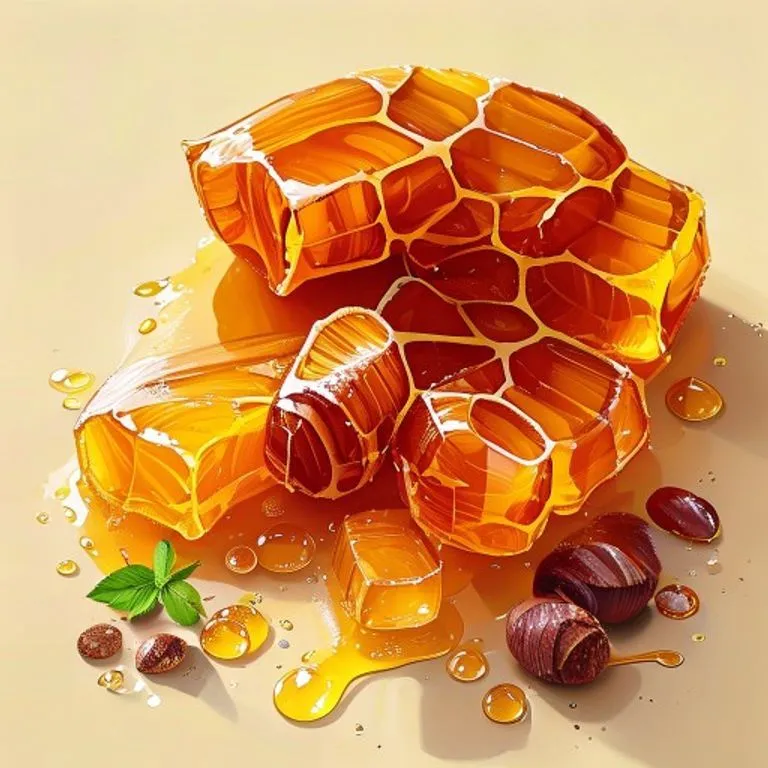
Honey is a concentrated sugar syrup made by honey bees from flower nectar. It is shelf-stable when kept dry and sealed, making it valuable for food, trade, and preservation.
Description of what it is like
A thick, sticky liquid that ranges from pale gold to dark amber depending on flowers and season. It smells floral and tastes sweet with distinctive notes.
Origin and where to find it
- Environments: Flower-rich areas, forest edges, orchards, and meadows.
- Origin: Nectar collected by bees and enzymatically converted in the hive.
- Natural: Found in honeycombs inside wild colonies or managed hives.
Minimum processing required
- Harvesting: Remove capped honeycomb carefully to avoid crushing brood.
- Draining: Let honey drip from combs or press gently.
- Straining: Filter through cloth to remove wax and debris.
- Storage: Seal in clean, dry Containers.
Tools needed to work on it
- Knife: To uncap combs.
- Cloth: For filtering.
- Containers: For storage and transport.
Common forms of use
- Raw honey as sweetener and energy source.
- Fermented drinks made with Yeast.
- Medicinal syrups mixed with herbs.
- Preserving fruit and nuts in honey.
Possible substitutes
- Sugar: Similar sweetness but lacks aroma and enzymes.
- Fruit reductions: Sweet but spoil faster.
Limitations and common failures
- Moisture: Absorbs water and can ferment if stored humid.
- Crystallization: Natural and harmless, but changes texture.
- Contamination: Dirty tools introduce microbes and off-flavors.
Risks and safety
- Infant risk: Do not feed honey to infants under one year.
- Stings: Harvesting requires dealing with bees.
Related materials
Properties
- Viscous
- Hygroscopic
- Antibacterial
- Energy-dense
Used for
- Food
- Sweetener
- Preservation
- Fermentation
- Medicinal syrups
Manufacturing / Process
Collected from combs and strained to remove wax and debris.