SyntheticGenerated with AI3 min read
Asphalt Concrete
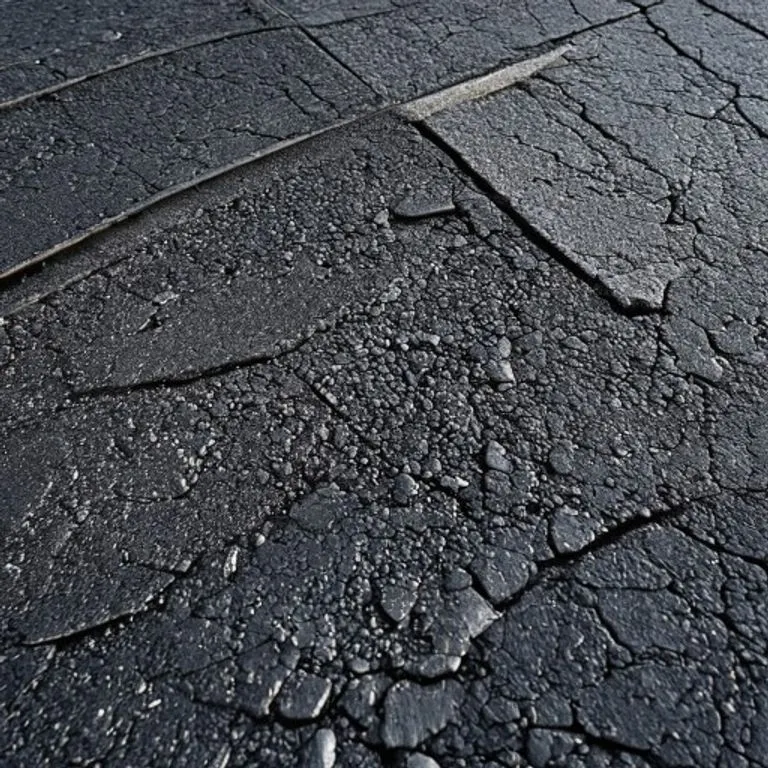
A composite material commonly used to surface roads, parking lots, airports, and the core of embankment dams. It consists of mineral aggregate bound together with asphalt, laid in layers, and compacted.
Description
Asphalt concrete (often called simply asphalt, blacktop, or pavement) is a dark, heavy material that forms a smooth, durable surface. It relies on the viscoelastic properties of bitumen to bind stones and sand together. Unlike cement concrete, it is somewhat flexible, allowing it to adapt to minor ground movements and thermal expansion without cracking as easily.
Origin and availability
- Type: Synthetic / Composite.
- Components: Requires Bitumen (from crude oil or natural deposits) and Aggregates (crushed stone, sand).
- Appearance: Black or dark grey, granular texture when close up, smooth from a distance.
Minimum processing required
- Drying: Aggregates must be dried to remove moisture.
- Heating: Both the bitumen and the aggregates are heated (usually to around 150-170°C or 300-350°F).
- Mixing: The hot components are mixed until the aggregate is fully coated.
- Laying & Compacting: The hot mix is spread and then compacted with rollers or rammers before it cools.
Tools needed to work on it
- Heating: Large metal containers or furnaces to melt bitumen.
- Mixing: Concrete mixer or manual mixing tools for small patches.
- Application: Shovels, rakes.
- Compaction: Rammers, Rollers (heavy weights).
Common forms of use
- Hot Mix Asphalt (HMA): Applied hot, for high-traffic roads.
- Cold Mix: Used for patching potholes; stays soft longer.
- Porous Asphalt: Allows water to drain through it.
Possible substitutes
- Concrete: More rigid, durable, but more expensive and harder to repair.
- Macadam: Crushed stone layers without binder (dusty, less durable).
- Cobblestone: Extremely durable but rough and noisy.
- Dirt/Gravel: Cheap but requires constant maintenance.
Limitations and common failures
- Temperature: Can soften in extreme heat (rutting) and crack in extreme cold.
- Oxidation: Becomes brittle over time due to sun exposure.
- Water: If water gets under the layer, freeze-thaw cycles can cause potholes.
- Chemicals: Dissolved by solvents like gasoline.
Risks and safety
- Burns: Handling hot mix (150°C+) causes severe burns.
- Fumes: Heating bitumen releases fumes that can be irritating or toxic.
- Heavy Machinery: Road construction involves dangerous equipment.
Related materials
Properties
- Water-resistant
- Viscoelastic
- Durable
- Smooth surface
- Recyclable
Used for
- Road construction
- Airport runways
- Parking lots
- Embankment dams
Manufacturing / Process
Produced by mixing heated asphalt binder (bitumen) with aggregate (stone, sand, gravel) at high temperatures.