Generated with AI3 min read
Exotic Fruits
Related Materials
Brief description
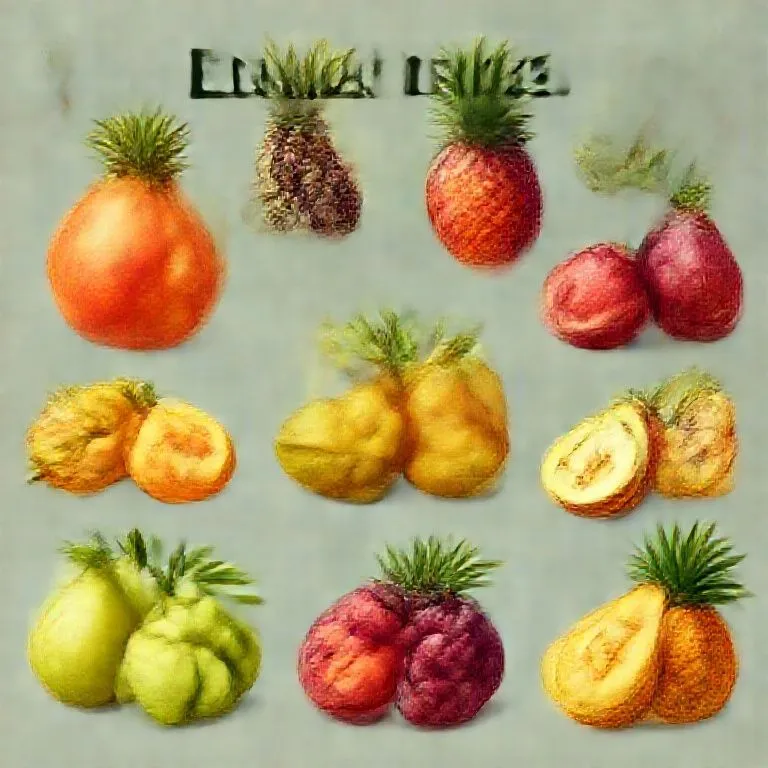
Exotic fruits are edible fruits that grow outside of temperate zones and are often associated with tropical or subtropical climates. They provide dense energy, hydration, and micronutrients, and they require careful handling because they bruise easily and ripen quickly. Banana and coconut are prime examples of exotic fruits that can be eaten fresh or processed into stable food.
Use / Function
- Nutrition: High carbohydrate energy, potassium, and vitamins.
- Hydration: Moist pulp supports fluid intake in warm climates.
- Preservation: Can be dried or milled into flour for longer storage.
- Trade and variety: Adds dietary diversity and value in exchange.
- Scale: Household to market distribution.
Operating principle
- Ripening chemistry: Starch converts into sugars, softening the pulp and increasing aroma.
- Warm climate growth: Continuous warmth and moisture allow large, fast-growing plants.
- Banana propagation: Most edible bananas are seedless and grow from suckers, not seeds.
Banana (Musa spp.)
- Edible parts: Sweet pulp; peel can be composted; leaves can wrap food or line baskets.
- Harvest timing: Cut when green and full-sized; ripen off the plant to reduce bruising.
- Storage window: Short at warm temperatures; longer if cooled and kept out of direct sun.
Coconut (Cocos nucifera)
- Useful parts: Water and flesh; copra for Vegetable Oil; husk fiber for Plant Fibers; hard shell for bowls or Charcoal.
- Harvest timing: Green for coconut water; brown and fully mature for copra and storage.
- Storage window: Long if intact and uncracked; can keep for weeks in shaded ventilation.
Peanut (Arachis hypogaea)
- Edible parts: Seeds that can be roasted or boiled; pressed into Vegetable Oil or ground into Peanut flour and paste.
- Harvest timing: Uproot plants when the leaves yellow and pods are full; cure the pods to dry.
- Storage window: Long when pods are dry and ventilated; short if damp because of mold risk.
Mangosteen (Garcinia mangostana)
- Edible parts: Soft white arils; thick rind protects the fruit and can be composted.
- Harvest timing: Pick when the rind is deep purple and yields slightly to gentle pressure.
- Storage window: Short at warm temperatures; longer if kept cool and dry without chilling.
How to create it
- Select healthy plants: Choose disease-free banana mats with strong pseudostems.
- Harvest carefully: Cut bunches with padding or pick coconuts without cracks or impact damage.
- Ripen or cure in shade: Ventilate bananas for ripening; let coconuts dry at the surface before opening.
- Process for storage: Slice and sun-dry for chips, dry and mill into flour with a Hand Mill, or dry copra and press with a Mechanical Press for Vegetable Oil.
Materials needed
- Essential: Clean Water for washing, Containers for transport, shaded airflow.
- Processing: Plant Fibers for mats or drying racks, Hand Mill for flour.
- Cooling option: Zeer Pot to slow ripening in hot climates.
- Oil extraction: Mechanical Press if producing Vegetable Oil.
Variants and improvements
- Drying: Chips or strips for long-term storage.
- Fermentation: Sweet pulp can be fermented into beverages.
- Cultivar choice: Dessert bananas for sweetness, plantains for cooking and flour.
- Coconut products: Coconut milk, oil, and dried copra.
Limits and risks
- Bruising: Soft fruit is damaged by impacts and stacking pressure.
- Rapid spoilage: High moisture accelerates rot in humid conditions.
- Pests and disease: Fungal infections spread quickly in dense plantings.
- Allergies: Rare but possible reactions to latex-like compounds.