Generated with AI3 min read
Mechanical Press
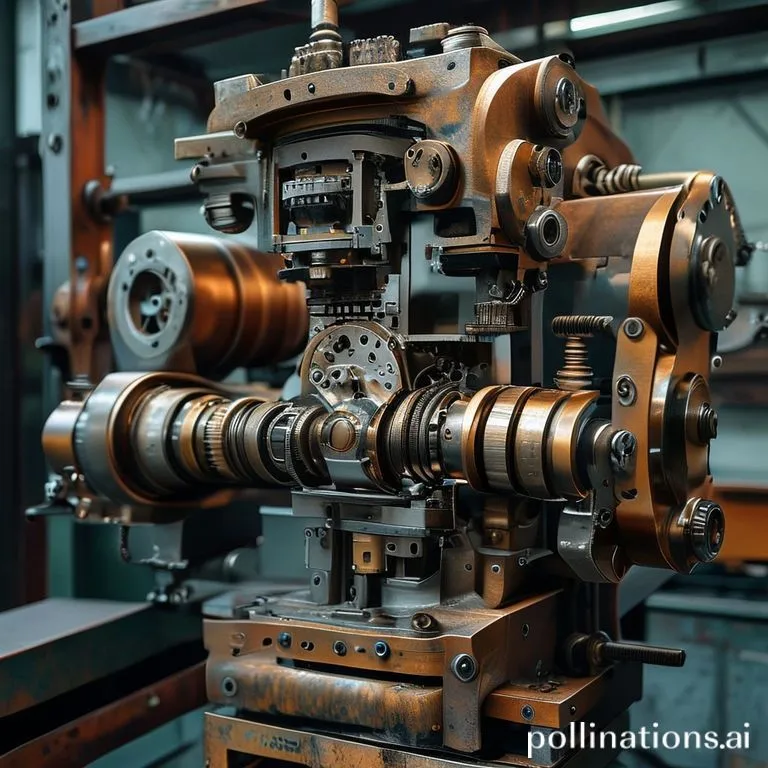
Brief description
A mechanical press is a machine tool that changes the shape of a workpiece by the application of pressure. It is fundamental to manufacturing, allowing for the precise and consistent shaping of materials, particularly metals.
Use / Function
- Forging: Shaping metal by compressive force.
- Stamping: Cutting or embossing flat sheet metal.
- Bending: Deforming material into a desired angle or shape.
- Shearing: Cutting material using a blade driven by the press.
- Scale: From small workshop fly presses to massive industrial power presses.
Operating Principle
The mechanical press transforms rotational motion (often from a motor or manual flywheel) into linear motion to drive a “ram” or “slide” against a workpiece placed on a stationary “bed.”
- Energy Storage: A flywheel stores rotational kinetic energy.
- Transmission: A mechanism (screw, crank, eccentric shaft, or toggle) converts the rotation into a powerful linear stroke.
- Impact/Pressure: The ram delivers the stored energy to the workpiece in a controlled manner.
How to create it
- Frame Construction: Build a rigid, heavy frame (C-frame or O-frame) that can withstand high reaction forces without deforming.
- Drive Mechanism:
- Screw Press: Install a large vertical screw through a threaded collar in the frame. Attach a handle or flywheel to the top.
- Crank Press: Mount a crankshaft and connecting rod to drive the ram up and down.
- Ram and Bed: Install a guided sliding block (ram) at the bottom of the mechanism and a solid table (bed) below it.
- Tooling: Attach the specific punch (to the ram) and die (to the bed) for the desired operation.
Materials needed
- Frame: Cast iron or welded steel plates for rigidity; heavy timber for primitive versions.
- Mechanism: Hardened steel for screws, cranks, and gears; bronze for bushings/bearings.
- Flywheel: Heavy iron wheel to store momentum.
- Tooling: Tool steel (hardened and tempered) to resist wear and deformation.
Variants and improvements
- Screw Press: Uses a screw to drive the ram (e.g., Gutenberg’s printing press, coining press). Slow but high force.
- Fly Press: A screw press with a weighted flywheel for impact.
- Crank/Eccentric Press: Uses a rotating shaft to drive the ram. Faster, used for punching/blanking.
- Knuckle-Joint Press: Uses a toggle mechanism for very high force at the bottom of the stroke (coining).
- Hydraulic Press: Uses fluid pressure instead of mechanical linkages (modern variant).
Limits and risks
- Crushing Hazard: Extremely dangerous to hands and fingers. Requires safety guards.
- Frame Failure: If the press is overloaded, the frame can crack or shatter.
- Energy Limit: Mechanical presses rely on stored flywheel energy; if the cut is too hard, the press may stall.