Generated with AI2 min read
Fly catcher
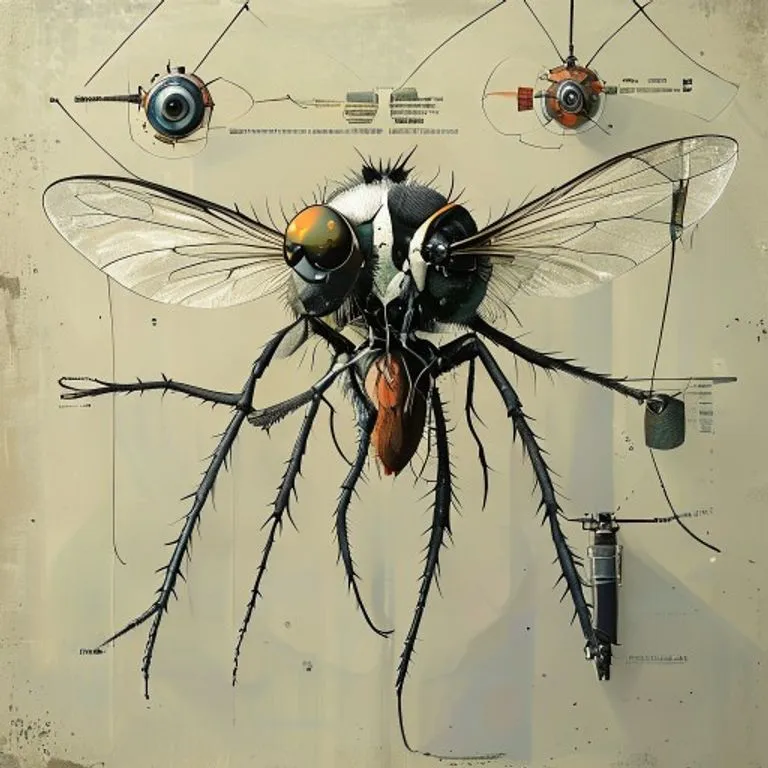
Brief description
A fly catcher is a simple trap that reduces flies by attracting them with bait and capturing them using a sticky surface or a one-way entrance.
Use / Function
- Pest control: Reduce flies around food, animals, and waste.
- Food safety: Lower contamination risk in kitchens and storage.
- Hygiene: Improve comfort and reduce disease transmission.
- Scale: Household, pantry, animal sheds.
Operating principle
Flies follow strong odors from sweet or fermenting bait. Once they land on a sticky surface or enter a narrow funnel, they cannot escape. Stickiness comes from Glue or Resin. Bait is made with Sugar, Water, and Vinegar or fruit scraps.
How to create it
- Prepare bait: Warm Water and dissolve Sugar, add a small amount of Vinegar or fruit mash.
- Make a sticky strip: Brush Glue or warmed Resin onto a strip of Paper.
- Build a bottle trap: Place bait in a Glass jar and insert a cone of Paper with a small opening.
- Hang or place: Use Plant fibers to suspend strips or set jars near fly paths.
- Maintain: Replace bait and sticky strips as they dry or fill.
Materials needed
- Essential: Paper, Glue or Resin, Sugar, Water.
- Containers/structure: Glass jar, Wood frame, Plant fibers for hanging.
- Tools: Knife, pot, brush.
- Substitutes: Honey or fruit mash for bait, clay pot instead of glass, cloth strips instead of paper.
Variants and improvements
- Flypaper ribbons: Long strips hung near windows and doors.
- Funnel jar: Narrow cone improves one-way entry.
- Covered bait cup: Small lid holes reduce dust and splashes.
- Outdoor shelter: Simple Wood roof to protect from rain.
Limits and risks
- Non-target insects: May capture beneficial insects.
- Mess: Sticky surfaces attract dust and debris.
- Odor: Fermenting bait can smell if left too long.
- Weather: Wind and rain reduce effectiveness outdoors.