Generated with AI3 min read
Torch
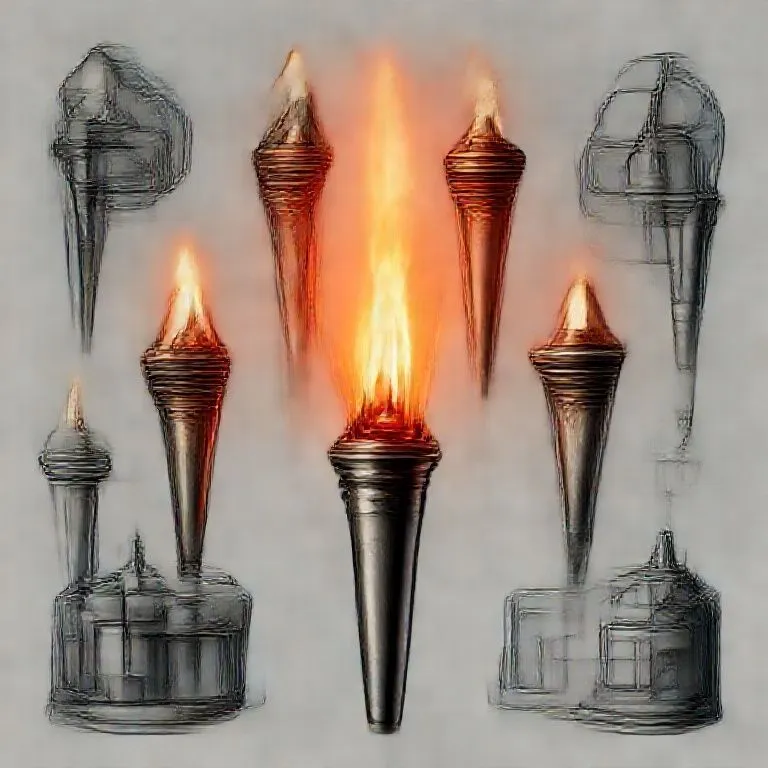
Brief description
A torch is a portable light source consisting of a stick or rod with one end wrapped in combustible material. It is one of the oldest and most effective forms of mobile lighting before the invention of the electric lamp.
Use / Function
- Portable lighting: Allows seeing in the dark while traveling or exploring.
- Signaling: Can be used to send visual signals over a distance.
- Defense: Fire can scare away wild animals.
- Ignition: Serves to transport fire from one place to another.
Operating principle
The torch works through the controlled combustion of a fuel (resin, fat, oil) soaking an absorbent material (fabric, vegetable fibers) attached to a holder (wood). The absorbent material acts as a large wick, regulating the flow of fuel to the flame and preventing it from burning too quickly, while the holder allows it to be held without burning the user.
How to create it
- Holder: Find a branch of green or hard wood, about 50-70 cm long. Green wood takes longer to burn.
- Head: Wrap the top end with cloth, old rags, or dry vegetable fibers (like birch bark or rope). Secure it well so it doesn’t fall off.
- Fuel: Generously soak the wrapped head with a flammable but slow-burning material:
- Pine resin (pitch).
- Animal fat.
- Vegetable oil.
- Natural bitumen.
- Ignition: Bring the head close to a fire source until it catches.
Rudimentary version: A pine branch with high resin content (fatwood) can burn on its own, although it will drip and be consumed faster.
Materials needed
- Essential:
- Wood (for the handle).
- Fuel (resin, fat, oil).
- Absorbent material (fabric, fibers).
- Tools: Knife (to prepare the wood), initial fire source.
Variants and improvements
- Fatwood: Splinter or branch of resinous wood that burns without the need for an added wick.
- Rushlight: Rushes soaked in fat, used for soft domestic lighting.
- Wax torch: Rolled fabric dipped in beeswax (cleaner and longer-lasting).
Limits and risks
- Fire hazard: Gives off sparks and drops of burning fuel. Do not use near very dry or flammable materials.
- Smoke: Produces smoke that can be suffocating in enclosed spaces or unventilated caves.
- Limited duration: A typical torch lasts between 20 and 60 minutes. It is necessary to carry spares or extra fuel.
- Residue: Dripping pitch or hot fat can burn the carrier; using a “guard” or protection on the handle is recommended.