Generated with AI2 min read
Simple housing
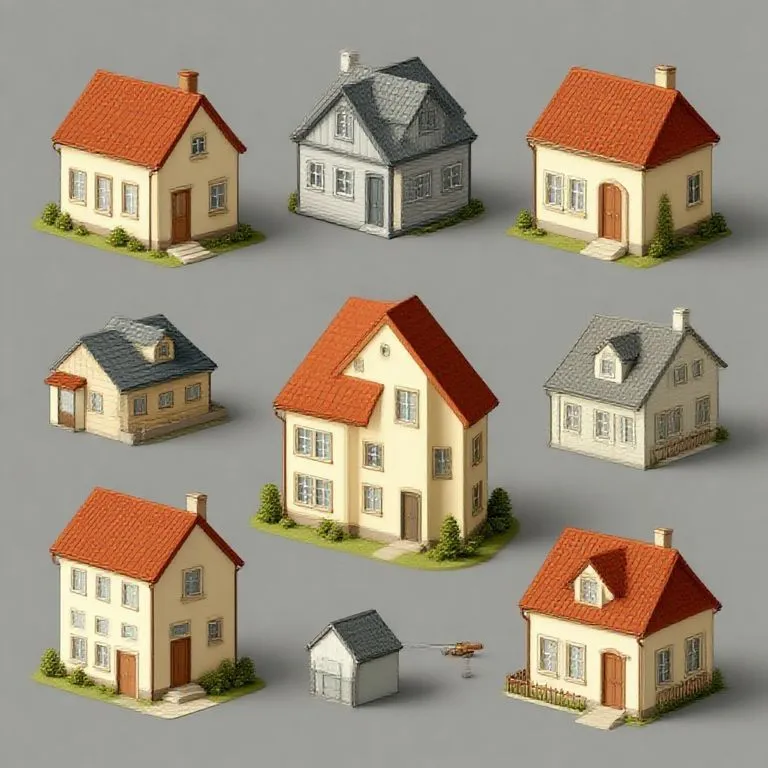
Brief description
Simple housing is a small, semi-permanent dwelling built with locally available materials. It improves on basic shelter by adding stronger walls, a stable roof, and better control of heat, moisture, and storage.
Use / Function
- Protection: Shields people and supplies from wind, rain, and sun.
- Thermal stability: Keeps interiors warmer at night and cooler during the day.
- Storage: Provides dry, enclosed space for food and tools.
- Living space: Enables cooking, sleeping, and daily activities in a safer place.
- Scale: Family or small group.
Operating principle
Simple housing works by combining a load-bearing structure with an envelope that blocks water and wind.
- Frame: Posts and beams carry the roof load.
- Walls: Packed earth, stacked Stone, or wattle-and-daub made with Clay reduce drafts.
- Roofing: A sloped roof sheds rain and directs water away from the base.
- Drainage: A dry base of Gravel and Sand limits moisture rise.
- Sealing: Lime and clay plasters close gaps and reduce pests.
How to create it
- Choose the site: Slightly elevated ground, away from flood paths and falling branches.
- Prepare the base: Level the ground, add a compacted layer of gravel and sand for drainage.
- Build the frame: Use straight Wood posts with crossbeams tied using Plant Fibers.
- Raise walls: Use stacked stone, adobe blocks (clay + sand), or wattle-and-daub panels.
- Add the roof: Sloped rafters with a covering of thatch, bark, or overlapping boards.
- Seal and finish: Apply clay or lime plaster, add a doorway, and create a smoke vent.
- Technical level: Basic to Intermediate.
Materials needed
- Essential: Wood, stone, clay, sand, gravel, plant fibers, water.
- Tools: Digging tools, cutting tools, mallets, measuring cord.
- Substitutes: Earthbags, sod, snow blocks, or bamboo depending on climate.
Variants and improvements
- Adobe house: Clay + sand blocks for dry climates.
- Stone hut: High durability where stone is abundant.
- Raised floor: Keeps out moisture and insects in wet areas.
- Improved roof: Clay tiles or shingles for longer lifespan.
Limits and risks
- Fire risk: Thatch and wood burn quickly if unmanaged.
- Moisture damage: Poor drainage leads to rot and wall collapse.
- Smoke accumulation: Without a vent, indoor fires cause harmful fumes.
- Structural failure: Weak joints or heavy rain can destabilize walls.