Generated with AI3 min read
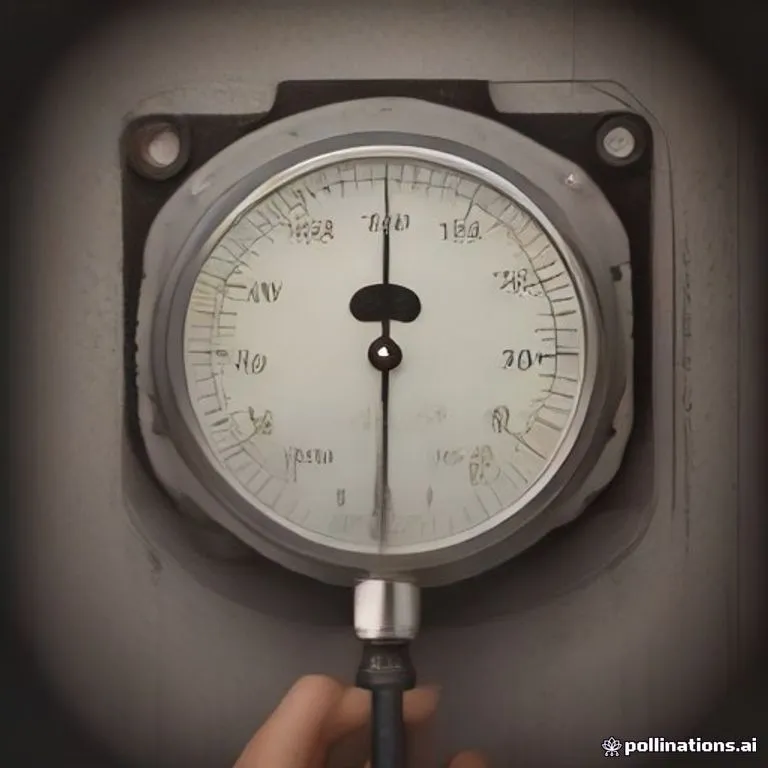
Manometer
Brief description
A manometer is an instrument used to measure the pressure of fluids (liquids or gases) by balancing a column of fluid against an applied pressure difference. Featuring a U-shaped transparent tube partially filled with liquid, it provides precise measurement of pressure relative to atmospheric pressure or between two distinct fluid lines.
Use / Function
- Differential Pressure Measurement: Measuring pressure drop across filters, orifices, or flow meters in fluid channels.
- System Calibration: Calibrating mechanical pressure gauges, regulators, and pneumatic or hydraulic controls.
- Scale: Laboratory bench-top U-tube manometers, industrial inclined differential manometers, and HVAC airflow instruments.
Operating principle
- Hydrostatic Equilibrium: A manometric liquid (such as water or high-density mercury) settles at equal heights in both legs of an open U-tube under atmospheric pressure.
- Pressure Difference Application: Connecting a pressurized gas or liquid source to one leg forces the manometric liquid down in that leg and up in the opposite leg.
- Displacement Measurement: The height difference ($\Delta h$) between the liquid levels in the two columns is directly proportional to the applied pressure difference ($\Delta P = \rho g \Delta h$).
- Direct Visual Scale: The pressure magnitude is read directly off a calibrated linear scale mounted alongside the liquid column.
How to create it
- Form U-Tube: Carefully heat a straight tube of high-grade Glass over a flame and bend it smoothly into a U-shape with uniform internal bore diameter.
- Mount Frame: Secure the glass U-tube vertically onto a rigid wooden or metal support board using rubber-padded metal clamps.
- Attach Graduated Scale: Mount a millimeter-graduated ruler or precision scale directly behind the vertical legs of the U-tube.
- Fill Manometric Fluid: Fill the U-tube halfway with a clean manometric fluid (Water for low pressures, or Mercury for higher pressure ranges).
- Install Fittings: Fit Brass connectors and flexible tubing to the top openings of the U-tube for connecting to system pressure ports.
Materials needed
- Transparent Column: Uniform glass tubing. Sourced from Glass.
- Manometric Working Liquid: Water or dense liquid metal. Sourced from Water and Mercury.
- Connections & Mounting: Metal fittings, wooden board, and brass clamps. Sourced from Brass and Wood.
Variants and improvements
- U-Tube Manometer: Standard open-end or differential U-tube configuration; simple and highly reliable reference standard.
- Well-Type Manometer: Uses a large reservoir well on one leg so only a single vertical column height needs to be read.
- Inclined Manometer: Inclines one leg at an angle to expand the scale length, greatly improving sensitivity for low-velocity airflow measurements.
Limits and risks
- Fluid Blowout: Overpressure exceeding the U-tube column height can force toxic or corrosive manometric fluid out of the tube.
- Toxicity Hazard: Using mercury requires strict ventilation and handling to prevent toxic vapor exposure or spills.
- Meniscus Reading Error: Parallax errors and surface tension capillary effects can introduce minor reading inaccuracies if bore diameter is inconsistent.