Generated with AI2 min read
Incandescent Light Bulb
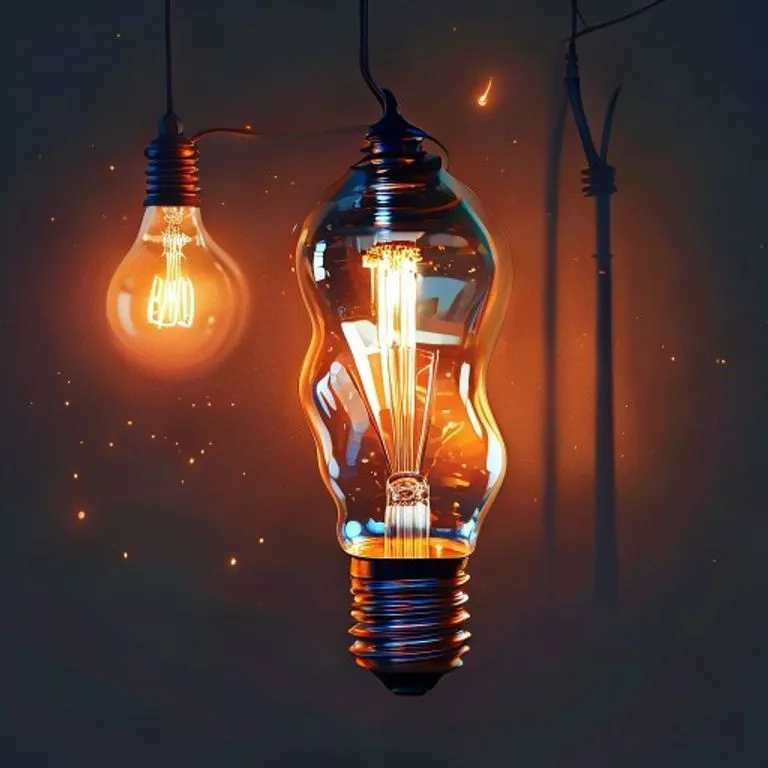
Brief description
An incandescent light bulb is an electric light with a wire filament heated until it glows. The filament is enclosed in a glass bulb with a vacuum or inert gas to protect the filament from oxidation. Current is supplied to the filament by terminals or wires embedded in the glass.
Use / Function
- Primary use: Providing artificial light in homes and buildings.
- Secondary uses: Flashlights, automotive lighting, and decorative lighting.
- Scale: Domestic and industrial illumination.
Operating principle
- Joule Heating: When an electric current passes through the filament, it encounters resistance, which generates heat.
- Incandescence: The filament reaches such a high temperature that it begins to emit visible light.
- Protection: The bulb must be evacuated of oxygen or filled with an inert gas (like argon or nitrogen) to prevent the filament from burning up instantly.
How to create it
Creating a durable light bulb requires high precision and specific materials:
- Filament: Draw a very fine wire of Tungsten and coil it to increase its surface area.
- Supports: Mount the filament on sturdy support wires made of molybdenum or Steel.
- Enclosure: Create a Glass bulb and seal the support wires through the glass.
- Evacuation: Use a Vacuum Pump to remove air or fill the bulb with an inert gas mixture.
- Base: Attach a metal base (typically Copper or Brass) to provide electrical connections.
Materials needed
- Filament: Tungsten (highest melting point).
- Bulb: Glass (transparent and heat-resistant).
- Filling: Argon or Nitrogen (inert gases).
- Terminals: Copper or Iron.
- Base: Copper or Brass.
Variants and improvements
- Carbon Filament: The earliest bulbs used carbonized bamboo or paper.
- Halogen Lamp: Uses a small amount of halogen gas to recycle evaporated tungsten back to the filament, increasing its life and efficiency.
- LED: A modern, non-incandescent alternative that is far more efficient and durable.
Limits and risks
- Efficiency: Very low; about 95% of the energy is lost as heat, not light.
- Fragility: The glass bulb and delicate filament are easily broken.
- Heat: The bulb gets extremely hot and can cause burns or fires if placed near flammable materials.
- Limited Life: The filament eventually thins and breaks due to evaporation.