Generated with AI2 min read
Hourglass
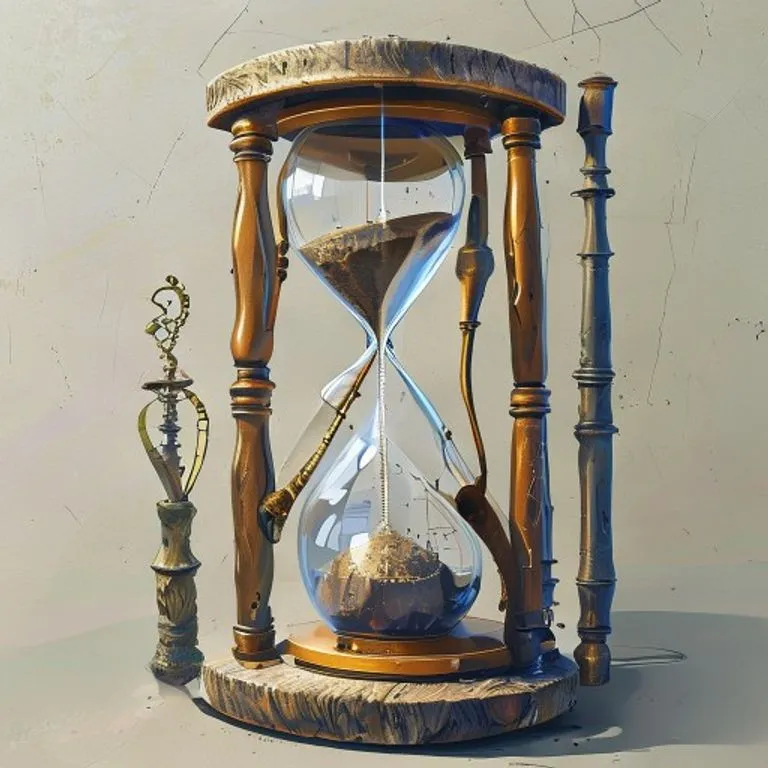
Brief description
A device used to measure the passage of a determined period of time. It comprises two glass bulbs connected vertically by a narrow neck that allows a regulated flow of material (usually sand) from the upper bulb to the lower one.
Use / Function
- Timer: Measuring short, fixed intervals (cooking, games, sermons, watches on ships).
- Durability: Works on ships where pendulum clocks fail due to motion.
- Symbolism: Representation of time running out.
Operating principle
Gravity pulls the granular material through the narrow neck. Unlike water, dry sand (or similar material) flows at a constant rate regardless of the height of the column in the upper bulb, provided the neck is narrow enough and the grains are uniform.
How to create it
- Bulbs: Blow two glass bulbs or use two separate bottles joined at the necks.
- Neck: Ensure a smooth, narrow passage. A metal plate with a precise hole can be placed between the bulbs to regulate flow.
- Fill: Use fine, dry, uniform sand, powdered eggshells, or marble dust. Sift carefully to remove large particles.
- Seal: Hermetically seal the connection to prevent moisture from entering (which clumps the sand).
- Frame: Mount in a protective wooden or metal frame.
Materials needed
- Essential: Glass for visibility and smoothness.
- Flow Material: Sand (washed and dried), pulverized eggshells, or metal oxides.
- Structure: Wood or Metal for the stand.
Variants and improvements
- Multiple Glasses: Several hourglasses mounted together for different intervals (e.g., 15, 30, 60 minutes).
- Rotatable Mount: Easy turning mechanism on a wall or stand.
Limits and risks
- Fixed Interval: Can only measure the specific time it was designed for.
- Clogging: Moisture or irregular grains can stop the flow.
- Breakage: Glass is fragile.
- Wear: Sand can erode the neck over time, changing the flow rate (widening the hole).