Generated with AI3 min read
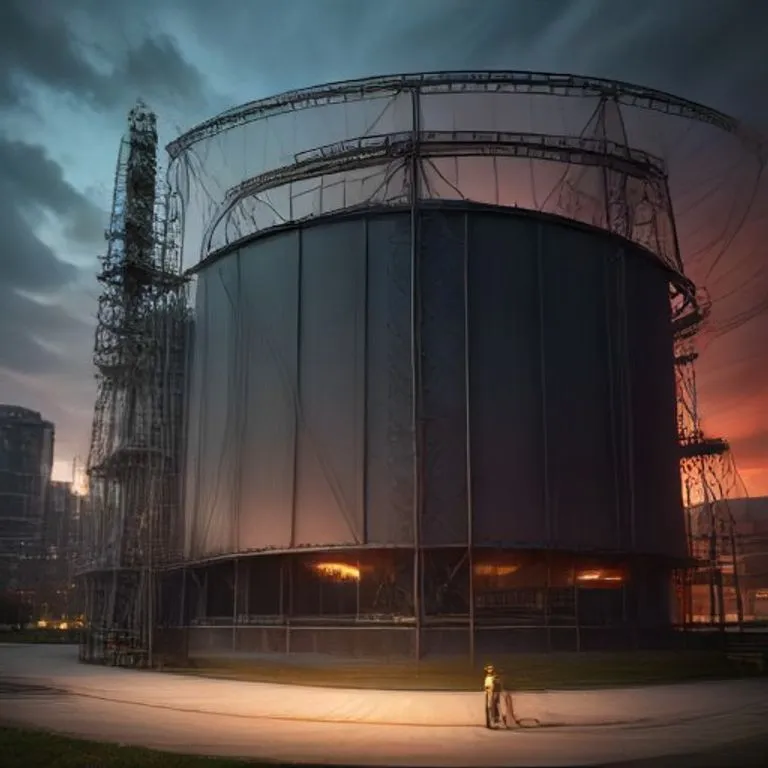
Gasometer
Made of
Brief description
A gasometer (or gas holder) is a large variable-volume container used to store combustible gas—such as town gas, wood gas, or biogas—at ambient pressure and deliver it at a constant, controlled output pressure. It is an essential component of local gas production and distribution infrastructure.
Use / Function
- Primary Use: Storing combustible gases produced intermittently from gasifiers or biodigesters for on-demand use.
- Secondary Uses: Regulating fuel pressure for stationary engines, gas lighting, stoves, and heating systems.
- Scale: Domestic biogas collection tanks to municipal town gas holding facilities.
Operating principle
A telescoping or floating gasometer operates on hydrostatic displacement and variable volume under weight-controlled pressure:
- Storage: Gas enters the hollow cylindrical bell through an inlet pipe extending above the water level inside the tank.
- Expansion: As gas enters, the buoyant bell rises vertically within a water-filled outer seal vessel or reservoir.
- Pressure Regulation: The weight of the floating bell imposes a uniform downward force on the trapped gas volume, maintaining a steady delivery pressure regardless of how much gas is stored inside.
- Discharge: Opening the outlet valve forces gas out into the supply pipe as gravity pulls the bell downward into the water basin.
How to create it
Improvised Floating-Drum Gasometer
- Base Water Container: Set up an open-top outer tank (e.g., a cut steel drum or concrete basin) filled with water.
- Inlet & Outlet Piping: Install two vertical pipes inside the basin that project above the water line, fitted with shut-off valves at their outer ends.
- Floating Bell: Invert a slightly smaller airtight drum inside the water container so its open bottom rests underwater over the pipe outlets.
- Guide Frame: Construct vertical guide posts or pulley counterweights around the outer tank to keep the inner bell balanced and rising straight without tilting.
- Sealing Check: Fill the outer vessel with water to submerge the bottom lip of the inner drum, establishing a liquid seal that prevents gas leaks.
Materials needed
- Outer Basin & Inner Bell: Steel drums, Iron tanks, or masonry lined with waterproof sealants.
- Sealing Liquid: Water (or oil in freezing climates).
- Piping & Valves: Steel or copper tubing with airtight valves.
- Gaskets & Hose Connections: Natural Rubber or sealed leather fittings.
Variants and improvements
- Water-Sealed Floating Gasometer: Traditional design utilizing a water basin as a liquid barrier.
- Dry Gasometer (Wicker-type): Uses a flexible rubber or leather membrane or piston sealed with grease instead of a heavy water tank.
- Telescoping Gasometer: Multi-sectioned bell that extends in stages for maximum storage capacity in minimal footprint.
Limits and risks
- Explosion Risk: Explosive air-gas mixtures can form inside the bell if air enters prior to purge or if open flames are near gas leaks.
- Freezing: Liquid seals made of plain water can freeze in cold winter temperatures, locking the mechanism or bursting the tank unless anti-freeze or oil is added.
- Corrosion: Constant exposure to water and hydrogen sulfide in raw gases causes accelerated rusting of steel tanks.