Generated with AI4 min read
Colorimeter
Brief description
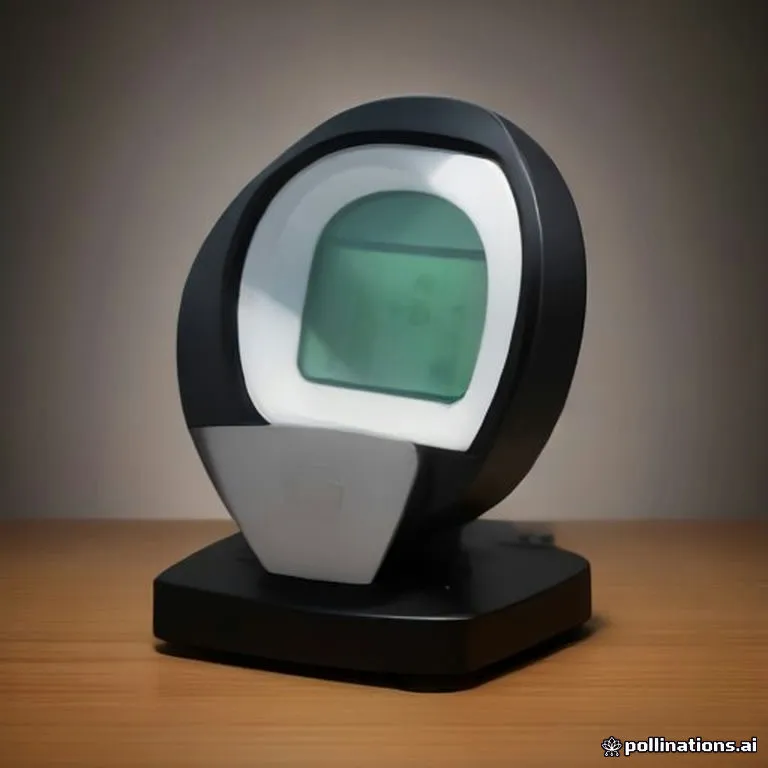
A colorimeter is an analytical instrument designed to measure the absorbance and transmittance of specific wavelengths of light passing through a chemical solution. Relying on the Beer-Lambert law, which states that light absorption is directly proportional to both solute concentration and path length, the instrument enables quantitative biochemical assays, water quality monitoring, and chemical synthesis verification without requiring complex electronic spectrophotometry.
Use / Function
- Quantitative Chemical Analysis: Measuring the concentration of dissolved solutes, metal complexes, and organic compounds in liquid solutions.
- Water Quality Testing: Detecting trace contaminants, chlorine, nitrates, phosphates, and heavy metal concentrations in drinking water and agriculture.
- Biochemical Assays: Quantifying proteins, blood glucose, hemoglobin, and enzymatic reaction rates in clinical and survival medicine.
- Dye and Pigment Standardization: Verifying color consistency, dye concentration, and formulation reproducibility in textile and ink production.
Operating principle
- Light Generation & Collimation: A stable light source—such as an oil lamp, daylight aperture, or incandescent filament—emits a continuous beam directed through an aperture.
- Spectral Filtration: The light beam passes through a selective optical filter (colored glass, liquid solution, or gelatin film) that isolates the complementary wavelength absorbed maximally by the sample.
- Sample Transmission: The monochromatic or narrow-band beam passes through a transparent cuvette of known path length containing the analyte solution.
- Visual or Photometric Comparison: In visual designs (such as the Duboscq colorimeter), two matching beams pass through a sample and a known standard; dipping glass plungers adjust liquid depths until the two fields match in a split-field eyepiece.
- Concentration Calculation: Because absorbance equals $A = \varepsilon c l$, comparing the matched depths ($c_1 l_1 = c_2 l_2$) yields the unknown solute concentration directly.
How to create it
- Construct the Frame: Fabricate a sturdy vertical chassis from cast iron or brass with leveling feet and an adjustable substage mirror to reflect ambient daylight upward.
- Machine the Cuvette Stages: Mount dual side-by-side stages to hold precision cylindrical or rectangular optical glass tubes (cuvettes) of uniform cross-section.
- Mount Optical Plungers: Fit two solid glass immersion rods into rack-and-pinion carriers, allowing them to descend smoothly into the cuvettes without generating bubbles.
- Integrate Split-Field Optics: Install a dual-prism assembly (biprism or rhomboid prisms) above the cuvettes to combine the light transmitted through both tubes into a single circular visual field split down the center.
- Attach Vernier Scales: Fix millimetric scales with vernier indicators to each plunger carrier to measure the optical immersion path length down to tenths of a millimeter.
- Enclose Light Baffles: Enclose the optical path inside a blackened brass or wooden housing to prevent ambient stray light from biasing visual contrast.
Materials needed
- Essential: Brass or Iron for machined mechanical columns, stages, and racks; optical Glass for cuvettes, plungers, and splitting prisms; seasoned Wood for protective chassis baffles.
- Tools: Precision metal lathe, glass-cutting wheel, optical grinding abrasives, dividing engine or precision ruler for vernier scales.
- Substitutes: Matched Nessler cylinders viewed from above over a white reflective tile can serve as a simple visual comparison colorimeter without glass plungers.
Variants and improvements
- Duboscq Colorimeter: The classic visual instrument featuring dual immersion plungers and split-field eyepiece for high-precision comparative colorimetry.
- Nessler Tube Rack: A simplified visual comparator using calibrated graduated test tubes illuminated from beneath.
- Filter Photometer: Replaces visual comparison with selenium photovoltaic cells or photoresistors to read light transmittance directly on a galvanometer.
- Bessel or Wedge Colorimeter: Uses a graduated colored optical glass wedge moved across the beam to match optical density.
Limits and risks
- Interfering Turbidity: Suspended particles scatter light and cause false positive absorbance readings; samples must be filtered or centrifuged prior to measurement.
- Non-Linear Deviation: High solute concentrations deviate from the Beer-Lambert law due to molecular electrostatic interactions and refractive index shifts.
- Visual Subjectivity: Visual colorimeters depend on operator visual acuity and can suffer from fatigue and slight color blindness discrepancies.