Generated with AI3 min read
Autoclave
Made of
Brief description
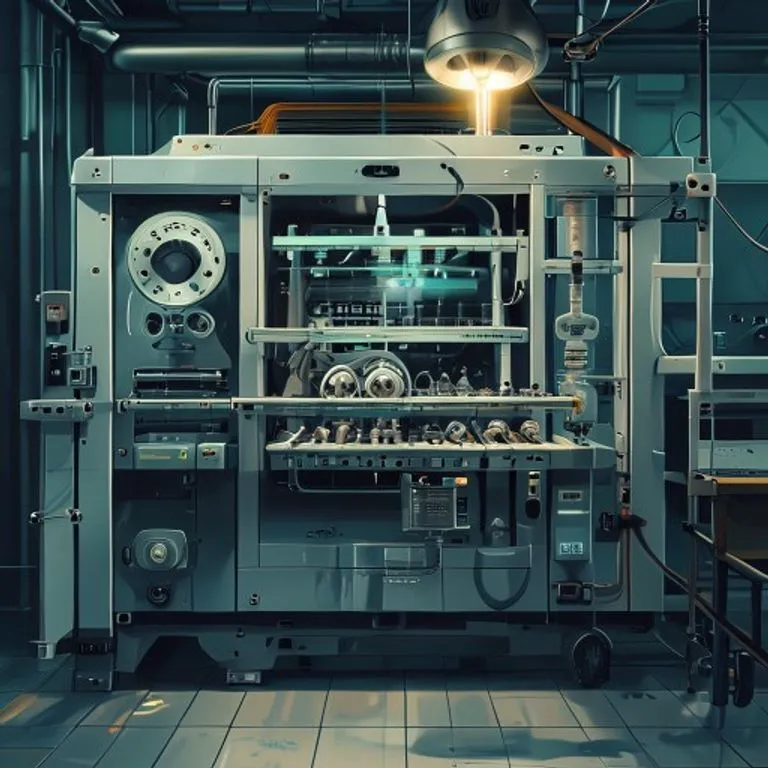
An autoclave is a strong, heated container used for chemical reactions and other processes using high pressure and temperature. Its primary purpose is sterilization and curing materials.
Use / Function
- Sterilization: Killing all forms of life, including spores, on medical and laboratory equipment.
- Curing: Processing composite materials and vulcanizing rubber.
- Industrial Processing: Facilitating chemical reactions that require high pressure and heat.
- Scale: From small tabletop units for dental clinics to massive industrial vessels.
Operating principle
The autoclave works on the principle of using saturated steam under pressure to achieve temperatures above the normal boiling point of water.
- Water Heating: Water is heated to produce steam.
- Pressure Increase: As the steam is trapped in a sealed vessel, the pressure rises.
- Temperature Elevation: Increased pressure allows the steam to reach temperatures (typically 121°C or 134°C) that would be impossible at atmospheric pressure.
- Penetration: The pressurized steam penetrates deep into porous materials or narrow crevices, ensuring complete sterilization or uniform heating.
How to create it
Building a safe autoclave requires high-level mechanical engineering and precision:
- Pressure Vessel: A thick-walled cylinder, usually made of Stainless Steel or Steel, capable of withstanding several atmospheres of pressure.
- Sealing Mechanism: A heavy door with a heat-resistant Natural Rubber or silicone gasket to ensure an airtight seal.
- Heating System: Electric heaters or a steam generator.
- Safety Valves: Crucial components that release pressure if it exceeds safe limits to prevent explosion.
- Technical level: Advanced.
Materials needed
- Essential materials:
- Steel or Stainless Steel: For the main vessel.
- Natural Rubber: For gaskets and seals.
- Water: To generate steam.
- Tools:
- Arc Welder: To assemble the pressure vessel.
- Lathe: For machining precise sealing surfaces.
- Possible substitutes:
- Pressure Cooker: A domestic version for small-scale sterilization.
Variants and improvements
- Gravity Displacement: Steam enters and pushes out the denser air.
- Pre-vacuum: Uses a vacuum pump to remove air before steam entry, ensuring better penetration.
- Industrial Autoclaves: Massive units used for vulcanizing tires or curing aircraft parts.
Limits and risks
- Explosion Risk: If the pressure vessel fails or the safety valve is blocked, it can explode with devastating force.
- Burn Hazard: High-temperature steam and hot surfaces can cause severe burns.
- Material Degradation: Some materials (like certain plastics) cannot withstand the high heat and pressure.
- Incomplete Sterilization: If air is trapped inside, the steam may not reach all surfaces.
Related Knowledge
- Sterilization: The fundamental process enabled by the autoclave.
- Vulcanization: A material process often performed in an autoclave.