Generated with AI2 min read
Apiary
Made of
Brief description
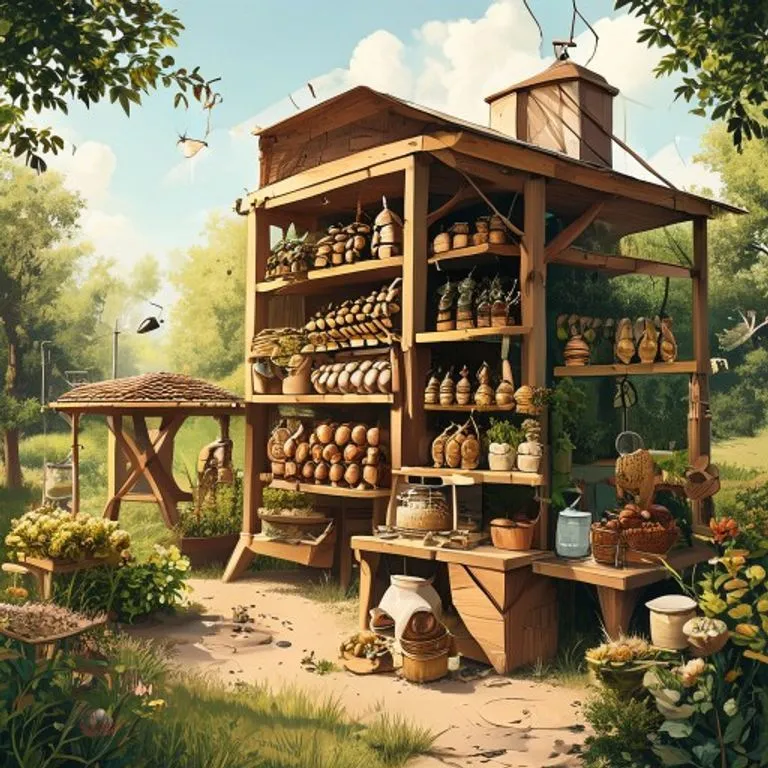
An apiary is a managed site where multiple bee hives are placed, protected, and maintained for efficient Beekeeping.
Use / Function
- Hive organization: Keeps colonies in a single, manageable area.
- Protection: Reduces wind, moisture, and predator exposure with barriers and spacing.
- Workflow: Allows inspection, harvest, and feeding with minimal disruption.
- Scale: From a few backyard hives to village-level production.
Operating principle
- Site selection: Sun, dry ground, and clear flight paths improve colony health.
- Spacing: Separation limits drifting, disease spread, and robbing.
- Access control: Clear paths and stable stands prevent tipping.
- Resource proximity: Nearby Water and forage reduce stress.
How to create it
- Choose the site: Pick a sunny, well-drained area with windbreaks and clean Water nearby.
- Lay out rows: Mark hive positions with clear approach paths and enough spacing for work.
- Build stands: Use level Wood frames or Stone pads to keep hives off damp ground.
- Add barriers: Install fences or screens woven from Plant fibers to guide bee flight upward.
- Protect and label: Seal joints with Resin and mark hives for tracking.
- Operate: Use Controlled Fire smoke sparingly and Containers for harvests.
Required technological level
Basic to intermediate. Layout and stands are low tech; stable multi-hive management requires routine skill.
Materials needed
- Essential: Wood for stands and hive supports, Stone or compacted earth for stable pads, Plant fibers for screens.
- Tools: Cutting tools, mallet, measuring cord, Containers for honey handling.
- Possible substitutes: Packed earth berms, clay pads, or woven brush for windbreaks.
Variants and improvements
- Fence apiary: Enclosed yard to deter livestock and theft.
- Migratory apiary: Portable stands for seasonal bloom.
- Terraced apiary: Stepped layout on slopes for drainage and access.
- Shade structures: Light roofing in hot climates to reduce heat stress.
Limits and risks
- Disease spread: Too many hives in tight space accelerate pests.
- Robbing pressure: High density increases inter-colony theft.
- Overheating: Poor ventilation and no shade can weaken colonies.
- Access hazards: Unstable stands and clutter increase stings and spills.