NaturalGenerated with AI2 min read
Bamboo
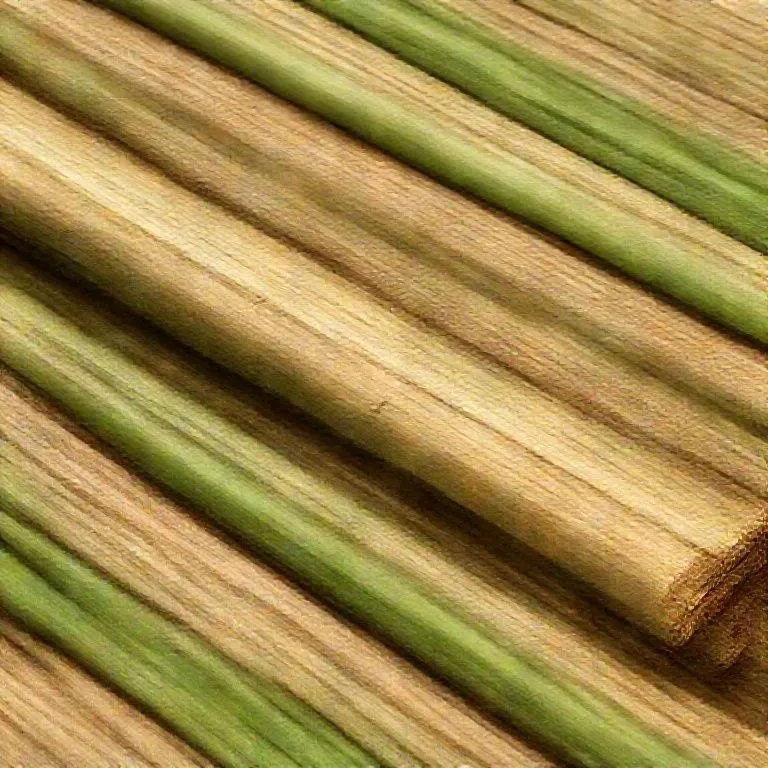
A giant woody grass that grows mainly in the tropics and subtropics. It is one of the fastest-growing plants in the world.
Description of what it is like
Long, green, hollow stems (culms) with periodic nodes (solid joints). It is extremely tough and flexible.
Origin and where to find it
- Environments: Tropical forests, riverbanks, and warm temperate zones.
- Signs: Clumps of tall, green canes with lance-shaped leaves.
- Natural: It grows naturally in many parts of Asia, Africa, and the Americas.
Minimum processing required
- Harvesting: Cut mature stems (3-5 years old) for maximum strength.
- Delimbing: Remove branches with a machete.
- Curing/Drying: Air dry or smoke to remove moisture and sugar (to prevent beetle attack).
- Working: Split or saw to size.
Tools needed to work on it
- Machete/Saw: For cutting and splitting.
- Drill/Rod: To remove internal nodes for pipes/containers.
Common forms of use
- Whole Culms: Structural posts, scaffolding, pipes.
- Splits: Weaving baskets, mats, walls (wattle).
- Shoots: Young shoots are edible (must be boiled).
Possible substitutes
- Wood: For construction (heavier, slower to grow).
- PVC/Metal: For pipes.
- Reed/Cane: For weaving (weaker).
Limitations and common failures
- Insects: Highly susceptible to powder-post beetles if not cured properly (starch removal).
- Cracking: Can split vertically if dried too fast or nailed without pre-drilling.
- Rot: Will rot if in direct contact with damp soil for long periods.
Risks and safety
- Sharp Edges: Freshly cut bamboo edges are razor sharp.
- Splinters: Bamboo splinters are painful and can get infected.
Related materials
- Wood: Similar structural uses.
- Reeds: Smaller grass relatives.
Properties
- Lightweight
- Strong
- Hollow
- Flexible
- Fast-growing
Used for
- Construction
- Pipes
- Containers
- Weapons
- Food
Manufacturing / Process
Harvested and dried.