SyntheticGenerated with AI3 min read
Kerosene
Mixture of C10 to C16 hydrocarbons
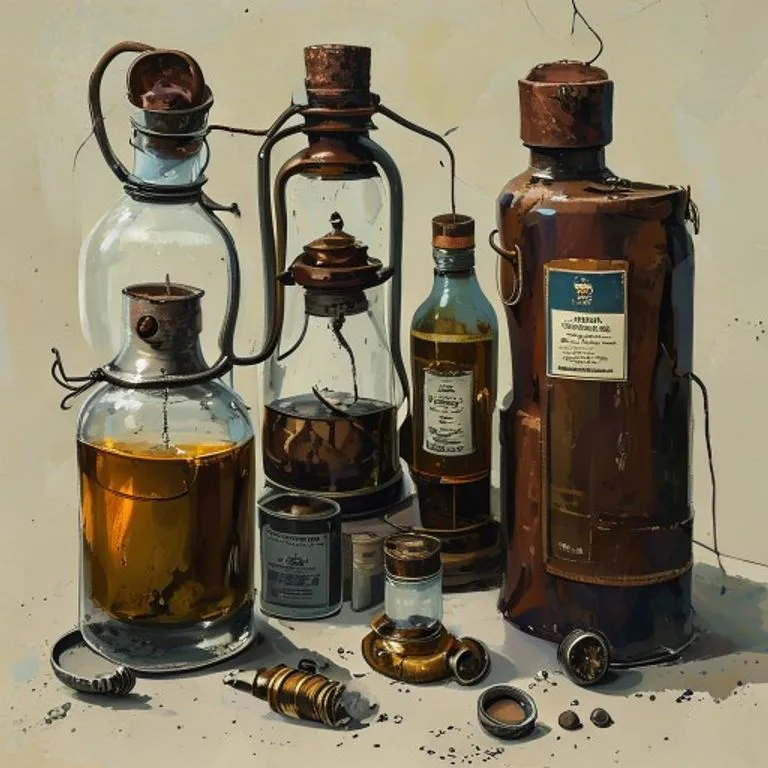
Kerosene (also known as paraffin or lamp oil) is a combustible hydrocarbon liquid derived from petroleum. It is widely used as a fuel in industry and households.
Description of what it is like
Kerosene is typically a clear, thin liquid with a characteristic odor. It is less volatile than gasoline, meaning it does not evaporate as quickly at room temperature, which makes it safer to store and handle for lighting and heating.
Origin and where to find it
- Refinery Product: Extracted from Crude Oil through refining.
- Historic Sources: Historically also produced from coal, oil shale, and wood (through more complex processes).
Minimum processing required
- Distillation: Fractional distillation of crude oil to isolate the kerosene fraction.
- Treatment: Often treated with solvents or acid to remove sulfur and unsaturated hydrocarbons, which reduces smoke and odor when burned.
- Filtration: To remove any particulate matter.
Tools needed to work on it
- Fractional Distillation Column: To separate it from crude oil.
- Condenser: To liquefy the vapors.
- Storage Tanks: Typically metal or high-density plastic.
Common forms of use
- Lighting: Used in hurricane lamps and pressure lamps (like Petromax).
- Heating: Portable kerosene heaters for indoor use.
- Cooking: Kerosene stoves (wick or pressure types).
- Aviation: Jet A-1 fuel is a highly specialized and refined form of kerosene.
Possible substitutes
- Vegetable Oil: Can be used in simple wick lamps, though it burns less brightly and can clog wicks.
- Animal Fat (Tallow): Used in candles and very basic lamps.
- Biofuel: Specifically biodiesel or bio-kerosene derived from plant oils.
- Gasoline: NOT a safe substitute for lamps or heaters designed for kerosene due to its high volatility and explosion risk.
Limitations and common failures
- Wick Fouling: Impure kerosene can leave carbon deposits on wicks, causing smoke and reduced light.
- Water Contamination: Like other fuels, water can cause issues in burners and promote corrosion.
- Odor: When burned in poorly maintained equipment, it can release a strong, unpleasant smell.
Risks and safety
- Fire Hazard: While safer than gasoline, it is still highly flammable.
- Carbon Monoxide: Burning kerosene in unventilated spaces can lead to a dangerous buildup of CO.
- Poisoning: Toxic if swallowed or inhaled; a common cause of accidental poisoning in children.
Related materials
- Crude Oil: The primary source.
- Gasoline: A lighter fraction.
- Vegetable Oil: Natural alternative for lighting.
Properties
- Flammable
- Moderate volatility
- Oily texture
- High energy density
Used for
- Fuel for lamps (Paraffin lamps)
- Fuel for heating and cooking
- Jet fuel (as a highly refined base)
- Degreaser and cleaner
Manufacturing / Process
Produced by the fractional distillation of crude oil. It is collected at boiling points between approximately 150°C and 275°C, making it heavier than gasoline but lighter than diesel.