SyntheticGenerated with AI3 min read
Borosilicate Glass
SiO2, B2O3, Na2O, Al2O3
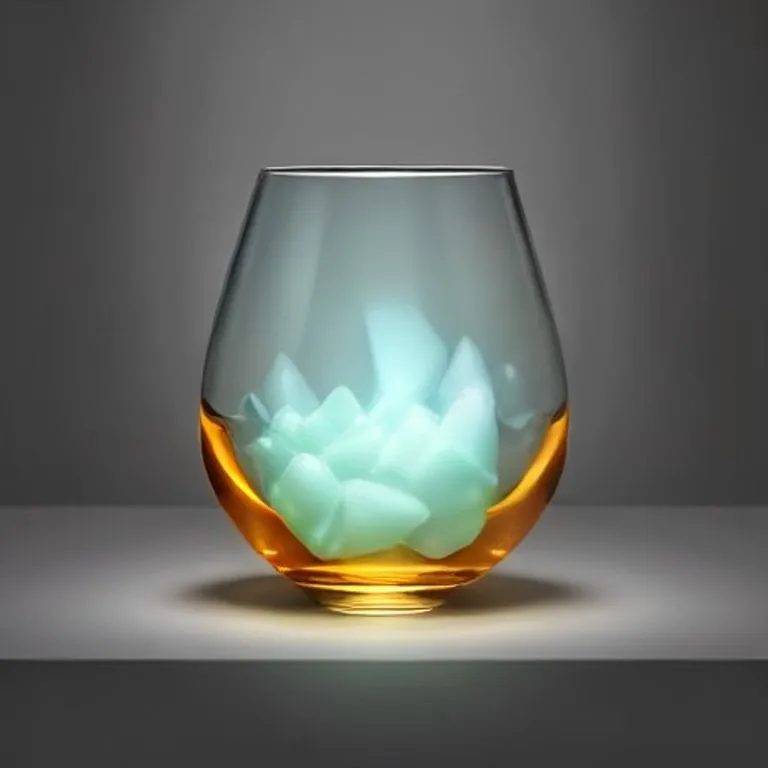
Borosilicate glass is a type of glass with silica and boron trioxide as the main glass-forming constituents. It is renowned for having very low coefficients of thermal expansion, making it highly resistant to thermal shock and chemically inert compared to standard soda-lime glass. This makes it an indispensable material for chemical laboratories and pharmaceutical manufacturing.
Description of what it is like
- Appearance: Exceptionally clear and colorless, free of the greenish tint common in standard soda-lime glass.
- Texture: Extremely smooth, hard, and non-porous.
- State: Solid at room temperature, softening at around 820°C.
- Breakage: Brittle, shattering with very sharp edges when subjected to high-velocity impacts, though more robust than soda-lime glass against gentle knocks.
Origin and where to find it
Borosilicate glass is entirely synthetic and does not occur naturally.
- Components:
- Sand (Silica / SiO2): The primary glass-forming network (approx. 70-80%).
- Boric Oxide (B2O3): The key additive (approx. 10-13%) which lowers the thermal expansion coefficient. Obtained by processing mineral borates.
- Soda / Potash: Fluxes to assist melting.
- Alumina (Al2O3): Enhances chemical durability.
Minimum processing required
- Preparation: Mix high-purity silica sand, boric oxide (or borax/boric acid), soda ash, and alumina in exact ratios.
- Melting: Heat the mixture to extremely high temperatures (around 1400°C to 1600°C) in a specialized refractory furnace or high-quality crucible.
- Forming: Blow, press, or draw the molten glass into desired shapes (such as beakers or tubes) while it is hot and malleable.
- Annealing: Cool the formed objects slowly and uniformly in an annealing oven (lehr) to eliminate internal mechanical stresses.
Tools needed to work on it
- High-temperature Furnace: Capable of exceeding 1500°C.
- Refractory Crucible: Made of platinum, zirconia, or high-grade alumina to withstand boron’s corrosive nature.
- Glassblowing Pipe and Shears: To handle and shape the hot glass.
- Annealing Lehr: For precise, computer-controlled or carefully managed manual slow cooling.
Common forms of use
- Labware: Beakers, Erlenmeyer flasks, test tubes, and distillation columns capable of surviving direct flames.
- Kitchenware: Heat-resistant baking dishes and measuring cups.
- Industrial Piping: For transporting highly corrosive acids.
Possible substitutes
- For Labware:
- Standard Glass: Soda-lime glass can be used but is prone to shattering under direct heating or sudden temperature shifts.
- Glazed Ceramics: Opaque, but chemically resistant and capable of holding hot liquids.
- Metal Vessels: Tough, but react with strong acids and do not allow visual observation of chemical reactions.
- For Kitchenware:
- Cast Iron or Earthenware: Excellent thermal mass and durable, though opaque.
Limitations and common failures
- High Manufacturing Temperature: Requires significantly more energy to melt and refine than standard soda-lime glass.
- Fluoride Vulnerability: Rapidly etched and degraded by hydrofluoric acid.
- Mechanical Fragility: While thermally tough, it is still glass and will shatter if dropped on hard surfaces.
Risks and safety
- High Temperatures: Molten glass at 1500°C poses severe burn and fire risks.
- Dust Inhalation: Handling raw silica sand and borates requires respiratory protection to prevent silicosis and chemical irritation.
- Extreme Cuts: Broken borosilicate glass forms razor-sharp shards.
Related materials
- Glass: The foundational sibling material.
- Sand: The main ingredient.
- Sulfuric Acid: Often stored or processed inside borosilicate vessels.
Properties
- Highly transparent
- Low coefficient of thermal expansion
- Extreme thermal shock resistance
- High chemical resistance
- Hard
Used for
- Laboratory glassware (beakers, flasks, test tubes, condensers)
- Medical packaging (ampoules, vials)
- High-intensity lighting and optics
- Cookware (Pyrex)
- High-precision mirrors (telescopes)
Manufacturing / Process
Melting silica sand, boric oxide, soda, and alumina at very high temperatures (around 1400°C to 1600°C), followed by forming and controlled annealing to relieve internal stresses.