Generated with AI2 min read
Mathematics
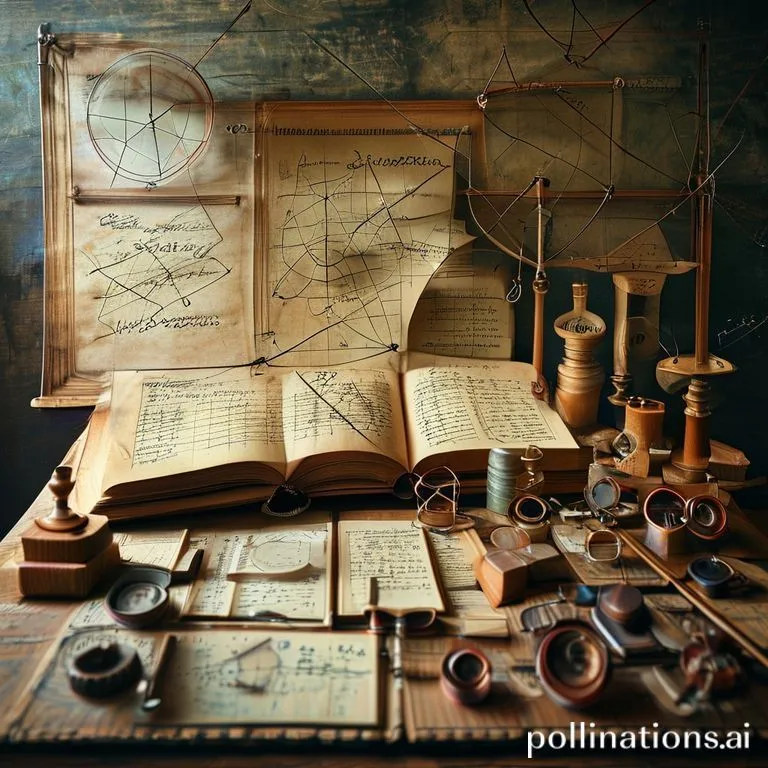
Brief description
Mathematics is the abstract science of number, quantity, and space. It usually begins with counting and measuring, evolving into a system for understanding shapes, patterns, and change. It is the language of science and engineering.
Use / Function
Its practical purpose is to model reality to solve problems:
- Trade and Accounting: Tracking inventory, debts, and currency.
- Construction: Calculating areas, volumes, and structural loads (Geometry).
- Astronomy/Navigation: Predicting celestial positions and determining location on Earth.
- Timekeeping: Creating accurate calendars.
Operating principle
Mathematics operates on abstraction and logic:
- Abstraction: Converting real-world objects (3 apples) into symbols (the number 3).
- Operations: Manipulating these symbols according to logical rules (addition, subtraction, multiplication).
- Proof: Verifying that a statement is true based on previously established truths (axioms).
How to create it
-
Counting (Arithmetic):
- Start with one-to-one correspondence (e.g., one finger per sheep).
- Use tally marks or tokens (stones) to represent larger quantities.
- Develop a number system (base-10 is common due to fingers, base-60 was used by Babylonians).
- Invent place value (a zero symbol) to handle large numbers efficiently.
-
Measuring (Geometry):
- Use a standard length (rope) to measure fields.
- Discover relationships: The 3-4-5 triangle creates a perfect right angle (essential for building).
- Calculate Pi ($\pi$) by measuring the circumference and diameter of circles.
Materials needed
- Recording Surfaces:
- Sand/Dust: For temporary calculations and geometric diagrams (used by Archimedes).
- Clay/Wax Tablets: For erasable or permanent records.
- Paper/Papyrus: For complex calculations.
- Tools:
- Abacus: A frame with beads for performing arithmetic.
- Rope/Compass: For drawing circles and straight lines.
- Straightedge: For drawing lines.
Variants and improvements
- Abacus/Suanpan: Mechanical aids for calculation.
- Algebra: Solving for unknown values using symbols.
- Calculus: Mathematics of change (motion, growth).
- Statistics: Analyzing data and probability.
Limits and risks
- Abstractness: Math is a model, not reality. A correct calculation can describe an impossible physical situation.
- Error Propagation: A small mistake at the beginning of a calculation grows into a large error.
- Complexity: Advanced math requires years of study and specialized notation.