Generated with AI3 min read
Compost
Brief description
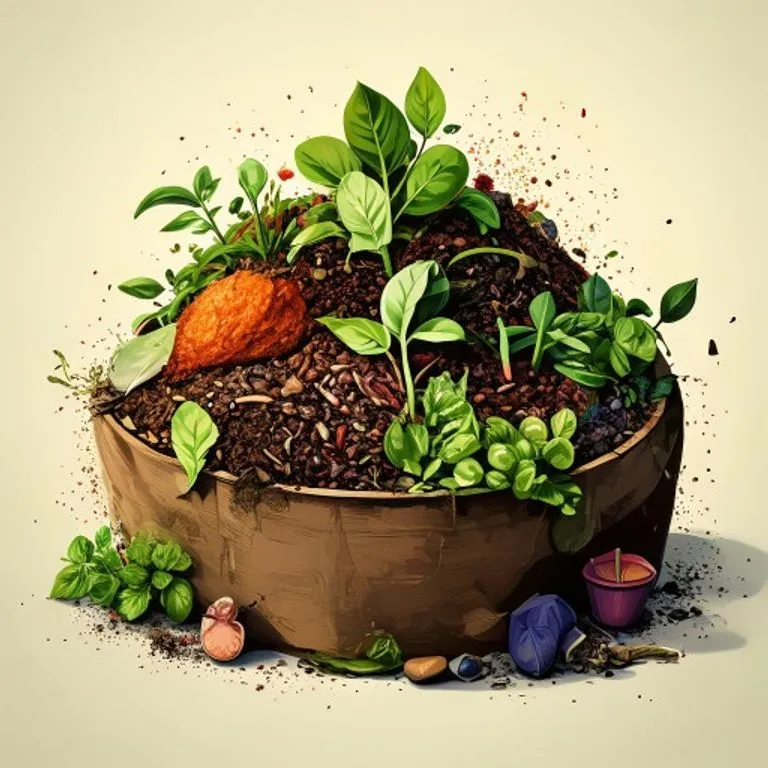
Compost is decomposed organic matter turned into a nutrient-rich soil amendment. It is the result of a controlled biological process where microorganisms break down kitchen scraps, crop residues, and animal waste into humus.
Use / Function
- Fertilizer: Provides essential nutrients (Nitrogen, Phosphorus, Potassium) to crops.
- Soil conditioner: Improves soil structure, moisture retention, and aeration.
- Waste management: Recycles organic refuse that would otherwise rot and attract pests.
- Scale: Household gardens to large-scale communal fields.
Operating principle
Compost relies on aerobic decomposition by bacteria, fungi, and invertebrates (like worms):
- Carbon/Nitrogen Balance: A mix of “browns” (carbon-rich: straw, dry leaves, paper) and “greens” (nitrogen-rich: food scraps, fresh grass, manure).
- Aeration: Microbes need oxygen to work efficiently. Without air, the pile becomes anaerobic and smelly.
- Moisture: The pile should be damp like a wrung-out sponge.
- Heat: Active microbial activity generates heat (up to 60°C), which kills pathogens and weed seeds.
How to create it
- Select a site: A well-drained spot, preferably in partial shade.
- Layer materials: Start with a layer of coarse “browns” (twigs) for aeration, then alternate layers of “greens” and “browns.”
- Maintain moisture: Add water if the pile is dry.
- Turn the pile: Use a pitchfork or shovel to mix and aerate the pile every week or two.
- Cure: Wait until the material is dark, crumbly, and smells like earth (3-6 months depending on temperature).
Materials needed
- Greens: Fruit/vegetable scraps, green leaves, Manure (if available), coffee grounds.
- Browns: Straw, dry leaves, sawdust, shredded cardboard.
- Additives: A handful of Soil or old compost to “seed” the microbes; a little Ash (in moderation) to balance acidity.
- Tools: Shovel, pitchfork, or a simple wooden bin.
Variants and improvements
- Hot Composting: High-maintenance method that produces compost in weeks by frequent turning and precise C:N ratios.
- Vermicomposting: Using specific earthworms to process waste in small bins.
- Pit Composting: Burying waste in trenches (good for dry climates).
- Compost Tea: Soaking compost in water to create a liquid fertilizer for spraying.
Limits and risks
- Pathogens: Cold compost piles may not kill all harmful bacteria or parasites.
- Pests: Meat, dairy, or oily foods can attract rodents and flies.
- Odors: Too much moisture or lack of air causes a foul ammonia or “rotten egg” smell.
- Volume: Requires a significant amount of organic matter to create a useful quantity of humus.
Related Knowledge
- Basic Agriculture: Primary application.
- Crop Rotation: Used alongside composting to maintain soil health.