Generated with AI2 min read
Circulatory System
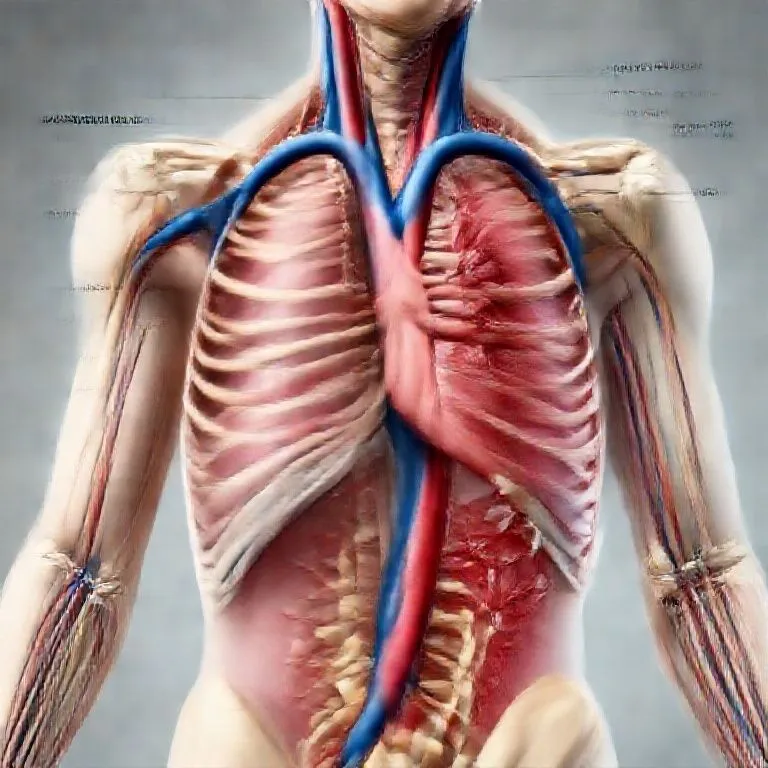
Brief description
The circulatory system is the network of heart, vessels, and blood that delivers oxygen and nutrients, removes waste, and keeps the body stable. Understanding it supports safe bleeding control and early shock recognition in the field.
Use / Function
- Transport: Deliver oxygen, nutrients, and hormones to tissues.
- Removal: Carry carbon dioxide and metabolic waste away.
- Thermoregulation: Adjust heat through blood flow.
- Defense: Move immune cells and clotting factors.
- Scale: Individual care to organized field medicine.
Operating principle
- Central pump: The heart generates cyclic pressure to move blood.
- Vessel network: Arteries distribute, capillaries exchange, veins return.
- Capillary exchange: Gases and nutrients diffuse across thin walls.
- Venous return: Valves and muscle movement prevent backflow.
- Volume balance: Blood loss lowers pressure and tissue perfusion.
How to create it
- Draft a map: Draw the basic loop on Paper with Ink from heart → arteries → capillaries → veins.
- Mark key points: Identify palpable pulses (neck, wrist, groin) and compression zones.
- Add clinical signals: Capillary refill time, skin color, and heart rate.
- Tie to anatomy: Use Anatomy & Blood for bony landmarks.
- Validate in practice: Refine the map with real cases and record variations.
Materials needed
- Essential: Paper, Ink, and Bone references for landmarks.
- Hygiene: Soap, Alcohol, Cotton, Water.
- Support: Blood Type records for triage and transfusion safety.
Variants and improvements
- Regional maps: Separate head, chest, abdomen, and limbs.
- Color coding: Red for arteries, blue for veins, purple for capillaries.
- Quick cards: Shock signs and bleeding control steps.
- Teaching models: Flow charts with estimated volumes and critical loss.
Limits and risks
- Individual variation: Landmarks and pulses shift with age and body type.
- Misleading signs: Cold, dehydration, or stress can alter pulse and perfusion.
- Biohazard risk: Blood can carry pathogens without proper hygiene.
- Overconfidence: The map does not replace training or clinical assessment.