Generated with AI3 min read
Bessemer Process
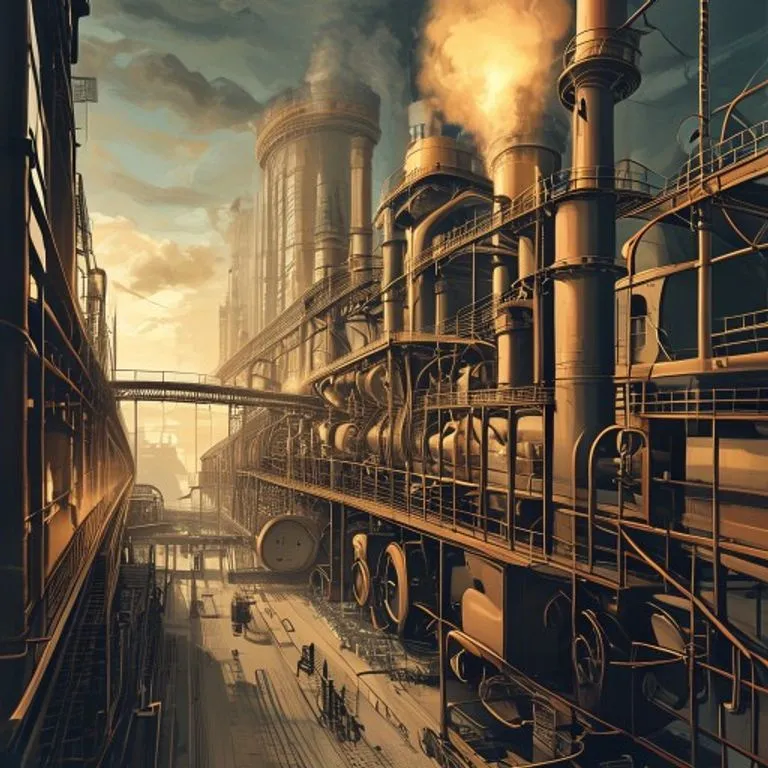
Brief description
The Bessemer process was the first inexpensive industrial process for the mass production of steel from molten pig iron. The key principle is the removal of impurities from the iron by oxidation with air being blown through the molten metal.
Use / Function
- Mass Production of Steel: Allowed steel to be produced in huge quantities, reducing its price significantly.
- Structural Material: Made steel available for bridges, skyscrapers, and railroads.
- Modern Industrialization: Provided the backbone material for the late 19th and early 20th centuries.
Operating principle
The process exploits the high chemical affinity of oxygen for impurities found in pig iron (carbon, silicon, and manganese).
- Oxidation: Air is blown through the bottom of a pear-shaped vessel (the Bessemer converter) containing molten pig iron.
- Exothermic Reaction: The oxygen in the air reacts with the silicon and manganese, then with the carbon. These reactions release heat, keeping the metal molten without extra fuel.
- Decarburization: Carbon is burnt off as carbon monoxide.
- Recarburization: Once impurities are removed, a precise amount of carbon and manganese (often as spiegeleisen) is added back to achieve the desired steel properties.
How to implement
1. The Converter
- Build a large, pear-shaped steel vessel lined with refractory Clay or Silica (acid process) or Limestone/Dolomite (basic process, for high-phosphorus iron).
- Mount the vessel on trunnions so it can be tilted to receive molten iron and pour out the finished steel.
2. The Air Blast
- Install a series of nozzles (tuyeres) at the bottom of the converter.
- Use a powerful steam-powered or water-powered blower to force air through the molten iron at high pressure.
3. The Blow
- Charge the converter with molten Pig Iron from a Blast Furnace.
- Turn on the air blast and rotate the converter to an upright position.
- Observe the flame at the mouth; it changes color as different impurities burn off.
Materials needed
- Molten Pig Iron: The raw material from the blast furnace.
- Refractory Linings: Heat-resistant bricks and clay.
- Fluxes: Limestone to remove phosphorus and form slag.
- Spiegeleisen/Ferromanganese: To add necessary carbon and manganese at the end.
Variants and improvements
- Acid Bessemer: Lined with silica, only works for low-phosphorus iron.
- Basic Bessemer (Thomas Process): Lined with limestone/dolomite, allows the use of high-phosphorus iron ore.
- Open Hearth Process: A slower but more controllable process that eventually replaced the Bessemer process.
- Basic Oxygen Steelmaking (BOS): The modern successor using pure oxygen instead of air.
Limits and risks
- Nitrogen Contamination: Using air introduces nitrogen into the steel, which can make it brittle over time.
- Process Speed: The reaction happens very fast (10-20 minutes), making it difficult to test the composition of the steel during the blow.
- Refractory Wear: The intense heat and chemical reactions wear out the vessel lining quickly.
- Safety: Working with tons of molten metal and high-pressure air involves extreme risk of splashes and explosions.