Generated with AI4 min read
Vacuum Flask
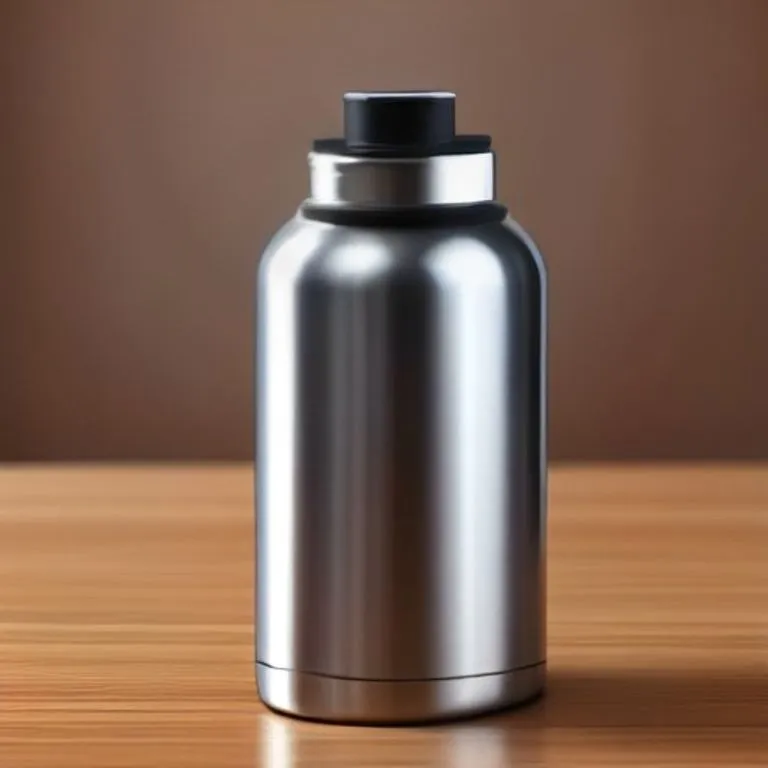
Brief description
A vacuum flask (also known as a Dewar flask or thermos) is an insulating storage vessel that greatly extends the time over which its contents remain hotter or colder than the surroundings. By minimizing heat transfer, it enables the long-term storage of hot or cold liquids, sensitive biological materials, and liquefied gases without active power.
Use / Function
The vacuum flask serves several vital practical purposes:
- Thermal Preservation: Keeping food, water, or medicinal solutions hot or cold for extended periods.
- Scientific and Medical Storage: Storing temperature-sensitive reagents, biological samples, or vaccines in field conditions.
- Cryogenic Containment: Safely transporting liquefied gases (such as liquid nitrogen or oxygen) under low-pressure conditions.
- Scale: Typically domestic (bottles, flasks) to small industrial/laboratory scale.
Operating principle
A vacuum flask minimizes heat transfer by targeting all three primary mechanisms of heat migration:
- Conduction and Convection: The flask consists of two vessels, one placed inside the other and joined at the neck. The air in the gap between the two vessels is evacuated during manufacturing, creating a near-vacuum. Since vacuum contains almost no matter, heat cannot travel across this gap via conduction or convection.
- Radiation: The inner surfaces of the outer vessel and outer surfaces of the inner vessel are coated with a thin, highly reflective layer of Silver (or aluminum). This mirror-like surface reflects infrared radiation (heat waves) back into the liquid, preventing radiative heat loss or gain.
- Neck and Cap Insulation: The opening of the flask is sealed with a tight-fitting stopper made from a poor thermal conductor like Cork or rubber, preventing heat exchange at the entry point.
How to create it
Creating a glass vacuum flask requires advanced glassblowing and silvering skills.
1. Shaping the Double-Walled Vessel
- Blow a cylindrical glass bulb using high-purity Glass (or borosilicate glass for better thermal shock resistance).
- Blow a second, slightly smaller cylindrical bulb.
- Insert the smaller bulb inside the larger one and fuse their rims together at the neck, leaving a narrow space between the two walls.
- Fuse a small glass tube (exhaust tube) to the base of the outer bulb; this tube will be used to evacuate the air.
2. Silvering the Glass Walls
- Prepare a silvering solution (similar to the Tollens’ reagent process) by mixing silver nitrate, water, and ammonia.
- Pour the liquid solution into the gap between the double walls through the exhaust tube at the base.
- Add a reducing agent (like glucose or formaldehyde) to trigger the precipitation of metallic Silver.
- Gently rotate the vessel to coat the glass surfaces evenly with a reflective silver mirror, then drain the remaining liquid.
3. Evacuation and Sealing
- Connect the exhaust tube to a high-capacity vacuum pump.
- Pump out the air from the cavity until a high vacuum is achieved.
- While maintaining the vacuum, heat the neck of the glass exhaust tube with a blowtorch until the glass melts and collapses, permanently sealing the vacuum chamber.
4. Mounting and Protective Casing
- Suspend the glass vessel inside an outer protective sheath made of Steel or plastic.
- Add small rubber spacers at the bottom and sides to prevent the fragile glass inner vessel from rattling or shattering.
- Seal the top with a snug stopper made from Cork or soft wood.
Materials needed
- Substrate: High-quality Glass (ideally borosilicate glass).
- Reflective Agent: Silver nitrate, ammonia, and distilled water.
- Stopper: Natural Cork or rubber.
- Protective Casing: Steel sheet or wood.
- Tools: Glassblowing torch, high-vacuum pump, and safety glassware.
Variants and improvements
- Dewar Flask: The original scientific design, often unsealed and kept under continuous laboratory vacuum, used for cryogenics.
- Steel Thermos: Modern durable variants that replace the fragile glass lining with double-walled stainless steel. These are much more robust but require highly specialized welding and metal-drawing machinery to manufacture.
Limits and risks
- Fragility: Glass vacuum flasks are highly sensitive to physical impacts and can implode if dropped, scattering sharp glass shards.
- Thermal Shock: Rapid, extreme temperature changes (e.g., pouring boiling water into a freezing glass flask) can crack the inner glass wall.
- Loss of Vacuum: Even minor micro-cracks or seals failing over time will leak air into the vacuum chamber, instantly ruining the flask’s insulating properties.