Generated with AI2 min read
Safety Lamp
Brief description
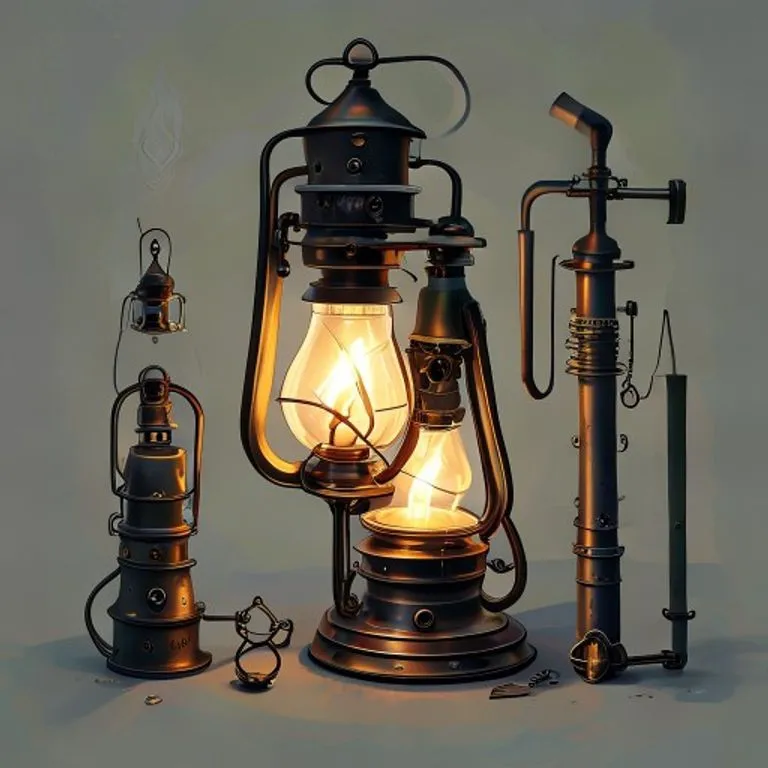
A safety lamp is an enclosed flame lamp designed for mines and tunnels with flammable gases. It provides light while reducing ignition risk and can indicate dangerous gas levels by changes in the flame.
Use / Function
- Primary use: Safer lighting in mines, shafts, and confined workings.
- Secondary uses: Early warning of methane or low oxygen by flame behavior.
- Scale: Small teams and underground crews.
Operating principle
- Enclosed flame: The flame sits inside a glass cylinder and a metal frame.
- Flame arresting: Fine wire gauze cools the flame front so it cannot pass outward.
- Controlled airflow: Small inlets feed combustion while limiting drafts.
- Gas indication: A blue cap or elongated flame signals methane or oxygen loss.
How to create it
Minimum functional version
- Fuel reservoir: Build a small oil lamp body with a wick adjuster.
- Glass shield: Fit a heat-resistant glass cylinder around the flame.
- Mesh cap: Add fine Steel wire gauze around the top to arrest flame.
- Air inlets: Punch small holes in a metal cap or chimney to control airflow.
- Test: Light it in open air and confirm the flame stays stable without smoke.
Technical level
Intermediate: Requires metalworking and fitting glass.
Materials needed
- Essential:
- Glass cylinder or window.
- Steel wire gauze.
- Frame in Brass or Iron.
- Cotton wick or Plant fibers.
- Vegetable Oil or Animal Fat fuel.
- Tools:
- Shears or snips, pliers, punch, file.
- Glass cutter or a pre-made glass cylinder.
- Rivets or wire for assembly.
- Possible substitutes:
- Mica window instead of glass.
- Iron instead of brass.
- Tightly woven metal cloth if wire gauze is unavailable.
Variants and improvements
- Davy lamp: Single wire gauze enclosure.
- Clanny lamp: Glass cylinder with gauze protection.
- Mueseler lamp: Chimney and baffle for steadier airflow.
- Lockable lamps: Prevent opening in gassy workings.
Limits and risks
- High gas levels: Not safe in very rich methane or strong airflow.
- Damage: Dents, torn gauze, or oil leaks defeat the safety effect.
- Low light: Dimmer than open flames and short range.
- False security: Flame behavior is a warning, not a replacement for ventilation.