Generated with AI3 min read
Printing Press
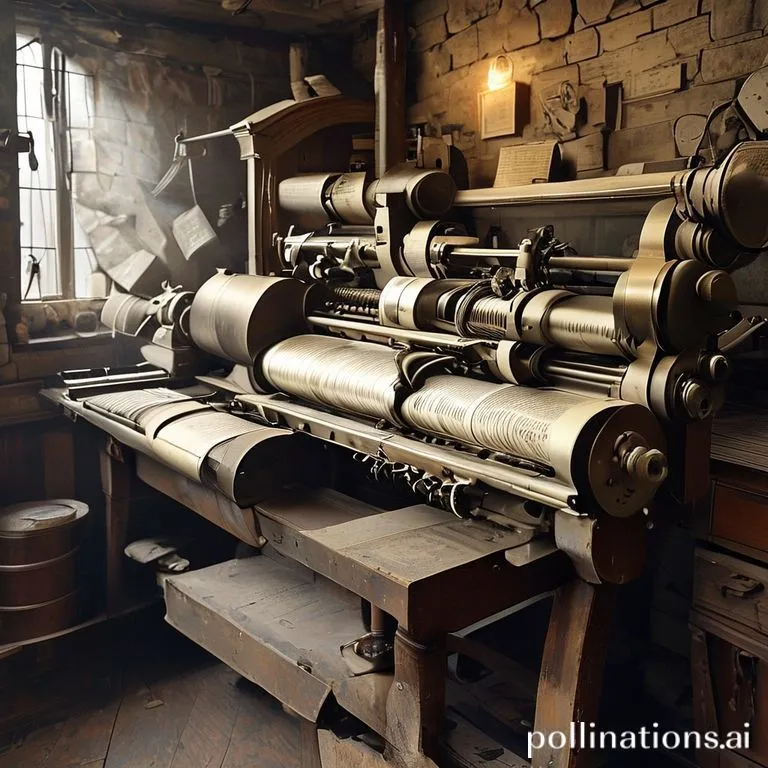
Brief description
The printing press is a mechanical device for applying pressure to an inked surface resting upon a print medium (such as paper or cloth), thereby transferring the ink. It was a revolutionary invention that allowed for the mass production of books and the rapid spread of information.
Use / Function
Its primary purpose is the mass reproduction of text and images:
- Mass Communication: Rapid dissemination of ideas, news, and knowledge.
- Education: Making books affordable and accessible to a larger population.
- Standardization: Ensuring uniformity in copies of texts, laws, and scientific data.
- Scientific Revolution: Facilitated the sharing of discoveries and data among scholars.
Operating principle
The printing press operates on several key principles:
- Movable Type: Individual characters (letters, numbers, punctuation) are cast in a durable metal alloy. These can be rearranged to form any text.
- Type Metal: An alloy of lead, tin, and antimony that melts at a low temperature, casts sharply, and expands slightly upon cooling to fill the mold perfectly.
- Oil-based Ink: Unlike water-based inks used for handwriting, printing ink must be thick and oily to adhere to the metal type and transfer cleanly to paper.
- The Press Mechanism: A screw or lever mechanism applies even, heavy pressure to a flat plate (the platen), pressing the paper against the inked type.
How to create it
- Step 1: Build the Frame: A sturdy frame (originally wood, later iron) to hold the mechanism.
- Step 2: Create the Type: Cast individual letters in molds using type metal alloy.
- Step 3: Prepare the Ink: Mix soot or charcoal with linseed oil and resin to create a thick, tacky ink.
- Step 4: Setting the Type: Arrange the characters in a “chase” (a metal frame) to form the page of text.
- Step 5: Printing: Apply ink to the type using leather ink balls, place the paper on top, and use the press to apply pressure.
Materials needed
- Frame: Wood (Oak) or Iron.
- Type: Lead, Tin, and Antimony alloy.
- Surface: Paper or Parchment.
- Ink: Linseed oil, Charcoal/Soot, and Resin.
- Tools: Type molds, leather ink balls, composing sticks, and chases.
Variants and improvements
- Woodblock Printing: Preceded the press; used carved wooden blocks for entire pages.
- Gutenberg Press: The first screw-press with movable metal type (15th century).
- Steam-powered Press: Dramatically increased printing speed in the 19th century.
- Offset Printing: Modern industrial method where the inked image is transferred from a plate to a rubber blanket.
- Digital Printing: Inkjet and laser technologies that do not require physical plates or type.
Limits and risks
- Mechanical Wear: Metal type eventually wears down and needs to be recast.
- Complexity: Requires precision in casting type and aligning the press.
- Resource Intensive: Requires significant amounts of metal, oil, and high-quality paper.
- Censorship: Because of its power to spread ideas, the press has often been a target of government or religious control.