Generated with AI2 min read
Milling Cutter
Brief description
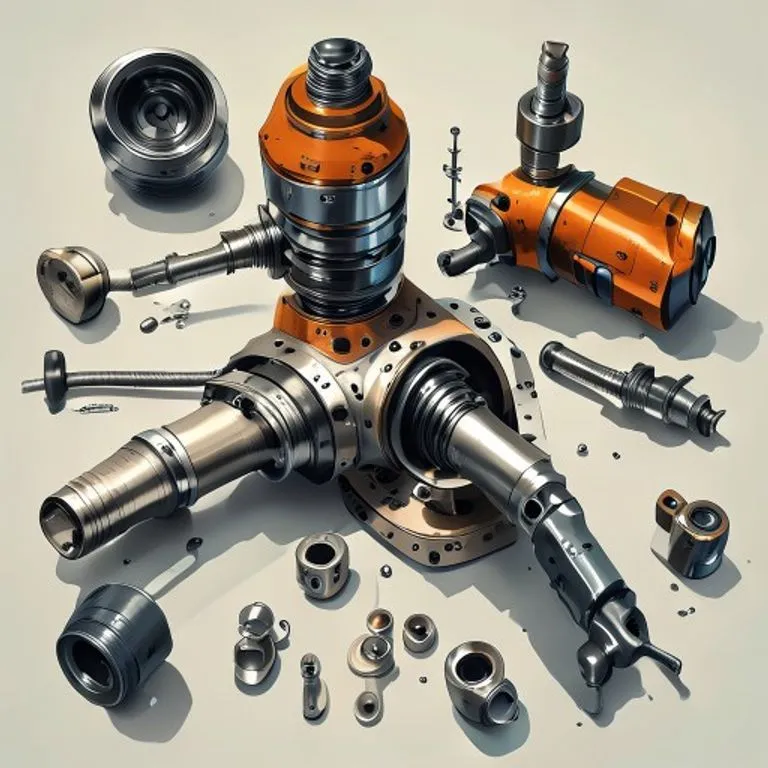
A milling cutter is a rotary cutting tool used in Milling Machines to remove material from a workpiece. Unlike a Drill Bit, which cuts only at the tip, a milling cutter can cut with its sides, allowing for the machining of flat surfaces, slots, and complex contours.
Use / Function
- Surface Machining: Flattening blocks of material (facing).
- Slotting: Cutting channels or keyways (slot milling).
- Contouring: Creating complex shapes following a profile.
- Scale: From micro-machining to large industrial mills.
Operating principle
The cutter rotates at high speed and has multiple cutting edges (teeth or flutes). As the workpiece is fed against the rotating cutter, each tooth shears off a small chip of material.
- Peripheral Cutting: Teeth on the circumference cut while the tool moves laterally.
- Face Cutting: Teeth on the end cut when the tool plunges or faces.
How to create it
Minimum functional version
A hardened steel bar with hand-filed teeth (before hardening) can work for soft materials like wood or plastic.
Advanced version (High Speed Steel - HSS)
- Turning: A high-speed steel bar is turned to the basic shape.
- Flute Milling: Another milling machine (or dividing head) is used to cut the helical grooves that form the cutting edges.
- Hardening: The steel is heated and tempered to achieve maximum hardness without being too brittle.
- Sharpening: The cutting edges are precision ground using abrasive wheels.
Materials needed
- Essential:
- High Speed Steel (HSS): Steel alloy with tungsten, chromium, and vanadium that maintains hardness at high temperatures.
- Tungsten Carbide: For modern high-performance tools, harder but more brittle.
- Tools: Lathe, Milling Machine (to make complex cutters), Grinding Wheel.
Variants and improvements
- End Mill: Cuts with the end and sides; most common for slots and profiles.
- Face Mill: Large diameter, for flattening large surfaces quickly.
- Ball Nose: Rounded tip for 3D machining and curved surfaces.
- Form Cutter: Custom profile (e.g., for cutting gears).
Limits and risks
- Wear: Edges dull with use, increasing friction and heat.
- Deflection: If the cutter is long and thin, it can bend under load, causing inaccuracies.
- Breakage: If fed too fast or the cutter jams, it can break violently.
- Heat: Cutting generates significant heat; coolant is often required.