Generated with AI2 min read
Lathe Tool
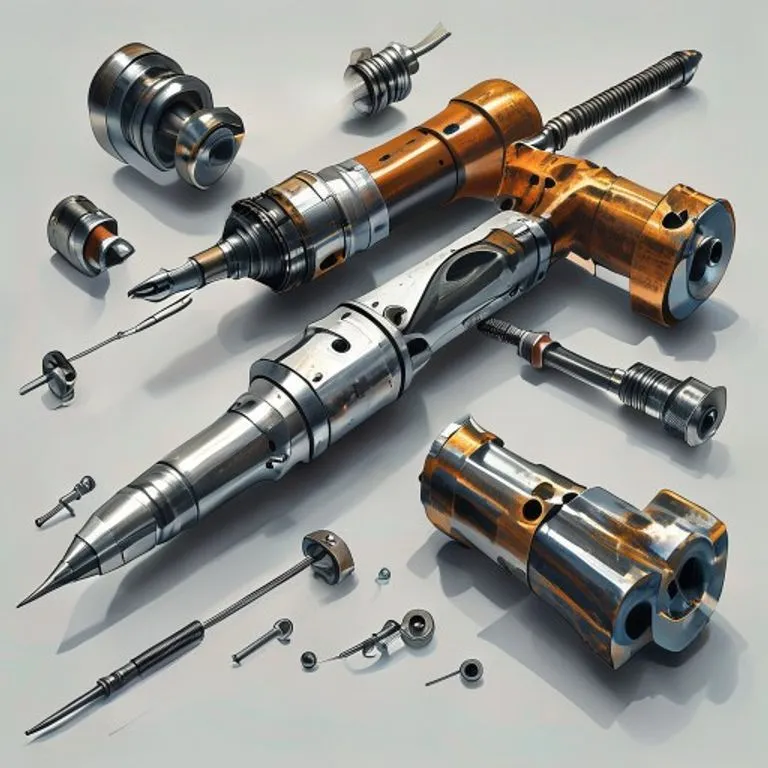
Brief description
A lathe tool (or tool bit) is a single-point cutting tool used in Lathes to machine materials. Unlike rotary tools such as Drill Bits or Milling Cutters, the lathe tool is typically held stationary while the workpiece rotates, removing material in the form of continuous chips.
Use / Function
- Turning: Reducing the diameter of a cylindrical part.
- Facing: Flattening the end of a workpiece.
- Threading: Cutting internal or external screw threads.
- Parting: Cutting off a piece to separate it from the stock.
Operating principle
The tool bit has a sharp cutting edge with specific angles (rake, clearance) that allow it to penetrate the rotating material and shear off a chip without excessive rubbing.
- Rake Angle: Facilitates chip flow.
- Clearance Angle: Prevents the tool from rubbing against the newly cut workpiece.
How to create it
Basic version (Carbon Steel)
- Forging: Shape a steel bar.
- Sharpening: Use files or whetstones to create the cutting angles.
- Tempering: Harden the tip to resist wear.
Standard version (High Speed Steel - HSS)
Start with a square HSS bar (cobalt or tungsten) and grind it on a Grinding Wheel to the desired geometry.
Advanced version (Carbide)
Braze a small Tungsten Carbide insert onto a steel shank, or use indexable inserts. This allows cutting harder materials at higher speeds.
Materials needed
- Essential:
- Tool Steel: Carbon steel (basic) or HSS (standard).
- Carbide: For high performance.
- Tools: Grinding Wheel (essential for shaping and sharpening).
Variants and improvements
- Roughing Tool: Robust, for removing large amounts of material quickly.
- Finishing Tool: Sharper or rounded tip for a smooth surface finish.
- Boring Bar: For enlarging internal holes.
- Parting Tool: Thin blade for cutting off the workpiece.
Limits and risks
- Center Height: The tip must be exactly at the lathe’s centerline height. If too high or low, it won’t cut well or will chatter.
- Overhang: If the tool sticks out too far from the holder, it will vibrate (chatter) and leave a poor finish.
- Heat: Excessive heat can soften HSS steel (burn the tip).