Generated with AI2 min read
Hydrometer
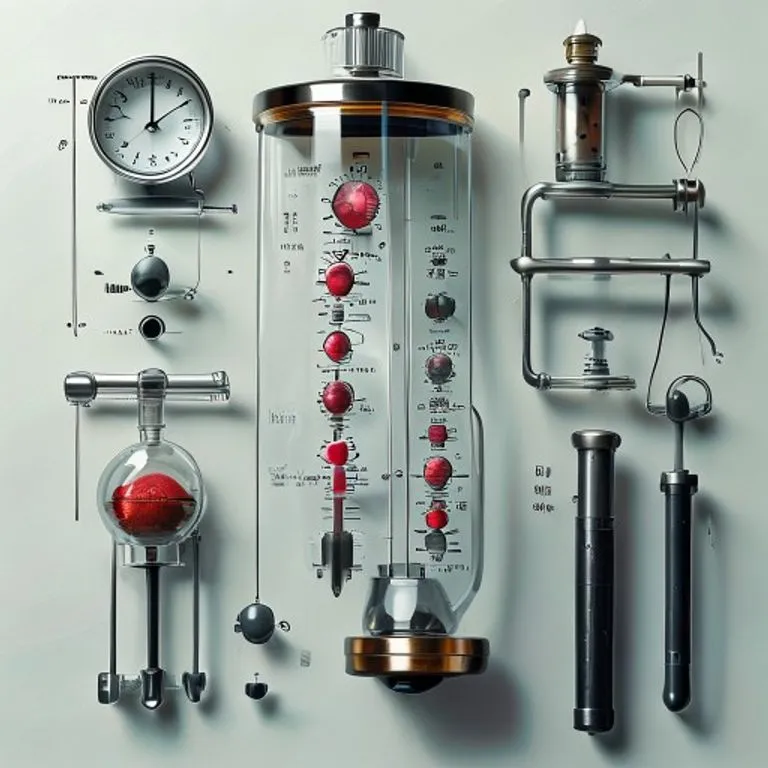
Brief description
A hydrometer is an instrument used to measure the density (specific gravity) of a liquid. It is a fundamental tool for monitoring chemical processes and ensuring the quality of fermented products.
Use / Function
- Fermentation Control: Monitoring the conversion of sugar to alcohol in Fermentation.
- Purity Testing: Checking the concentration of solutions like brine or acids.
- Quality Control: Verifying the density of milk or other liquid resources.
- Scale: Small-scale (domestic) to industrial use.
Operating principle
The hydrometer operates based on Archimedes’ principle: a solid body floats in a liquid at a depth proportional to the weight of the liquid it displaces.
- In a dense liquid (high sugar/salt), the hydrometer floats higher.
- In a light liquid (high alcohol), the hydrometer sinks deeper.
How to create it
Minimum functional version
- Tube: A thin, hollow Glass tube (or a sealed reed).
- Weighting: Place a small amount of Lead shot or dry sand at the bottom of the tube so it floats upright.
- Sealing: Seal the top with Beeswax or Glue to prevent water from entering.
- Calibration:
Materials needed
- Essential materials:
- Tools:
Variants and improvements
- Alcoholometer: Specifically calibrated to measure alcohol concentration in Alcohol.
- Saccharometer: Calibrated to measure sugar content in syrups.
- Thermometer integration: Advanced versions include a thermometer to correct for temperature-induced density changes.
Limits and risks
- Fragility: Usually made of glass and easily broken.
- Temperature sensitivity: Liquids change density with temperature; measurements must be corrected if the liquid is not at the calibration temperature.
- Surface Tension: Bubbles clinging to the tube can cause inaccurate (high) readings.