Generated with AI2 min read
Ruler
Made of
Brief description
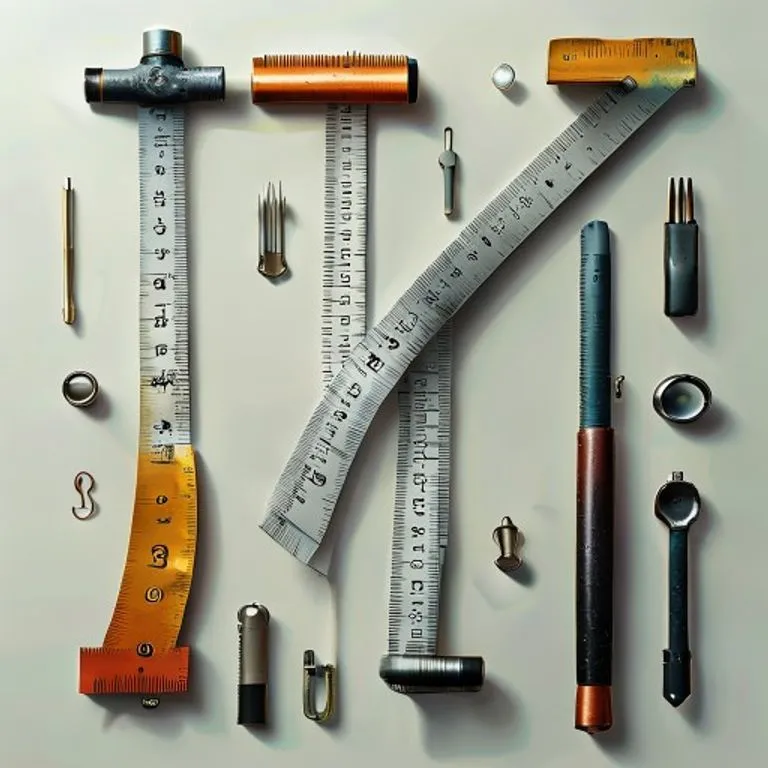
A ruler is a tool used to measure lengths and draw straight lines. It is a fundamental instrument in geometry, technical drawing, engineering, and construction.
Use / Function
- Measurement: Determining the length of an object or distance.
- Drawing: Guiding a pen or pencil to draw straight lines.
- Cutting: Providing a straight edge for cutting materials.
- Scale: Personal to small-scale construction.
Operating principle
It works by direct comparison. The ruler has markings (graduations) that represent standard units of length (centimeters, inches). By aligning the object with the ruler, its length can be read directly.
How to create it
- Material Selection: Choose a rigid, straight material (hardwood, metal strip).
- Straightening: Plane one edge until it is perfectly straight.
- Marking: Using a known standard, mark equal intervals along the edge.
- Finishing: Ensure markings are clear and durable.
- Technical level: Basic.
Materials needed
- Essential: Hardwood, metal, or rigid plastic.
- Tools: Planer, scribe or fine pen, standard reference for calibration.
Variants and improvements
- Folding ruler: Hinged sections for portability.
- Scale ruler: Multiple scales for reading architectural drawings.
- Steel rule: High precision for machining.
Limits and risks
- Length: Limited by the physical length of the ruler.
- Parallax: Reading from an angle can cause errors.
- Wear: Markings can fade or the edge can become damaged.