Generated with AI3 min read
Heliograph
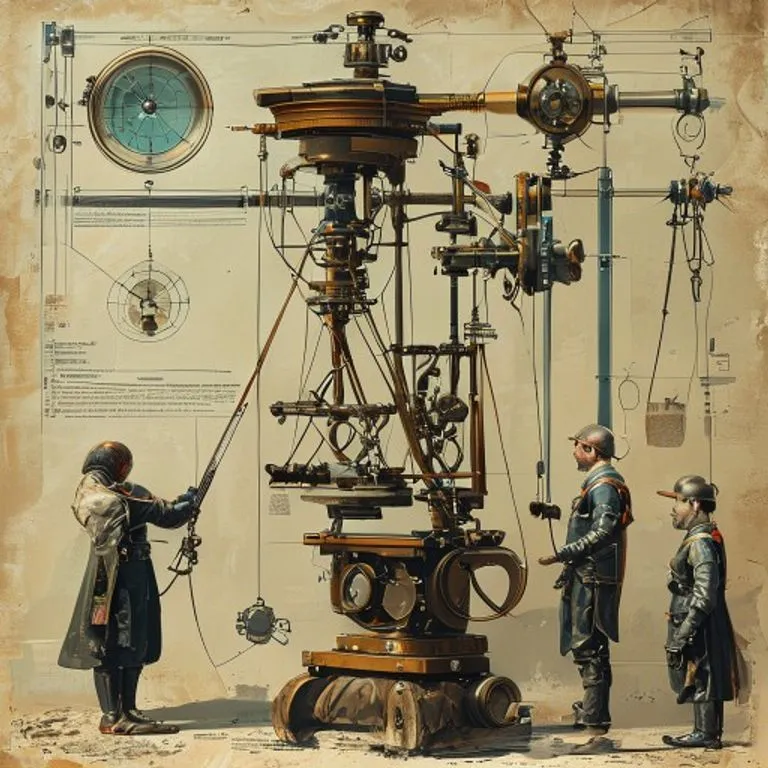
Brief description
A heliograph is a wireless telegraph that signals by flashes of sunlight (generally using Morse code) reflected by a mirror. The flashes are produced by momentarily pivoting the mirror, or by interrupting the beam with a shutter.
Use / Function
- Primary use: Long-distance optical communication.
- Secondary uses: Surveying (as a target), military signaling, and emergency rescue signaling.
- Scale: Local to regional (line-of-sight distances up to 50 km or more).
Operating principle
Reflected Sunlight:
- Light Source: Uses the Sun as a powerful, free source of light.
- Reflection: A high-quality plane mirror reflects sunlight toward a distant receiver.
- Alignment: A sighting device (vane or second mirror) ensures the reflected beam is precisely aimed at the target station.
- Signaling:
- Shutter Method: A screen or shutter is placed in front of the mirror to block or release the beam.
- Mirror Tilt Method: The mirror itself is tilted slightly to move the beam on and off the target.
- Coding: The sequence of light flashes (long and short) translates into a code, such as Morse code.
How to create it
1. The Mirror Assembly
- Use a flat, high-quality glass mirror.
- Mount it on a pivot that allows for both horizontal (azimuth) and vertical (elevation) adjustment.
2. The Signaling Mechanism
- Shutter: Build a wooden frame with louvers (like a blind) that can be opened and closed rapidly using a key or lever.
- Tilting Mirror: Attach a spring-loaded key to the mirror mount. Pressing the key tilts the mirror to aim the light at the receiver; releasing it returns the light to a “rest” position (away from the receiver).
3. Sighting and Alignment
- Place a sighting rod or vane a few feet in front of the mirror.
- Align the mirror so that the sun’s reflection hits the tip of the sighting rod while the target station is visible behind it.
- For situations where the sun is behind the operator, a second mirror (duplex mirror) is used to reflect light onto the main signaling mirror.
Materials needed
- Plane Mirror: A glass mirror with a silvered back. (Mirror)
- Wood: For the tripod, base, and shutter assembly. (Wood)
- Metal (Brass or Iron): For pivots, hinges, and the signaling key. (Metal)
- Glass: If needed for protective enclosures or sighting devices.
Variants and improvements
- Heliograph vs. Signal Lamp: The heliograph is superior during the day as it uses the intense power of the sun; signal lamps (using kerosene or electricity) are used at night.
- Portable Tripods: Early military heliographs were designed to be mounted on sturdy, foldable wooden tripods for field use.
- Automatic Tracking: Advanced versions could include a “heliostat” mechanism to slowly rotate the mirror to compensate for the sun’s movement across the sky.
Limits and risks
- Weather Dependence: Requires clear, sunny skies. It is useless at night, during heavy rain, or in thick fog.
- Line of Sight: Requires a clear, unobstructed path between the sender and receiver.
- Interception: Anyone with a line of sight to the sender or receiver can see the flashes. Messages must be encrypted if secrecy is required.
- Eye Safety: Looking directly at the reflected beam at close range can be blinding.