Generated with AI3 min read
Absorption Refrigerator
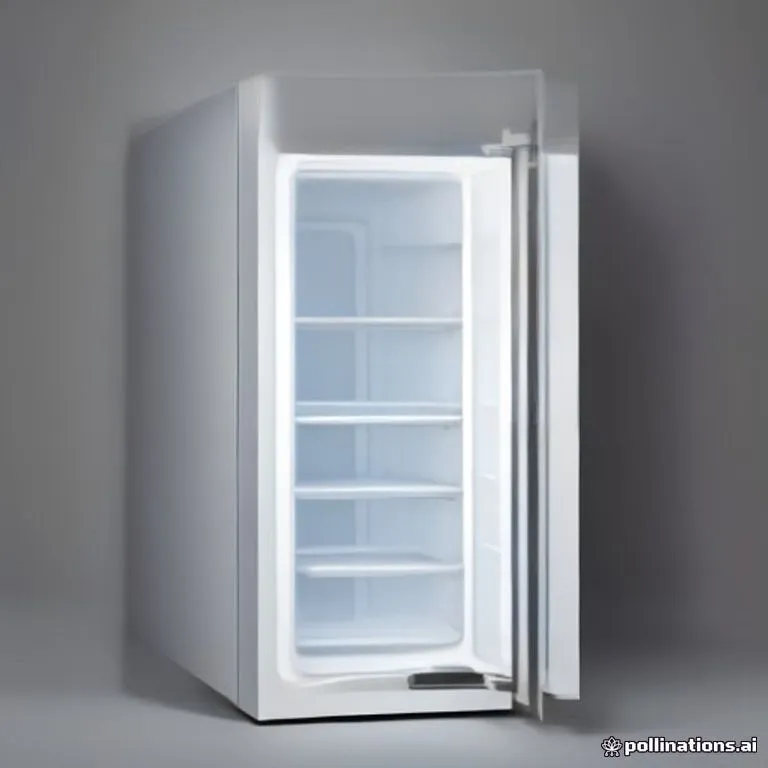
Brief description
An absorption refrigerator is a cooling system that uses a heat source (such as a flame, solar thermal energy, or waste heat) rather than an electric motor or mechanical compressor to drive the refrigeration cycle. It operates continuously without moving parts by exploiting the varying solubility of a refrigerant (typically ammonia) in a solvent (typically water) at different temperatures and pressures.
Use / Function
- Primary Use: Off-grid food preservation and refrigeration powered directly by heat (gas, kerosene, biomass, or thermal solar).
- Secondary Uses: Waste-heat recovery cooling in industrial processes and silent refrigeration for noise-sensitive environments.
- Scale: Domestic refrigerators, portable cooling units, and off-grid agricultural storage.
Operating principle
The standard 3-fluid gas-absorption cycle (Platen-Munters cycle) uses ammonia as the refrigerant, water as the absorbent, and hydrogen gas as a pressure equalizer:
- Generator: Heat applied to a rich ammonia-water solution boils off high-pressure ammonia gas.
- Condenser: The hot ammonia gas passes through an air-cooled coil, condensing into liquid ammonia.
- Evaporator: Liquid ammonia enters the evaporator chamber filled with hydrogen gas. Hydrogen reduces the partial pressure of ammonia, causing it to evaporate rapidly and absorb heat from the chilled space.
- Absorber: Ammonia vapor mixed with hydrogen flows down to the absorber, where a weak water solution re-absorbs the ammonia gas, allowing hydrogen to return to the evaporator.
- Thermo-Siphon Circulation: Temperature and density gradients circulate the fluids continuously without mechanical pumps.
How to create it
- Build the Generator: Construct a vertical steel vessel surrounded by a heater sleeve or gas burner flame tube.
- Add Rectifier Pipe: Install an inclined tube above the generator to allow condensed water droplets to drain back while pure ammonia vapor flows upward.
- Fabricate Condenser & Evaporator Coils: Bend steel tubing into radiator coils for heat dissipation and cold expansion sections.
- Assemble Absorber Vessel: Connect lower return lines to allow weak solution to absorb returning ammonia gas.
- Charge System: Evacuate air, charge with calculated ratios of high-purity ammonia, distilled water, and pressurized hydrogen, then hermetically seal all steel welds.
Materials needed
- Chamber & Piping: Steel tubing and pressure vessels (copper and brass must be strictly avoided as ammonia corrodes copper alloys).
- Working Fluids: Ammonia and distilled Water.
- Equalizing Gas: Compressed hydrogen gas.
- Heat Source: Kerosene burner, Biogas burner, or solar concentrator.
Variants and improvements
- Platen-Munters Continuous System: The classic 3-fluid hermetic unit with no moving parts.
- Water-Lithium Bromide System: Uses water as refrigerant under deep vacuum; widely used in large thermal industrial chillers.
- Solar Thermal Absorption Chiller: Integrates flat-plate or parabolic solar collectors to drive cooling without electricity.
Limits and risks
- Toxicity: Ammonia gas is hazardous if leaked; high-quality steel welding and pressure testing are critical.
- Orientation Sensitivity: Relies on gravity and buoyancy; unit must be operated level.
- Efficiency: Thermal efficiency (COP) is lower than mechanical vapor-compression systems.