SyntheticGenerated with AI3 min read
Nitric Acid
HNO3
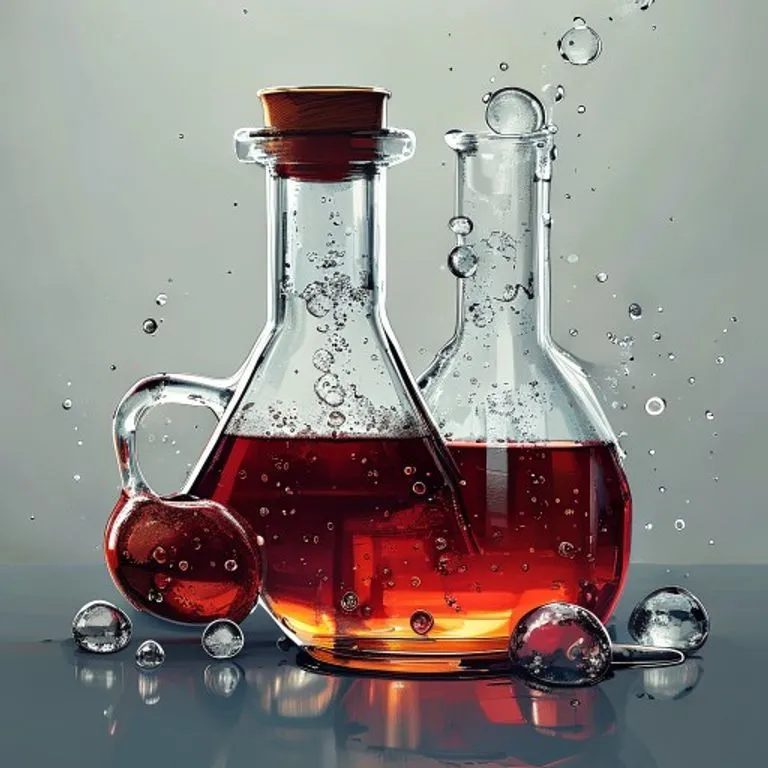
Nitric acid, also known as aqua fortis (strong water), is a highly corrosive mineral acid. It is a primary reagent in industrial chemistry, essential for nitrogen fixation in fertilizers and the production of explosives.
Description of what it is like
In its pure form, it is a colorless liquid, but it often develops a yellow or red cast over time due to decomposition into nitrogen oxides. It gives off choking, acrid fumes and reacts violently with many organic materials.
Origin and where to find it
- Not natural: It does not occur naturally in concentrated form.
- Source: Must be synthesized from other minerals, primarily Potassium Nitrate.
Minimum processing required
- Distillation (Glauber’s Method):
- Mix Potassium Nitrate with concentrated Sulfuric Acid in a glass retort.
- Gently heat the mixture.
- Nitric acid vapors will distill over and can be condensed into a receiving flask.
- Ostwald Process (Modern):
- Catalytic oxidation of Ammonia (requires platinum catalyst and high temperatures).
Tools needed to work on it
- Glass Retort and Receiver: Essential as nitric acid corrodes most metals. Requires Glass.
- Heat Source: Controlled furnace or sand bath.
- Glass Storage: Must be stored in dark glass bottles with glass stoppers.
Common forms of use
- Aqua Fortis: Concentrated nitric acid used for etching and chemical reactions.
- Aqua Regia: A mixture of nitric acid and hydrochloric acid (3:1 ratio) that can dissolve gold and platinum.
- Nitration Reagent: Mixed with sulfuric acid to produce explosives like nitrocellulose or TNT.
Possible substitutes
- Sulfuric Acid: For some etching or cleaning tasks, but cannot perform nitration.
- Vinegar (concentrated): Only for extremely mild acid needs.
Limitations and common failures
- Decomposition: Breaks down when exposed to light or heat, releasing toxic nitrogen dioxide gas.
- Container Failure: Will destroy cork, rubber, and most plastics.
- Moisture: Absorbs water from the air, diluting itself.
Risks and safety
- Severe Burns: Causes immediate, painful yellow staining and destruction of skin.
- Toxic Fumes: Nitrogen oxide vapors can cause delayed pulmonary edema (fluid in lungs), which can be fatal.
- Fire Hazard: Being a powerful oxidizer, it can spontaneously ignite wood, straw, or cloth upon contact.
Related materials
- Potassium Nitrate: The traditional raw material.
- Sulfuric Acid: Required for the distillation process.
- Ammonia: Modern precursor.
- Silver: Dissolved by nitric acid for photography.
Properties
- Corrosive
- Strong oxidizer
- Liquid
- Pungent odor
- Highly reactive
Used for
- Fertilizer production
- Explosives manufacturing
- Photography
- Metal etching
- Chemical synthesis
Manufacturing / Process
Historically produced by distilling potassium nitrate (saltpeter) with sulfuric acid.