NaturalGenerated with AI2 min read
Antler
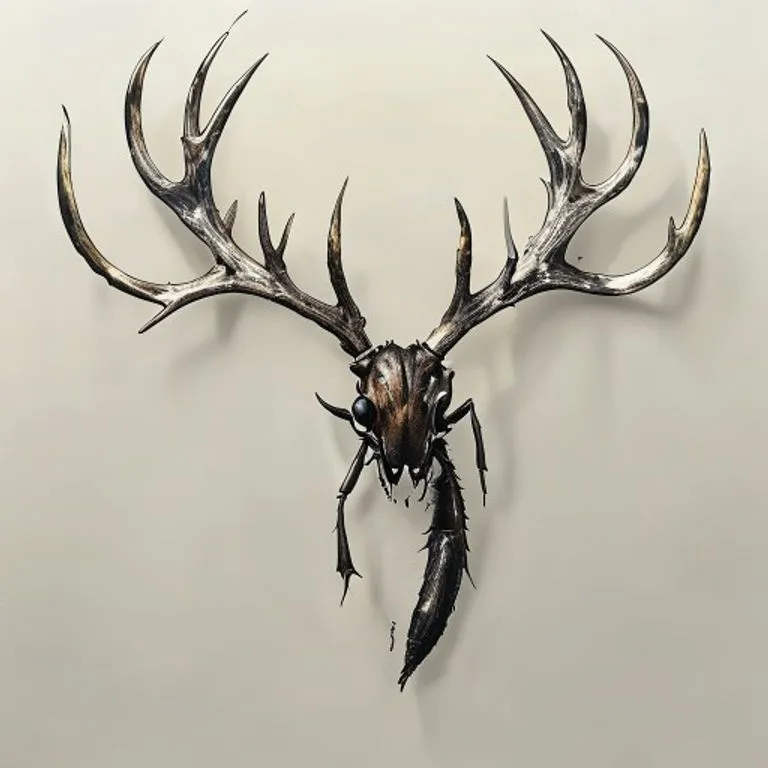
Antler is the bony outgrowth found on the heads of deer, elk, moose, and caribou. Unlike Horn, which is permanent keratin, antler is solid bone that is grown and shed annually.
Description of what it is like
- Appearance: Branching bony structure. Fresh antlers are covered in “velvet” (skin), but the usable material is the hard, calcified bone revealed after the velvet is rubbed off.
- Texture: Rough on the outside, solid and dense on the inside (sometimes with a spongy core).
- Properties: It is tougher and more elastic than regular skeletal Bone, making it less likely to shatter under impact.
Origin and where to find it
- Source: Cervids (Deer family).
- Location: Found on the forest floor in late winter/early spring after shedding.
- Recognition: Look for the characteristic branching shape.
Minimum processing required
- Collection: Finding shed antlers (ethical and sustainable) or harvesting from hunted animals.
- Seasoning: Fresh antler should dry for a few months to harden fully, but not too long or it becomes brittle and chalky.
- Cutting: Use a Saw (hacksaw works best) to cut into sections.
- Soaking: Soaking in water for a few days can soften it slightly for easier working/straightening.
Tools needed to work on it
- Saw: To cut the hard material.
- Files/Rasps: To shape the surface.
- Sandpaper: To smooth and polish.
- Drill: To make holes (burns easily if drilled too fast).
Common forms of use
- Tines (Points): Used as pressure flakers for making Stone Tools (flintknapping).
- Beam (Main shaft): Cut into sections for knife handles, hammer heads, or billets.
- Carving: Excellent for detailed carving of buttons, beads, or decorative items.
Possible substitutes
- Bone: More brittle.
- Horn: Softer and can be delaminated.
- Wood: Softer and less durable.
- Hard Plastic: Modern substitute.
Limitations and common failures
- Pith: The center can be spongy (pithy), which is weak. Use the solid outer wall for strength.
- Weathering: Antlers left in the woods for too long turn white, chalky, and brittle (gnawed by rodents for calcium).
- Smell: Smells like burning hair/bone when cut or sanded violently.
Risks and safety
- Dust: Breathing bone dust is harmful. Wear a mask.
- Points: Tines can be very sharp.
Related materials
Properties
- Hard
- Tough
- Dense
- Elastic (more than bone)
Used for
- Tool handles
- Knife scales
- Buttons
- Pressure flakers (for flintknapping)
- Needles
- Glue
Manufacturing / Process
Harvested after being shed naturally by deer.